Several weeks ago I analyzed the Twitter account of the Chief of MI6, the United Kingdom’s foreign intelligence agency. I was curious to examine why the UK’s top spy has joined Twitter and how he uses Twitter to advance his organization. I found that the Chief uses Twitter to increase the perceived transparency of MI6... Continue Reading →
A Q &A with University Students- Assessing the Impact of Diplomacy’s Digitalization
This week I was invited to a Q&A session with university students in Chile. Many questions were asked, ranging from the role of Ambassadors in the digital age to the live-streaming of UN deliberations. Below are questions and answers that may prove valuable to scholars and practitioners of digital diplomacy. Q: Has digitalization led to... Continue Reading →
How Chinese Ambassadors Use Twitter
In my 2019 book, The Digitalization of Public Diplomacy, I dedicated a chapter to Ambassadors’ use of Twitter. My assertion was that Ambassadors may be viewed by digital publics as trusted sources of information. This is because Ambassadors have privileged access to information, they have access to the highest echelons of power, they are viewed... Continue Reading →
License to Tweet: When the Chief of MI6 Goes Online
License to Tweet: When the Chief of MI6 Goes Online In November of 2013, the Chief of MI6, the UK’s foreign intelligence service, joined Twitter. On the one hand, one could argue that the willingness of senior spies to join social networks is an important step forward in government transparency and accountability. Indeed, one could... Continue Reading →
Are British Royals are a Digital Failure?
For much of the 20th century, the British Royal Family captured the world’s attention. Thanks to Prince Phillip, Queen Elizabeth’s 1953 Coronation attracted an estimated 227 million viewers from across the world, a record at that time. Princess Diana’s wedding was viewed by 750 million people, while her funeral was viewed by 2.5 billion viewers.... Continue Reading →
America’s New Rhetoric of Alliances
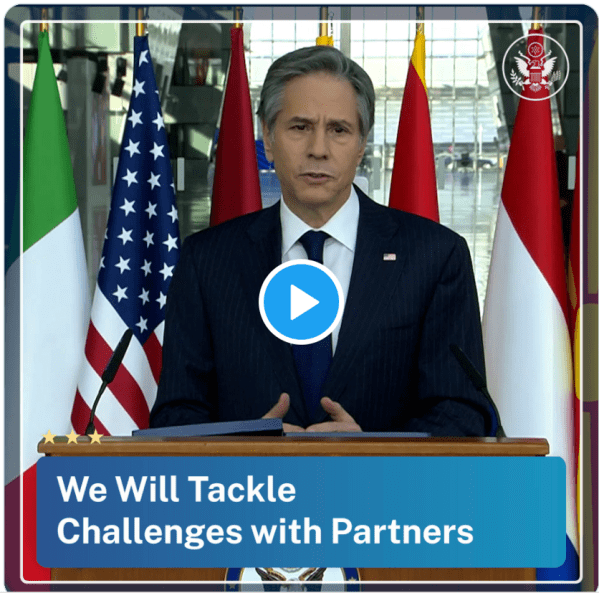
In a recent article, Guy Golan and I argued that the 21st century will be governed by three giants: The US and China, thanks to their military and financial power, and India thanks to its status as the world’s telecommunications hub. In the world of giants, no single nation will be able to later the... Continue Reading →
Wikipedia is a Digital Diplomacy Priority
By the end of the 18th century, the Palace of Versailles was no longer home to France's greatest thinkers. These had migrated to Paris where they attended the city's salons. French salons were never as ostentatious as those of Versailles, nor as rigid and overburdened with ceremony. The salons were simple parlor gatherings hosted by... Continue Reading →
How MFAs Celebrated International Women’s Day Online
Comment: This post about International Women’s Day was written from a man’s perspective. It is thus highly likely that the analysis in this post would benefit from the insight of women. I encourage women readers to comment on this post and offer their own analysis of the tweets analyzed below. This insight will be integrated... Continue Reading →
Biden’s 100 First Tweets in Office
The term ‘First 100 days’ in office was coined by US President Franklin D Roosevelt and referred to a windfall of legislation that Presidents promote during the earliest days of their administration. In Roosevelt’s case, the first 100 days were used to introduce 15 bills all meant to alleviate the Great Depression through ‘New Deal’... Continue Reading →
The Iran Deal is already being negotiated on Twitter
Digital platforms are now increasingly used for diplomatic signaling. MFAs and diplomats often use Twitter to comment on crises, address other nations’ policies and even criticize state action. They do so knowing full well that their Twitter accounts are monitored by their peers, and influential social media users such as journalists and blogger. Already in... Continue Reading →