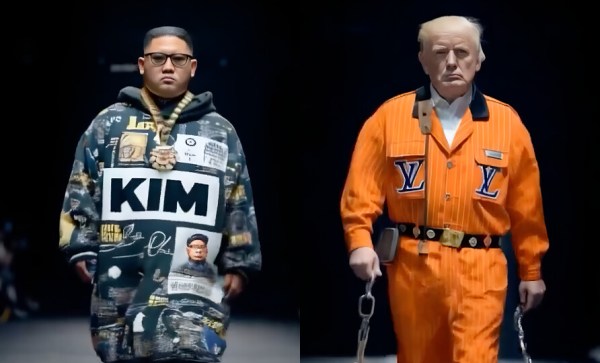
On July 21st, Elon Musk shared a tweet featuring an AI-generated fashion show of world leaders. The AI fashion show soon went viral, given the satirical depiction of world leaders and due to its realistic appearance. Although the fashion show was clearly generated by AI, the video did demonstrate the extent to which this technology... Continue Reading →
Monday’s Digital Diplomacy Must Read List
Each week, I publish a list of interesting articles, essays and reports that may be of interest to the digital diplomacy community. This week- Inside the powerful Peter Thiel network that anointed JD Vance (The Washington Post) China Is Closing the A.I. Gap With the United States (The New York Times) OpenAI working on new... Continue Reading →
Monday’s Digital Diplomacy Must Read List
Each week, I publish a list of interesting articles, essays and reports that may be of interest to the digital diplomacy community. This week- How Microsoft’s Satya Nadella Became Tech’s Steely Eyed A.I. Gambler ?(The New York Times) Google Close to Its Biggest Acquisition Ever, Despite Antitrust Scrutiny (The New York Times) ‘Amazing’ new technology... Continue Reading →
Dual Use Terminology- Digital Diplomacy’s Dual Meaning
The term ‘dual-use technology’ is used to denote technologies that may have both civil and military applications. Such is the case with Global Positioning Systems or GPS which are used to help track and identify targets for missile attacks and are also used to help drivers navigate in cars. Another example is drones which may... Continue Reading →
Digital Diplomacy’s Next Challenge: Reality in the Age of Visual AI
The 'middle-ground' is as important to diplomacy as it is to society. It is in the middle-ground where diplomats can meet and resolve differences. It is in the middle-ground where different citizens, with different opinions, can meet to discuss issues of shared concern. It is therefore in the middle-ground where action may be initiated. In... Continue Reading →
Monday’s Digital Diplomacy Must Read List
Each week, I publish a list of interesting articles, essays and reports that may be of interest to the digital diplomacy community. This week- Meta has created a way to watermark AI-generated speech (MIT Technology Review) Immersive technology, blockchain and AI are converging — and reshaping our world (World Economic Forum) EU to take further... Continue Reading →
Monday’s Digital Diplomacy Must Read List
Each week, I publish a list of interesting articles, essays and reports that may be of interest to the digital diplomacy community. This week- How Big Tech Is Killing Innovation (The New York Times) Why does AI hallucinate? (MIT Technology Review) Does what happens on your iPhone still stay on your iPhone? (The Guardian) China... Continue Reading →
Digital Diplomacy in the Age of Visual AI
Last week I began exploring possible biases in popular (Artificial Intelligence) AI tools. Within the context of AI, “bias” refers to the generation of skewed output or content. AI tools such as ChatGPT or Microsoft’s Copilot may suffer from biases because they were trained on skewed data or because humans with biases and prejudices programmed... Continue Reading →
Through the Lookingglass: Digital Diplomacy and AI Biases
The launch of ChatGPT, a Generative AI tool developed by the tech company Open AI, spurred a global discussion on the risks and benefits of artificial intelligence. Notably, ChatGPT is referred to as an “AI” tool, yet it is not really an example of Artificial Intelligence. ChatGPT does not think. ChatGPT does act. ChatGPT has... Continue Reading →
Digital Diplomacy and The Rights of AI
I recently asked ChatGPT to draft an AI bill of rights. My prompt sought to identify which human rights should be enshrined in the era of AI and generative AI. Since the advent of AI tools such as ChatGPT, individuals and governments have expressed concerns over possible violations of human rights. For instance, many discussions... Continue Reading →