Each week, I publish a list of interesting articles, essays and reports that may be of interest to the digital diplomacy community. This week – Meta moves to tackle creepy behaviour in virtual reality (BBC News)Facebook owner Meta sees biggest ever stock market loss (BBC News)Can the Technology Behind Covid Vaccines Cure Other Diseases? (Wall Street... Continue Reading →
Monday’s Must Read List
Each week, I publish a list of interesting articles, essays and reports that may be of interest to the digital diplomacy community. This week – Facebook Messenger: The battle over end-to-end encryption (BBC News)Google asks a judge to dismiss Texas antitrust lawsuit about its ad business (TechCrunch)Israel’s Attorney General Sets Up Team to Look Into Police... Continue Reading →
Monday’s Must Read List

Each week, I publish a list of interesting articles, essays and reports that may be of interest to the digital diplomacy community. This week - Two-thirds of Ultra-Orthodox Israelis are online, COVID driving them to tech training (Times of Israel)How Russia tries to censor Western social media (BBC News)The worst technology of 2021 (MIT Technology Review)India... Continue Reading →
A Season of Faith’s Perfection: Digital Diplomacy’s Greatest Year
The universe, as we now know, began with a bang. A big bang to be precise. A cataclysmic and cosmic explosion that at once gave birth to more than 120 billion galaxies. Digital diplomacy also began with a bang, or a momentous event that instigated a global change in the practice of diplomacy. This event, according... Continue Reading →
Monday’s Must Read List- Best of 2021
Each week, I publish a list of interesting articles, essays and reports that may be of interest to the digital diplomacy community. This week I have curated a list of the most important digital news of 2021. Happy Holidays! Leveraging digital technology during the pandemic (Brookings)The Most Influential Spreader of Coronavirus Misinformation Online (The New York Times)Tokyo... Continue Reading →
Is Digital Diplomacy A form of Liquid Diplomacy?
In the year 2000, Zygmunt Bauman introduced his theory of Liquid Modernity. Bauman argues that modernity (i.e., 18th-20th centuries) was characterized by solid social institutions such as nation states, with clearly marked borders, social classes, characterized by limited mobility, and fixed identities built around nations, religion or ethnicity. Late modernity, or the 21st century, is... Continue Reading →
Effective Government Communication During Covid19: What Governments Can Learn from Diplomats
A recent article in Nature, titled "Toward effective government communication strategies in the era of COVID-19", outlines communications policies that may help governments face the Covid-19 pandemic. The authors layout 9 guiding principles for "effective" government communication, including clarity, honesty and empathy. It is interesting that most of these principles are relevant to digital diplomacy,... Continue Reading →
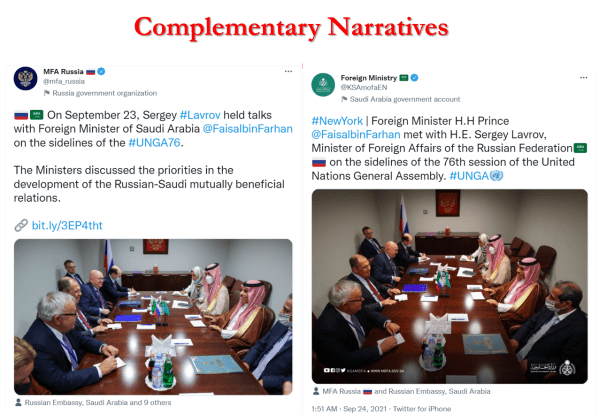
Image Management at the UN General Assembly: The Russian Case Study
It’s that time of the year again. A time of expectation and jubilation. A time of press junkets and photobombs. A time of pomp and circumstance and a time of high level negotiations. It’s the time of the UN’s annual General Assembly when leaders, foreign ministers and diplomats swarm to New York to redraw borders,... Continue Reading →
In the age of Covid19, are Pharma companies diplomatic actors? A Twitter Analysis
Are tech giants diplomatic actors? This question has occupied scholars and commentators for several years. Some have argued that social media companies have obtained a form of digital statehood. Facebook, for instance, displays many trappings of a state including a citizenry, a currency and a diplomatic branch charged with managing relations with offline states. Others... Continue Reading →
What are the future challenges for digital diplomacy?
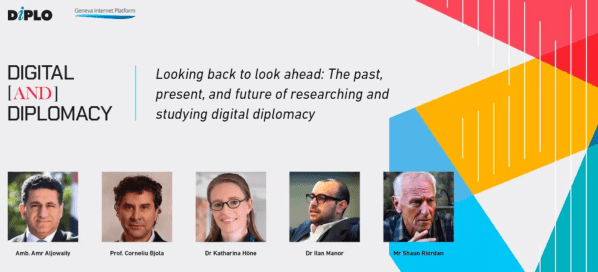
Last week I had the opportunity to partake in a conference organized by the Diplo Foundation asking- what do we mean when use the term “digital diplomacy”. During the conference I was asked three questions on the past, present and future practice of digital diplomacy. This post includes my answer and analysis. Q: How... Continue Reading →