On July 17, 2025, a kiss cam at a Coldplay concert captured Astronomer CEO Andy Byron and HR chief Kristin Cabot embracing, prompting viral speculation of an affair. The lead singer’s on-stage comment, "Either they’re having an affair or they’re just very shy”, as well as the couple’s obvious alarm at being caught on camera,... Continue Reading →
The Dangers of the AI Hype
A version of this post was originally published on E-IR website and can be found here According to Dr. Dan Kotliar, technological advancements are accompanied by a certain degree of hype, or hyperbolic discourse. The internet, for example, was accompanied by a democratization hype with scholars and pundits arguing that the internet would enable new... Continue Reading →
Digital Diplomacy in the Age of Visual AI
Last week I began exploring possible biases in popular (Artificial Intelligence) AI tools. Within the context of AI, “bias” refers to the generation of skewed output or content. AI tools such as ChatGPT or Microsoft’s Copilot may suffer from biases because they were trained on skewed data or because humans with biases and prejudices programmed... Continue Reading →
Is Digital Diplomacy Disruptive?
In a classic episode of the television show “Yes Prime Minister”, the Civil Servant Humphrey Appleby explains the logic of British diplomacy saying: “The Foreign Office is pro-Europe because it’s really anti-Europe. The civil service was united in its desire to make sure that the Common Market didn’t work. That’s why we went into it.... Continue Reading →
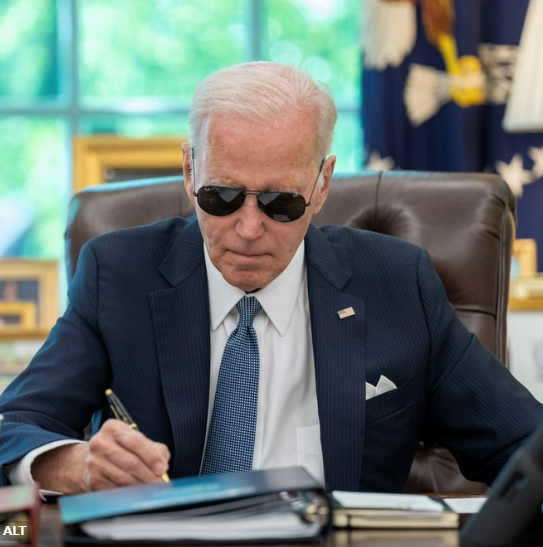
The Old Man? Biden’s Digital Branding
A brand may be considered as a set of associations that are elicited by a product or company. For example, when people see the Apple company logo certain associations come to mind be it “slick design”, “innovation” or “expensive”. The logo of the clothing company H&M elicits a different set of associations including “young”, “affordable”... Continue Reading →
Diplomacy in the Age of Post-Reality
Last week, the Financial Times published an AI generated image of Presidents Putin and Trump kissing. The headline read “Fakes in the Post-Truth Era”. The term post-truth was first coined in 2016 by The Economist Magazine. The Economist was referring to the impact of social media on politics in general, and American politics in particular.... Continue Reading →
Practicing Diplomacy in the Attention Economy
Advertisers argue that attention is a finite resource. According to one study, individuals in the digital society are exposed to 8,000 advertisements a day. Given humans’ limited capacity for information processing, this barrage of advertisements is mostly ignored or forgotten within seconds. This means that if commercial brands are to compete successfully for the attention... Continue Reading →
Monday’s Must Read List
Each week, I publish a list of interesting articles, essays and reports that may be of interest to the digital diplomacy community. This week- Assistive technology is AI's next billion-person market (Axios) China's military and government acquire Nvidia chips despite US ban (Reuters) How psychology is shaping the future of technology (APA) Microsoft topples Apple... Continue Reading →
‘I can be a bastard too’ – ChatGPT’s Real Contribution to Diplomacy
By Giles Strachan and Ilan ManorIn 1952, General Sir Gerard Templer arrived in Malaya. On a visit to a village suspected of supporting communists, he delivered a tough speech. He began ‘You are all bastards’, which his translator converted to ‘His Excellency says that none of your parents were married.’ He continued ‘I can be... Continue Reading →
AI’s Impact on Public Diplomacy
Recently, I was asked by an American diplomat about the benefits of using AI in public diplomacy activities. The Diplomat stated that as AI was a new kind of technology, foreign ministries around the world are anxious to learn about its benefits and shortcomings. This very question was put to me again this week when... Continue Reading →