Traditionally, MFAs (ministries of foreign affairs) have been viewed as organizations that face the world with their back to the nation as they have been responsible for communicating with foreign populations rather than the national citizenry. Thus, unlike ministries of Justice, Homeland Security and Culture, MFAs were never able to foster a domestic constituency putting... Continue Reading →
Preparing for the Next Wave of #Digital Disruption
Several weeks ago I published a post titled "Preparing for the Digital Future". In it, I advocated that MFAs (ministries of foreign affairs) and diplomats should adopt a proactive approach to digital innovation. A proactive approach begins with understating the future technological landscape and taking measures to adapt to this landscape in terms of working... Continue Reading →
Who is Winning the #DigitalDiplomacy Competition over the Salisbury Attack?
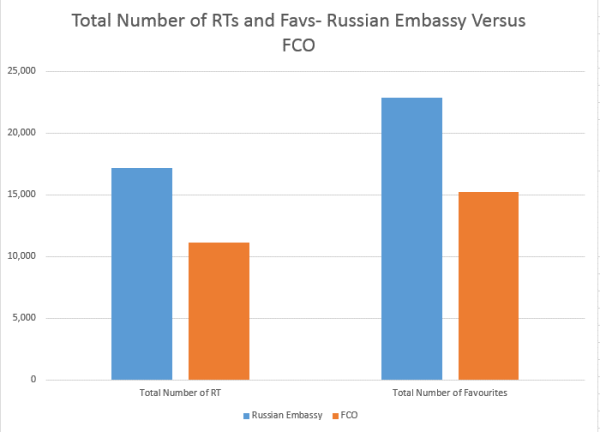
Introduction March 4th saw a nerve agent attack in London that left two people dead. According to the British government, this attack was perpetrated by Russia and constitutes the first nerve agent attack since the end of World War 2. In the hours and days following the attack, the UK government demanded that Russia offer... Continue Reading →
Preparing for the #Digital Future
Prof. Corenliu Bjola of the Oxford Digital Diplomacy Research Group recently concluded that the first stage of digital diplomacy has been a resounding success. Although MFAs are risk averse organizations who value discretion and shun from the limelight, they have successfully migrated to social media and adopted new communication practices that centre on information sharing,... Continue Reading →
How to Re-integrate #Digital into Diplomacy
The Challenge of Digital Diplomacy I often say that like Woody Allen, I was born into the Hebrew faith but later in life converted to pessimism. And indeed, I often have a pessimistic view of digital diplomacy. Yet I recently attended a conference in The Hague that filled me with optimism as more and more... Continue Reading →
From Digital Tactics To Digital Strategies: Practicing Digital Public Diplomacy
Note: This post was co-written with Prof. Corneliu Bjola and first appeared on the USC Center for Public Diplomacy Blog On the 1st and 2nd of February 2017, the Oxford Digital Diplomacy Research Group (DigDiploRox) took part in The Hague Digital Diplomacy Camp. Organized by the Dutch Foreign Ministry, the Camp sought to explore the... Continue Reading →
Should Diplomats Dump Social Media?
During World War 2, the US 101st Airborne Division took part in what would be known as the Battle of the Bulge. Encircled by the German Military, pounded by German artillery and freezing in the winter’s snow, members of 101st were told to hold their positions near the municipality of Bastogne at all costs. By... Continue Reading →
The Digital Disruption of the Two Level Game
In 1988 Robert Putnam conceptualized diplomacy as a two level game. At the first level lies the world of domestic or national politics. At the second level lies the world of international politics. Putnam argued that these two levels continuously collide with one another. For instance, a government's ability to negotiate treaties is limited given... Continue Reading →
The New Network Gatekeepers
Last month I had the pleasure of reviewing Anne Marie Slaughter’s recent book ‘The Chessboard and the Web: Strategies of Connection in a Networked World’. Slaughter’s book encourages academics and policymakers to view the world through two metaphors- that of the chessboard and that of the web. The chessboard metaphor has long since inspired diplomats... Continue Reading →
Do MFAs Really Attract Journalists on Social Media?
Some have traced the origins of digital diplomacy to America's need to counter Al-Qaeda's online narrative and recruitment efforts. As Ellen Hallams has written, already in 2008 it was estimated that the internet was responsible of 80% of recruitment of Jihadi movements. In an attempt to stem the tide of recruitment, and counter Al-Qaeda's narrative... Continue Reading →