AI and the Decline of Reality in Public Diplomacy

By Giles Strachan and Ilan Manor In 1957, the physicist Hugh Everett proposed the Many-worlds Interpretation of reality. Quantum physicists had discovered that fundamental information about particles was unknowable until the particles were observed. At this point, reality re-asserts itself, as in the famous example of Schrödinger’s cat, which is both alive and dead until... Continue Reading →

On DeepSeek, AI and “Post-Time”

Sociologist Manuel Castells famously argued that digital societies relentlessly strive to annihilate time and space. Time is annihilated by the reversal of traditional roles and life experiences. Such is the case with a 30-year-old tech CEO that manages 50-year-old employees or in the view of retirement as a second adolescence, a period of experimentation, of... Continue Reading →

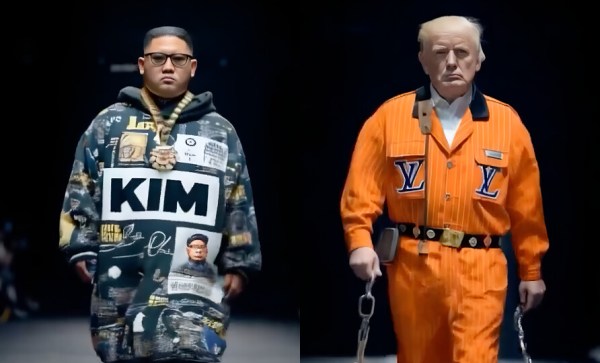
Digital Diplomacy in the Age of Visual AI

Last week I began exploring possible biases in popular (Artificial Intelligence) AI tools. Within the context of AI, “bias” refers to the generation of skewed output or content. AI tools such as ChatGPT or Microsoft’s Copilot may suffer from biases because they were trained on skewed data or because humans with biases and prejudices programmed... Continue Reading →

Digital Diplomacy and The Rights of AI

I recently asked ChatGPT to draft an AI bill of rights. My prompt sought to identify which human rights should be enshrined in the era of AI and generative AI. Since the advent of AI tools such as ChatGPT, individuals and governments have expressed concerns over possible violations of human rights. For instance, many discussions... Continue Reading →

Blog at WordPress.com.

Up ↑