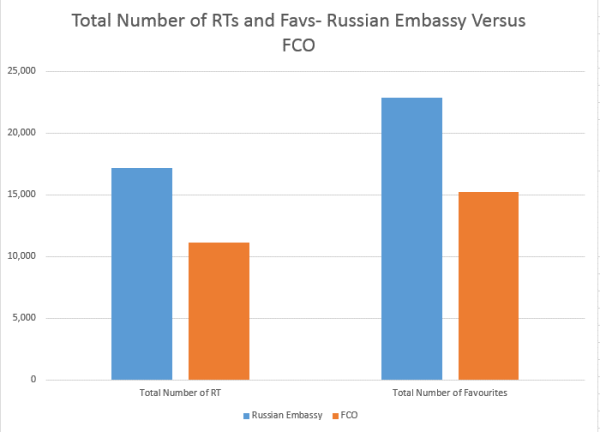
Social media sites are predicated on the concept of reciprocity. When a user follows one of his peers, he expects his peer to respond in kind. The same is true with content engagement. The basis of social media is a social contract where users “Like” and “Share” one another’s content. Given that the ultimate goal... Continue Reading →
What Is The Role of Humor in Digital Diplomacy?
The past two years have seen the growing use of humor and satire in digital diplomacy. Memes, GIFs, pop references and BLOCK CAPITALS have become another instrument in the diplomatic toolkit. One of the earliest successful uses of humor in digital diplomacy occurred during the Crimea Crisis of 2014 when the Canadian Mission to NATO... Continue Reading →
The Growing Importance of Journalists in Diplomacy
In 1986 a new press attaché was appointed to the Israeli Embassy in London. His first task was to establish close working relationships with the editors of Fleet Street, the home all major British newspapers at the time. One of the attaché’s most important meeting was with the journalist writing the editorials for the Times... Continue Reading →
Narrative Alignment as Public Diplomacy Evaluation
Despite the emergence of new technologies the task of evaluating public diplomacy activities remains a daunting one. While scholars and practitioners have offered numerous definitions for the term public diplomacy, they have yet to agree upon a method for measuring the impact of public diplomacy activities. Some have suggested that public diplomacy is a means... Continue Reading →
Who is Winning the #DigitalDiplomacy Competition over the Salisbury Attack?
Introduction March 4th saw a nerve agent attack in London that left two people dead. According to the British government, this attack was perpetrated by Russia and constitutes the first nerve agent attack since the end of World War 2. In the hours and days following the attack, the UK government demanded that Russia offer... Continue Reading →
How to Re-integrate #Digital into Diplomacy
The Challenge of Digital Diplomacy I often say that like Woody Allen, I was born into the Hebrew faith but later in life converted to pessimism. And indeed, I often have a pessimistic view of digital diplomacy. Yet I recently attended a conference in The Hague that filled me with optimism as more and more... Continue Reading →
Evaluating the Dialogic Activities of London Embassies
When one explores the digital diplomacy activities of embassies, he is often surprised by the number of social media accounts embassies now maintain. For instance, embassies in Washington DC are often active on Facebook, Twitter, YouTube and Instagram. The rationale for operating several accounts lies in the understanding that audiences use different social media platform... Continue Reading →
Evaluating Palestine’s Digital Diplomacy Strategy
Note: A version of this post originally appeared on the USC Centre on Public Diplomacy's Blog From a diplomatic perspective, Palestine represents a puzzling case study. On the one hand, Palestine has been recognized as an independent state by the UN General Assembly. On the other hand, it is not a full member state of... Continue Reading →
Why Digital Diplomacy Should be Follower Centric
It's fair to say that the marketing and sales worlds are customer centric. Companies that produce products to be sold to the general public are well attuned to their customers' needs. The process of launching a new product is also customer centric as companies aim to evaluate whether such products will meet the expectations, needs... Continue Reading →
What Ediplomacy can Learn from Ehealth: The Importance of Tailoring Foreign Policy Messages
On Governments and Cyberspace In 1996 John Perry Barlow published the Deceleration of Independence of Cyberspace. In his manifesto, Barlow envisioned cyberspace as a world that is detached from the physical one, a world that would offer its inhabitants a new marketplace of ideas and free speech far from the tyranny of government. For in Barlow's... Continue Reading →