Over the past few weeks, several reports and publications have suggested that social media is entering a new era. The reason being that social media is increasingly becoming less social. During the early days of social media, millions of users would publish updates from their daily lives. Platforms such as Facebook, Twitter and Instagram were... Continue Reading →
Diplomacy in a World without Popular Culture
In recent years diplomats have increasingly employed pop culture in their digital communications. Some nations, for instance, celebrate Star Wars Day on May the 4th tweeting at their followers. Others employ pop culture memes when attempting to shape global public opinion. Countries such as Ukraine, Russia, Israel and the UK have all relied in popular... Continue Reading →
Digital Diplomacy and the Crisis of Diplomatic Credibility
Diplomacy hinges on credibility. As Ben Mor aptly notes, “being perceived as honest and reliable is a necessary condition for obtaining and holding the attention of target audiences, as well as for effective persuasion.” States that are perceived as duplicitous or deceptive struggle to engage with global publics, let alone persuade them to accept their... Continue Reading →
On DeepSeek, AI and “Post-Time”
Sociologist Manuel Castells famously argued that digital societies relentlessly strive to annihilate time and space. Time is annihilated by the reversal of traditional roles and life experiences. Such is the case with a 30-year-old tech CEO that manages 50-year-old employees or in the view of retirement as a second adolescence, a period of experimentation, of... Continue Reading →
Between Measuring Engagement and Measuring Resonance
In the early days of digital diplomacy research, scholars were enamored by “engagement metrics”. Given that digital diplomacy was closely associated with public diplomacy, and seeing as how public diplomacy mandated that diplomats “engage” with foreign populations, counting likes, Re-Tweets and comments seemed fruitful. By measuring “engagement metrics” one could finally measure the outcome of... Continue Reading →
What An AI Fashion Show Tells us About Tech Moguls
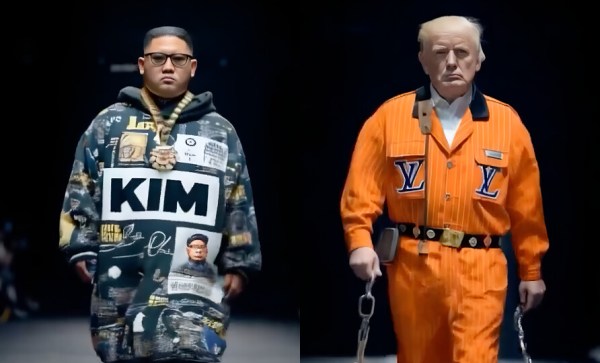
On July 21st, Elon Musk shared a tweet featuring an AI-generated fashion show of world leaders. The AI fashion show soon went viral, given the satirical depiction of world leaders and due to its realistic appearance. Although the fashion show was clearly generated by AI, the video did demonstrate the extent to which this technology... Continue Reading →
Digital Diplomacy’s Next Challenge: Reality in the Age of Visual AI
The 'middle-ground' is as important to diplomacy as it is to society. It is in the middle-ground where diplomats can meet and resolve differences. It is in the middle-ground where different citizens, with different opinions, can meet to discuss issues of shared concern. It is therefore in the middle-ground where action may be initiated. In... Continue Reading →
Monday’s Digital Diplomacy Must Read List
Each week, I publish a list of interesting articles, essays and reports that may be of interest to the digital diplomacy community. This week- Iran-linked Website Leaks Secret Israeli Data (Haaretz Newspaper) The Technology Powering Taylor Swift, Netflix and the Sphere (Bloomberg) AI scientist : "We will expand intelligence a millionfold by 2045"| (The Guardian)... Continue Reading →
The Role of Pop Culture and Humor in Ukraine’s Digital Diplomacy
Acknowledgement: This blog post is part of a paper that I presented at a recent workshop on humor and global politics at the University of Sheffield. I am thankful to all participants and to the organizer, Dr. Dmitry Chernobrov. Since the beginning of the Russia-Ukraine War, Ukraine has used social media to rally online and... Continue Reading →
How to Practice Digital Diplomacy in a World Devoid of Context?
Every few years, a new word seems to dominate societal discourses. In recent years the dominant word was “narrative”. New pundits depicted politics as a clash of narratives, diplomacy was understood as the practice of constructing appealing narratives, fake news and conspiracy theories were viewed as disruptive narratives that undermine trust in national institutions while... Continue Reading →