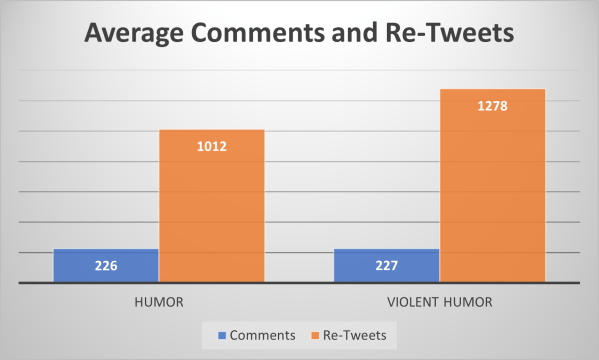
Acknowledgement: This blog post is part of a paper that I presented at a recent workshop on humor and global politics at the University of Sheffield. I am thankful to all participants and to the organizer, Dr. Dmitry Chernobrov. Since the beginning of the Russia-Ukraine War, Ukraine has used social media to rally online and... Continue Reading →
From “Wolf Warrior Diplomacy” To “Lone Wolf Diplomacy: The New Logic of Digital Public Diplomacy
At a recent international conference I was asked- how does relationality help understand public diplomacy in today’s world? To answer this question, we must first characterize todays’ world. It is a world that is prone to crises, a world that is marked by wars, it is a complex world as a crisis in one world... Continue Reading →
Practicing Diplomacy in the Attention Economy
Advertisers argue that attention is a finite resource. According to one study, individuals in the digital society are exposed to 8,000 advertisements a day. Given humans’ limited capacity for information processing, this barrage of advertisements is mostly ignored or forgotten within seconds. This means that if commercial brands are to compete successfully for the attention... Continue Reading →
Is Humor an Effective Digital Diplomacy Strategy?
Since the beginning of the Russia-Ukraine War, Ukraine has relied on its social media channels to obtain foreign policy goals. Through its use of Twitter, Facebook and Telegram Ukraine has crowdfunded humanitarian aid, raised funds for the purchasing of weapons, negotiated agreements with tech magnets such as Elon Musk, managed a cyber army and obtained... Continue Reading →
The Power of Memes: Analyzing War-Time Messaging
The Russia-Ukraine war has witnessed the emergence of new social media practices. The Ukrainian government, for one, has been using social media to crowdfund its armed forces and create an IT army charged with cyber-attacks against Russia. Yet the war has also seen the growing use of memes. Ukrainian diplomats and government ministries have published... Continue Reading →
This is Russia: Satire and Attribution in the Russia Ukraine War
On Thursday, July 28th, a video supposedly touting the benefits of moving to Russia began to gain traction on Telegram. Titled “This is Russia”, the video identifies the many benefits of moving to Russia at this moment in time. For instance, unlike Europe or America, Russia currently boasts cheap gas, fertile soil, low-priced electricity, delicious... Continue Reading →
Israel Escalates Twitter Feud with Iran
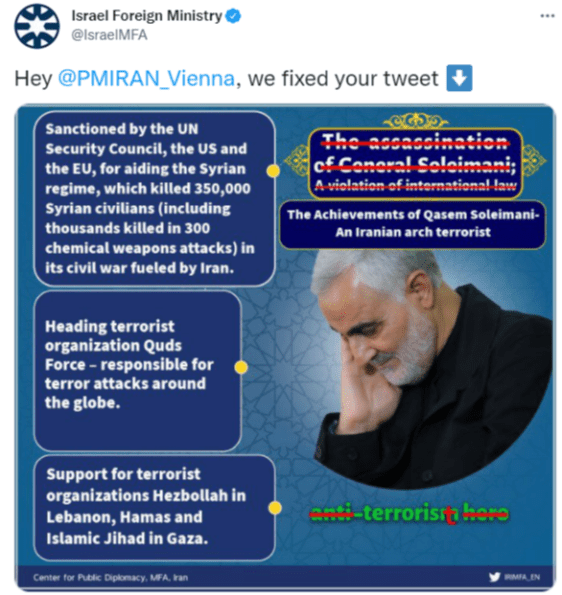
Recent years have seen the mass migration of MFAs (foreign ministries) and diplomats to social media sites. It is now estimated that 95% of UN Member States have established some form of social media presence. Iran is no exception. Although Twitter, Facebook and other platforms cannot be accessed from Iran, senior Iranian policy makers can... Continue Reading →
Monday’s Must Read List
Each week, I publish a list of interesting articles, essays and reports that may be of interest to the digital diplomacy community. This week- Technology Without Transparency Lacks Trust (Forbes)Start-Ups Aim Beyond Earth (The New York Times)Carbon removal hype is becoming a dangerous distraction (MIT Technology Review)The dangerous appeal of technology-driven futures (MIT Technology Review)Pentagon... Continue Reading →
What Is The Role of Humor in Digital Diplomacy?
The past two years have seen the growing use of humor and satire in digital diplomacy. Memes, GIFs, pop references and BLOCK CAPITALS have become another instrument in the diplomatic toolkit. One of the earliest successful uses of humor in digital diplomacy occurred during the Crimea Crisis of 2014 when the Canadian Mission to NATO... Continue Reading →