How Different AIs Frame America’s Support for Ukraine

In a previous blog post, I sought to examine a possible Country-of-Origin Effect in Generative AI applications. In the late 1990’s nation branding scholars began exploring the Country-of-Origin Effect.  Rooted in marketing research, the Country-of-Origin Effect suggested that consumer labels impact individuals’ willingness to buy products. For example, the “Made in China” label was once... Continue Reading →

National Image Management in the Digital Age

Scholars have long since asserted that nations have images. Although scholars differ on what these images consist of, and whether these images can be managed, they nonetheless agree that like consumer brands, nations elicit cognitive associations in people's minds. Upon hearing the name “Germany”, for example, certain associations may spring to people’s minds be it... Continue Reading →

Digital Diplomacy in the Age of Visual AI

Last week I began exploring possible biases in popular (Artificial Intelligence) AI tools. Within the context of AI, “bias” refers to the generation of skewed output or content. AI tools such as ChatGPT or Microsoft’s Copilot may suffer from biases because they were trained on skewed data or because humans with biases and prejudices programmed... Continue Reading →

What Role Does OSINT Play in Ukraine Crisis?

One of the defining characteristics of the Russia-Ukraine War has been the emergence of OSINT, or open-source intelligence. The term itself is not new. Several years ago, the British Foreign Office created an ‘open-source intelligence unit’ tasked with gathering information from online sources. This information would then be used by British diplomats to obtain foreign... Continue Reading →

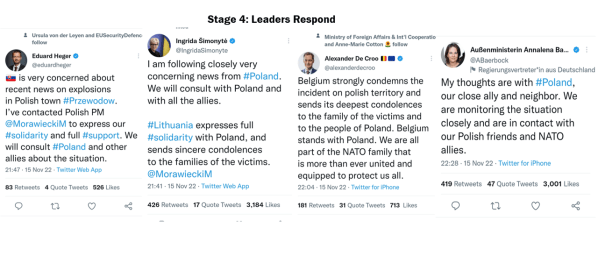
Real Time Diplomacy During the Russia Ukraine War

In 2012, Philip Seib published the book “Real-Time Diplomacy”. Seib argued that digital technologies in general, and social media in particular, had expedited the practice of diplomacy. The reason for this was the acceleration in news coverage made possible thanks to the emergence of citizen journalism. Seib viewed social media as a competitive arena in... Continue Reading →

Blog at WordPress.com.

Up ↑