AI and the Decline of Reality in Public Diplomacy

By Giles Strachan and Ilan Manor In 1957, the physicist Hugh Everett proposed the Many-worlds Interpretation of reality. Quantum physicists had discovered that fundamental information about particles was unknowable until the particles were observed. At this point, reality re-asserts itself, as in the famous example of Schrödinger’s cat, which is both alive and dead until... Continue Reading →

A China-First Approach to Digital Policy Making

The digital world is presently marked by an exceptional contradiction. On the one hand, a digital and interconnected world necessitates various forms of global governance. Global agreements, institutions and frameworks are what enable the free flow of information, capital, and resources across borders. Moreover, global institutions are essential for crisis management in an interconnected world... Continue Reading →

The Future of Virtual Negotiations

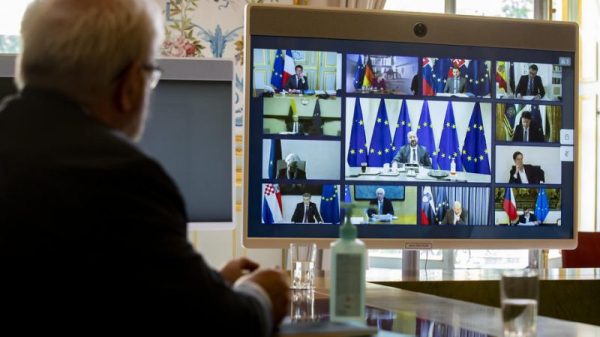
Negotiations have been a cornerstone of diplomacy since its very inception. Historically, Ambassadors to foreign courts held the title of “Extraordinary and Plenipotentiary”. This grandiose title meant that Ambassadors had the authority negotiate and sign treaties on their nation’s behalf. This was necessary due to the technology of the days- letter sent by horseback that... Continue Reading →

Revisiting Putnam’s two-level game theory in the digital age: Domestic digital diplomacy and the Iran nuclear deal

Note: This post was originally published on the blog of the Cambridge Review of International Affairs and was co-authored with Corneliu Bjola.   In 1988, Robert Putnam conceptualised diplomatic negotiations as a two-level game in which national and international politics often collide. In this framework, constituents and interest groups (labour unions, activist groups, etc.) pursue their interests at... Continue Reading →

Blog at WordPress.com.

Up ↑