The term ‘dual-use technology’ is used to denote technologies that may have both civil and military applications. Such is the case with Global Positioning Systems or GPS which are used to help track and identify targets for missile attacks and are also used to help drivers navigate in cars. Another example is drones which may... Continue Reading →
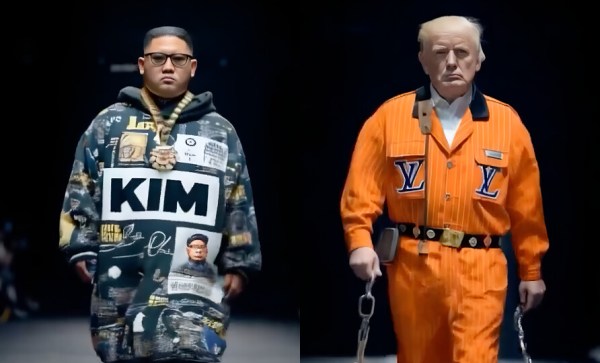
Digital Diplomacy’s Next Challenge: Reality in the Age of Visual AI
The 'middle-ground' is as important to diplomacy as it is to society. It is in the middle-ground where diplomats can meet and resolve differences. It is in the middle-ground where different citizens, with different opinions, can meet to discuss issues of shared concern. It is therefore in the middle-ground where action may be initiated. In... Continue Reading →
The Role of Pop Culture and Humor in Ukraine’s Digital Diplomacy
Acknowledgement: This blog post is part of a paper that I presented at a recent workshop on humor and global politics at the University of Sheffield. I am thankful to all participants and to the organizer, Dr. Dmitry Chernobrov. Since the beginning of the Russia-Ukraine War, Ukraine has used social media to rally online and... Continue Reading →
Digital Diplomacy in the Age of Visual AI
Last week I began exploring possible biases in popular (Artificial Intelligence) AI tools. Within the context of AI, “bias” refers to the generation of skewed output or content. AI tools such as ChatGPT or Microsoft’s Copilot may suffer from biases because they were trained on skewed data or because humans with biases and prejudices programmed... Continue Reading →
Through the Lookingglass: Digital Diplomacy and AI Biases
The launch of ChatGPT, a Generative AI tool developed by the tech company Open AI, spurred a global discussion on the risks and benefits of artificial intelligence. Notably, ChatGPT is referred to as an “AI” tool, yet it is not really an example of Artificial Intelligence. ChatGPT does not think. ChatGPT does act. ChatGPT has... Continue Reading →
How to Practice Digital Diplomacy in a World Devoid of Context?
Every few years, a new word seems to dominate societal discourses. In recent years the dominant word was “narrative”. New pundits depicted politics as a clash of narratives, diplomacy was understood as the practice of constructing appealing narratives, fake news and conspiracy theories were viewed as disruptive narratives that undermine trust in national institutions while... Continue Reading →
Digital Diplomacy and the Beautification of War
Susan Sontag famously argued that photography was violent in nature. Photographs, according to Sontag, are violent as they fracture linear time. Each photograph is like an atom torn from linear time and forever frozen. The more photographs one takes, the more he or she rips linear time into fragments that can longer form a coherent... Continue Reading →
The Drone Wars: How Ukrainian Drones Are Reshaping War Coverage
In the early 1990s, scholars coined the term “The CNN Effect” referencing the impact that CNN had on American foreign policy. Scholars asserted that issues which rose to prominence in CNN were soon addressed by American policy makers. In this way CNN shaped the priorities of the White House and the State Department. CNN was... Continue Reading →
Is Digital Diplomacy Disruptive?
In a classic episode of the television show “Yes Prime Minister”, the Civil Servant Humphrey Appleby explains the logic of British diplomacy saying: “The Foreign Office is pro-Europe because it’s really anti-Europe. The civil service was united in its desire to make sure that the Common Market didn’t work. That’s why we went into it.... Continue Reading →
Monday’s Must Read List
Each week, I publish a list of interesting articles, essays and reports that may be of interest to the digital diplomacy community. This week- White House will fight deepfakes with cryptographic verification (Cyber News) Russia using Elon Musk’s Starlink on Ukraine front line, says Kyiv (Financial Times) France uncovers a vast Russian disinformation campaign in... Continue Reading →