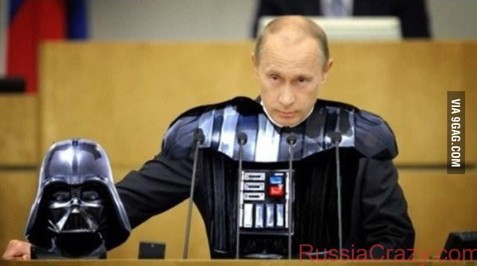
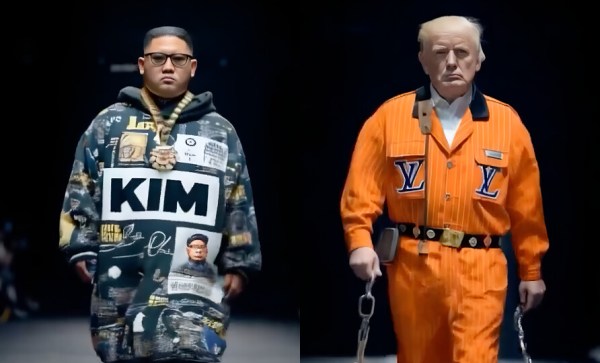
According to Roland Barthes, texts can never be wholly original. Every text, or cultural product, references, borrows or speaks to a prior one. This is especially true of visuals such as films, adverts and posters that “borrow” from other texts in terms of style, color, composition, angle and even actors being depicted. A popular example... Continue Reading →
The Factors that have Shaped Digital Diplomacy
2026 marks a decade since the publication of the first book on digital diplomacy. Since then, the digital diplomacy research corpus has extensively grown and now includes hundreds of books, book chapters, academic essays and journal articles. A review of this entire corpus suggests that the practice of digital diplomacy has been shaped and reshaped... Continue Reading →
A New Roadmap for the Study of Digital Diplomacy
Throughout the 1980s, historian Eric Hobsbawm delivered a series of lectures examining the work of historians and the state of social history, his chosen discipline. Hobsbawm’s lectures coincided with tectonic shifts in global politics and rapid technological advancements as this decade witnessed the end of the Cold War, the false promise of neo-liberalism championed by... Continue Reading →
The Long Road Ahead: Assessing the Impact of Ukraine’s Innovative Digital Tactics
Since the onset of the 2022 Russia-Ukraine War, the government of Ukraine has relied heavily on social media to narrate war related events, shape media coverage of the war, rally online support for Ukraine’s war effort and delegitimize Russia’s violent invasion. In a recent journal article, Moran Yarchi and I sought to examine Ukraine’s innovative... Continue Reading →
Tactical Diplomacy: The Next Stage in Diplomacy’s Digitalization
Digital diplomacy is now entering its third decade. Having emerged circa 2008 with the establishment of virtual embassies in virtual worlds, digital diplomacy now includes the use of diverse technologies ranging from social media to messaging applications, blogs, smartphone applications, big data analysis, coding, websites, and even crowdfunding, as recently used by Ukraine. For policymakers,... Continue Reading →
Can Digital Diplomacy Survive Slop, Rage Bait & AI?
Over the past few months, two social media trends have generated news headlines. The first trend suggests that social media is increasingly becoming less social. Across various age groups, individuals are posting less content online. When users do post content, it is usually disseminated among small groups of friends via WhatsApp groups or Instagram stories.... Continue Reading →
Digital Diplomacy in an Asocial World
Over the past few weeks, several reports and publications have suggested that social media is entering a new era. The reason being that social media is increasingly becoming less social. During the early days of social media, millions of users would publish updates from their daily lives. Platforms such as Facebook, Twitter and Instagram were... Continue Reading →
National Image Management in the Digital Age
Scholars have long since asserted that nations have images. Although scholars differ on what these images consist of, and whether these images can be managed, they nonetheless agree that like consumer brands, nations elicit cognitive associations in people's minds. Upon hearing the name “Germany”, for example, certain associations may spring to people’s minds be it... Continue Reading →
Diplomacy in a World without Popular Culture
In recent years diplomats have increasingly employed pop culture in their digital communications. Some nations, for instance, celebrate Star Wars Day on May the 4th tweeting at their followers. Others employ pop culture memes when attempting to shape global public opinion. Countries such as Ukraine, Russia, Israel and the UK have all relied in popular... Continue Reading →
AI and the Decline of Reality in Public Diplomacy
By Giles Strachan and Ilan Manor In 1957, the physicist Hugh Everett proposed the Many-worlds Interpretation of reality. Quantum physicists had discovered that fundamental information about particles was unknowable until the particles were observed. At this point, reality re-asserts itself, as in the famous example of Schrödinger’s cat, which is both alive and dead until... Continue Reading →