For much of the 20th century, the British Royal Family captured the world’s attention. Thanks to Prince Phillip, Queen Elizabeth’s 1953 Coronation attracted an estimated 227 million viewers from across the world, a record at that time. Princess Diana’s wedding was viewed by 750 million people, while her funeral was viewed by 2.5 billion viewers.... Continue Reading →
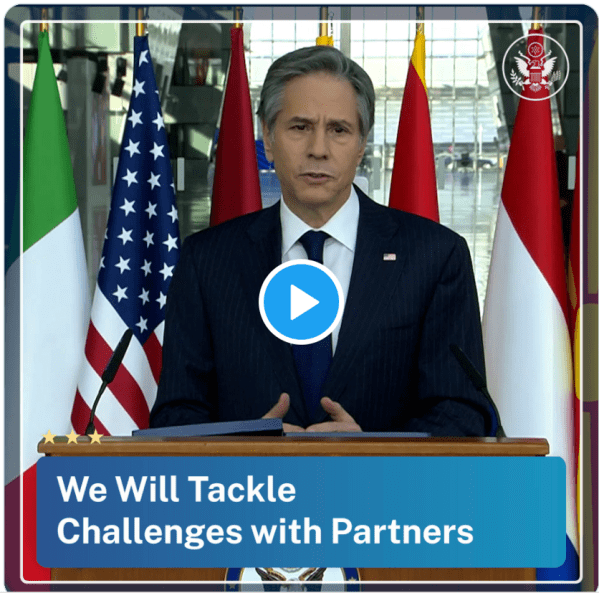
America’s New Rhetoric of Alliances
In a recent article, Guy Golan and I argued that the 21st century will be governed by three giants: The US and China, thanks to their military and financial power, and India thanks to its status as the world’s telecommunications hub. In the world of giants, no single nation will be able to later the... Continue Reading →
Monday’s #MustRead List
Each week, I publish a list of interesting articles, essays and reports that may be of interest to the digital diplomacy community. This week- Facebook, Twitter must do more to stop COVID-19 anti-vaxxers, U.S. states say (Reuters)Chinese Hackers Used Facebook To Target Uyghurs With Powerful iPhone And Android Spyware (Forbes)Coronavirus: Commission proposes a Digital Green... Continue Reading →
Wikipedia is a Digital Diplomacy Priority
By the end of the 18th century, the Palace of Versailles was no longer home to France's greatest thinkers. These had migrated to Paris where they attended the city's salons. French salons were never as ostentatious as those of Versailles, nor as rigid and overburdened with ceremony. The salons were simple parlor gatherings hosted by... Continue Reading →
Sputnik Tweets Its Way to Legitimacy
Now is the age of nostalgia. Throughout the world we are witnessing a yearning desire to return to the world of yesteryear. The UK seeks to return to the Empire’s last stand in WW2. In Eastern Europe, populist leaders promise to resurrect a mythical past while in the West, there are those who long for... Continue Reading →
How MFAs Celebrated International Women’s Day Online
Comment: This post about International Women’s Day was written from a man’s perspective. It is thus highly likely that the analysis in this post would benefit from the insight of women. I encourage women readers to comment on this post and offer their own analysis of the tweets analyzed below. This insight will be integrated... Continue Reading →
UAE Ambassador to Israel Makes Positive #Digital Impression
On the 17th of February 2021, the UAE’s Ambassador to Israel took to Twitter for the first time. In a tweet published in both English, Hebrew and Arabic, the Ambassador promised to strengthen ties between Israel and Emirates by ‘fostering peace, understanding and prosperity among our people and across the region’. Within 48 hours of... Continue Reading →
Monday’s Must Read List
Each week, I publish a list of interesting articles, essays and reports that may be of interest to the digital diplomacy community. This week- The biggest technology failures of 2020 (MIT Technology Review)Misinformation dropped dramatically a week after Twitter bans Trump and some allies (The Washington Post)Inside a Pro-Huawei Influence Campaign (The New York Times)Facial... Continue Reading →
Biden’s 100 First Tweets in Office
The term ‘First 100 days’ in office was coined by US President Franklin D Roosevelt and referred to a windfall of legislation that Presidents promote during the earliest days of their administration. In Roosevelt’s case, the first 100 days were used to introduce 15 bills all meant to alleviate the Great Depression through ‘New Deal’... Continue Reading →
Social Media & Life in the Risk Society
In his book ‘Risk Society’, German Sociologist Ulrich Beck proposes a theory of reflexive modernity. Unlike other sociologists, Beck is far removed from the utopian vision of modernization as the continuous progress of industry and human thought. Namely he is concerned with the role of scientific knowledge in society. In Beck’s mind, scientific and industrial... Continue Reading →