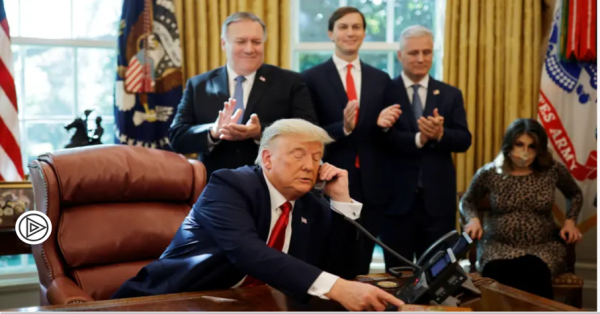
Two week ago, I analyzed the speed with which world leaders employed Twitter to congratulate Joe Biden on his election. Indeed, within two hours of CNN’s projection of a Biden victory, more than twenty world leaders tweeted at the President elect. These included the leaders of Germany, Canada, the UK, Norway, France, Sweden and the... Continue Reading →
Monday’s #MustRead List
Each week, I publish a list of interesting articles, essays and reports that may be of interest to the digital diplomacy community. This week- Tech giants join with governments to fight Covid misinformation (The Guardian)Alibaba sets 'Single Day' sales record (The Wall Street Journal)Coronavirus to dominate Saudi-hosted virtual G20 summit (The Japan Times) Microsoft says... Continue Reading →
Nostalgia’s Role in Digital Diplomacy
On Nostalgia Nostalgia is a basic human emotion. Strangely, it is a combination of two contradictory emotions- a sweet longing for the past and a pain emanating from the fact that the past can never be fully experienced again. Throughout history, nostalgia has served as a social and political tool, a means of gathering support... Continue Reading →
Lightning Fast- How Worlds Leader Tweeted at Biden
On November 7th, 2020, CNN projected that Joe Biden had won the US elections garnering 273 electoral votes. Following the projection, a CNN pundit wondered if world leaders would rush to congratulate Biden given that President Trump was unlikely to accept defeat. Moreover, while Biden was the projected winner, he was not yet the official... Continue Reading →
Monday’s #MustRead List
Each week, I publish a list of interesting articles, essays and reports that may be of interest to the digital diplomacy community. This week- Budapest Times Interviews Irish Ambassador on Use of Digital Diplomacy During Covid (The Budapest Times)Biden Win Would be Good for Global Tech (ITPro)Global Leaders Congratulate Joe Biden on His Victory (CNN)Online... Continue Reading →
Russia’s Digital Kiev Offensive
World War 2 (WW2) features prominently on social media. Dates of important battles are commemorated by many European nations. Foreign ministries (MFAs) also memorialize brutal occupations and celebrate eventual liberations. For some, WW2 is an integral part of national narratives, as is the case with Israel and Poland. While the former claims to have been... Continue Reading →
The New Aesthetics of Leaders’ Images
Images of leaders have always played an important role in politics. Images can capture the supremacy of a king, the daring of a field marshal or the cunning of a shrewd politician. Indeed, Napoleon’s portrait, sitting upon a fiery steed and pointing to the alps, captures his audacity and ambitions. Yet images of world leaders... Continue Reading →
When Auschwitz Goes Digital
Several days ago I reached an important decision- I began following the Auschwitz Memorial on Twitter. That Auschwitz was recommended by the Twitter algorithm is not surprising as much of my digital activities date back to WW2. I often Google battles and skirmishes, view lists of WW2 facts or read Wikipedia pages of prominent Nazis.... Continue Reading →
Re-Framing China: The Corona Virus and National Images
The Corona pandemic is likely to influence the images of many nations. This is because billions of individuals are stranded at home comparing nations' responses to the virus. Moreover, news organizations throughout the world are constantly reporting on the policies of other nations. Finally, periods of acute crisis can challenge misconceptions and worldviews. Indeed, it... Continue Reading →
What Embassies Tweet About During COVID-19
Diplomacy is not immune to the Covid-19 virus. For the first time since the 17th century, diplomats and world leaders no longer meet face-to-face to address shared challenges or resolve shared grievances. The UN is closed, the WTO is out of session and G7 meetings take place through video conference calls. Embassies, traditionally tasked with... Continue Reading →