In the late 1980’s Daniel Dayan and Elihu Katz developed their theory of Media Events. They argued that certain high-profiled Media Events may have prolonged societal impacts. The two scholars were influenced by the historic visit of Egyptian President Anwar Sadat to Israel in 1977. Dayan and Katz argued that this Media Event altered the... Continue Reading →
Are Consular Tweets a New Form of Crisis Signaling?
When scholars and pundits discuss digital diplomacy, they tend to equate this term with social media activities. Indeed, the majority of digital diplomacy studies have focused on how and why social media is used by foreign ministries (MFAs), embassies, Ambassadors and International Organisations. Studies have explored the numerous ways in which states use sites such... Continue Reading →
“Follow-mies”- Is Diplomatic Reciprocity Binding in Digital Diplomacy?
Social media sites are predicated on the concept of reciprocity. When a user follows one of his peers, he expects his peer to respond in kind. The same is true with content engagement. The basis of social media is a social contract where users “Like” and “Share” one another’s content. Given that the ultimate goal... Continue Reading →
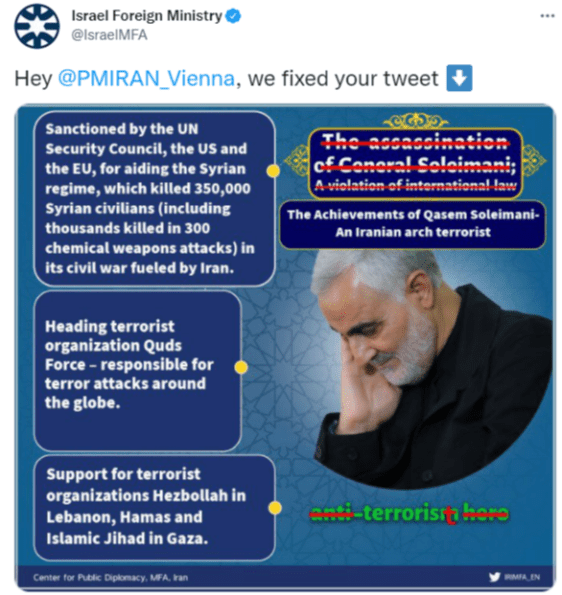
Israel Escalates Twitter Feud with Iran
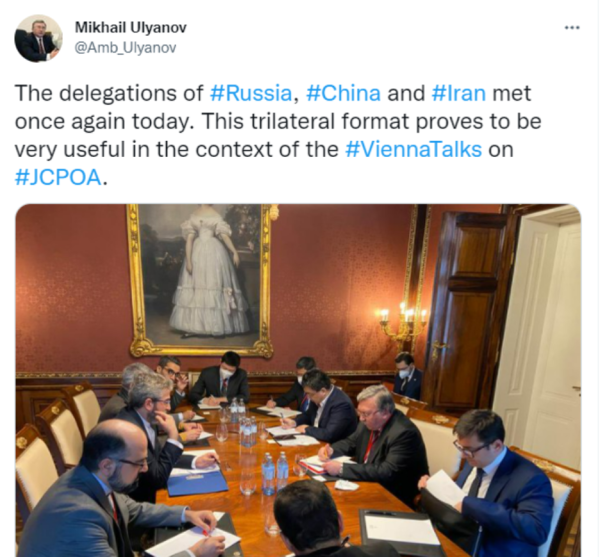
Recent years have seen the mass migration of MFAs (foreign ministries) and diplomats to social media sites. It is now estimated that 95% of UN Member States have established some form of social media presence. Iran is no exception. Although Twitter, Facebook and other platforms cannot be accessed from Iran, senior Iranian policy makers can... Continue Reading →
Walking a Tightrope: How Ambassadors Meet the Demands of the Digital Society
To understand digital diplomacy, one must first understand the digital society. The reason being that diplomacy is a social institution and diplomats are social beings. Processes that affect society as a whole affect diplomats and it is through diplomats that such processes permeate into MFAs giving rise to new norms, values and working routines. Sociologists... Continue Reading →
Monday’s Must Read List
Each week, I publish a list of interesting articles, essays and reports that may be of interest to the digital diplomacy community. This week- How Israeli Spy-tech Became Dictators' Weapon of Choice (Haaretz Newspaper)The opportunities that geospatial technology presents for India Inc. (The Economic Times)We don’t yet have the technology needed to reach net zero... Continue Reading →
The End of the Charm Offensive? Iran on Social Media
The 2013 election of Hassan Rouhani as President of Iran was greeted with a global sigh of relief. Here was a clear indication that Iran was willing to rejoin the international community even at the cost of halting its nuclear weapons program. From the eve of his election, Rouhani was positively depicted in Western media... Continue Reading →
Is Digital Diplomacy A form of Liquid Diplomacy?
In the year 2000, Zygmunt Bauman introduced his theory of Liquid Modernity. Bauman argues that modernity (i.e., 18th-20th centuries) was characterized by solid social institutions such as nation states, with clearly marked borders, social classes, characterized by limited mobility, and fixed identities built around nations, religion or ethnicity. Late modernity, or the 21st century, is... Continue Reading →
Monday’s Must Read List
Each week, I publish a list of interesting articles, essays and reports that may be of interest to the digital diplomacy community. This week- Israel escalates surveillance of Palestinians with facial recognition program in West Bank (The Independent)When Finnish researchers took on the Twitter trolls (Nature)North American companies rush to add robots as demand surges... Continue Reading →
Monday’s Must Read List
Each week, I publish a list of interesting articles, essays and reports that may be of interest to the digital diplomacy community. This week- Hey, Facebook, I Made a Metaverse 27 Years Ago (The Atlantic)The Technopolar Moment (Foreign Affairs)Analysis: Can Hybrid Diplomacy Work? (Oxford Institute for the Study of Diplomacy)Biden’s new cyber czar is pushing... Continue Reading →