This week I was invited to a Q&A session with university students in Chile. Many questions were asked, ranging from the role of Ambassadors in the digital age to the live-streaming of UN deliberations. Below are questions and answers that may prove valuable to scholars and practitioners of digital diplomacy. Q: Has digitalization led to... Continue Reading →
Monday’s Must Read List
Each week, I publish a list of interesting articles, essays and reports that may be of interest to the digital diplomacy community. This week- Twitter Nigeria: Users struggle to access site after government suspension (BBC News)Gaza conflict: Instagram changes algorithm after alleged bias (BBC News)Superspreaders of Malign and Subversive Information on COVID-19 (Rand)TikTok gave itself... Continue Reading →
Monday’s Must Read List
Each week, I publish a list of interesting articles, essays and reports that may be of interest to the digital diplomacy community. This week- Drones deliver blood to prevent maternal death in Botswana (Un News)France’s plan to rein in Big Tech (Politico)Voters already love technology. They don’t need anti-China messaging to get there (Vox)AI is... Continue Reading →
Monday’s Must Read List
Each week, I publish a list of interesting articles, essays and reports that may be of interest to the digital diplomacy community. This week- Chips and blocks—how TSMC mastered the geopolitics of chipmaking (The Economist)There Are Spying Eyes Everywhere—and Now They Share a Brain (Wired)India police visit Twitter offices after tweet row (The Financial Times)‘Rogue’... Continue Reading →
How Chinese Ambassadors Use Twitter
In my 2019 book, The Digitalization of Public Diplomacy, I dedicated a chapter to Ambassadors’ use of Twitter. My assertion was that Ambassadors may be viewed by digital publics as trusted sources of information. This is because Ambassadors have privileged access to information, they have access to the highest echelons of power, they are viewed... Continue Reading →
License to Tweet: When the Chief of MI6 Goes Online
License to Tweet: When the Chief of MI6 Goes Online In November of 2013, the Chief of MI6, the UK’s foreign intelligence service, joined Twitter. On the one hand, one could argue that the willingness of senior spies to join social networks is an important step forward in government transparency and accountability. Indeed, one could... Continue Reading →
Trump is back. Sort Of.
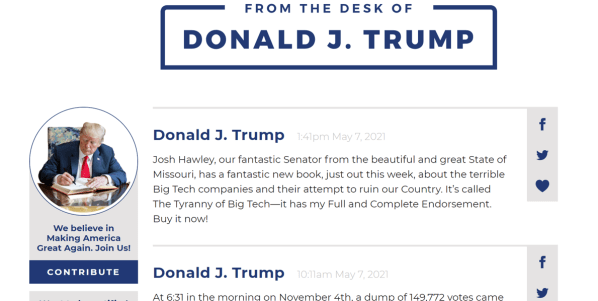
Last week, Facebook’s oversight board ruled that the company was right to suspend former President Donald Trump. According to the oversight board, Trump used his account to praise violent rioters that stormed Congress on January 6th. However, the oversight board did call on Facebook to re-examine its decision to ban Trump ‘indefinitely’. Notably, Facebook’s oversight... Continue Reading →
How World Leaders Framed the Climate Crisis
Traditionally, diplomats and world leaders have turned to communication channels in order to frame crises. Specifically, leaders and diplomats aim to identify the cause of a crisis, or the underlying problem that has precipitated a crisis between states. For instance, following the 9/11 terror attacks, President Bush announced that terror groups had declared war on... Continue Reading →
Nostalgia in British Digital Diplomacy
In a recent ISA conference panel, I argued that now is the age of nostalgia. Throughout the world we are witnessing an insatiable longing for the past. In the post-Brexit haze, the UK craves the influence and power of its defunct empire; in Turkey neo-Ottoman sentiments have transformed a President into a Sultan; Americas have... Continue Reading →
Monday’s Must Read List
Each week, I publish a list of interesting articles, essays and reports that may be of interest to the digital diplomacy community. This week- MEPs call for European AI rules to ban biometric surveillance in public (TechCrunch)Who Would Volunteer to Fact-Check Twitter? (The Atlantic)Twitter begins analyzing harmful impacts of its algorithms (The Verge)Can CLUBHOUSE Keep... Continue Reading →