In recent years diplomats have increasingly employed pop culture in their digital communications. Some nations, for instance, celebrate Star Wars Day on May the 4th tweeting at their followers. Others employ pop culture memes when attempting to shape global public opinion. Countries such as Ukraine, Russia, Israel and the UK have all relied in popular... Continue Reading →
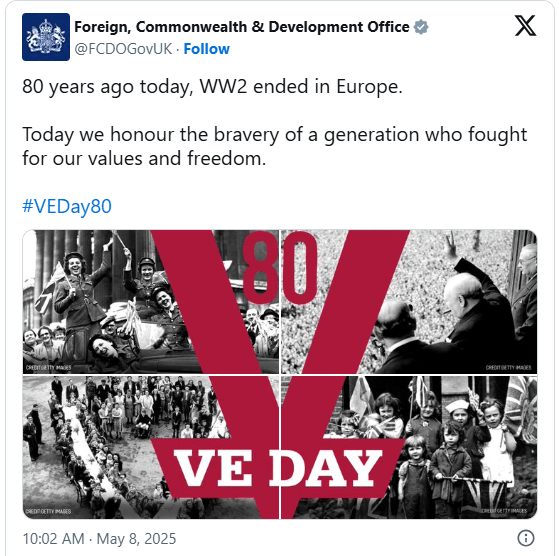
Digital Diplomacy and the Retelling of World War II
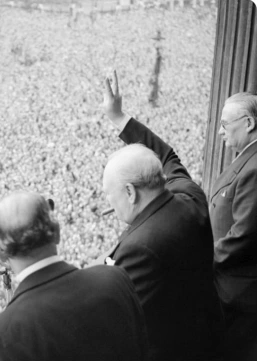
On May 8th, the world celebrated the 80th anniversary of the end of World War II. It was, for many, a solemn day. The end of World War II was meant to usher in a new dawn of stability and harmony amongst the nations of the world. The struggle to defeat Nazi Germany symbolized victory... Continue Reading →
Leveraging AI in Diplomacy: LLMs As Opinion Aggregators
The rapid development of AI tools has caused a frenzy in foreign ministries (MFAs) as diplomats across the world are trying to identify the risks and benefits brought about by artificial intelligence tools such as ChatGPT, Mistral, Claude, Gemini and DeepSeek. Diplomats’ attempts to grapple with the professional and societal ramifications of AI has taken... Continue Reading →
The Return of the Website? Lessons from Ukraine’s Digital Diplomacy
For nearly a decade, the term digital diplomacy has been closely associated with social media. In many MFAs, digital diplomacy units are actually tasked with managing social media empires that span hundreds of accounts across numerous platforms. Although social media has remained central to the practice of digital diplomacy, its use has changed over the... Continue Reading →
From “Wolf Warrior Diplomacy” To “Lone Wolf Diplomacy: The New Logic of Digital Public Diplomacy
At a recent international conference I was asked- how does relationality help understand public diplomacy in today’s world? To answer this question, we must first characterize todays’ world. It is a world that is prone to crises, a world that is marked by wars, it is a complex world as a crisis in one world... Continue Reading →
Digital Diplomacy and the Beautification of War
Susan Sontag famously argued that photography was violent in nature. Photographs, according to Sontag, are violent as they fracture linear time. Each photograph is like an atom torn from linear time and forever frozen. The more photographs one takes, the more he or she rips linear time into fragments that can longer form a coherent... Continue Reading →
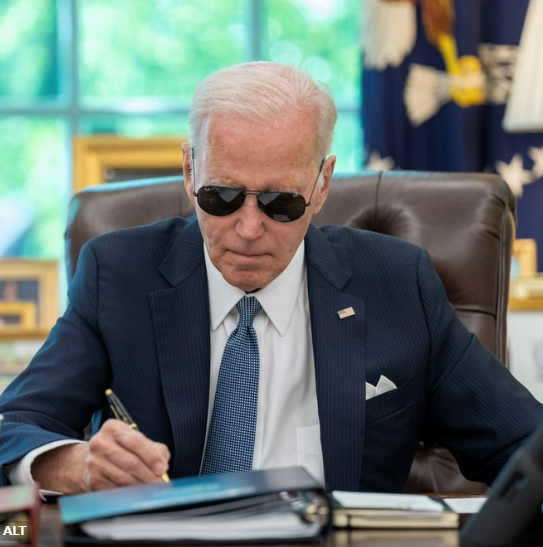
The Old Man? Biden’s Digital Branding
A brand may be considered as a set of associations that are elicited by a product or company. For example, when people see the Apple company logo certain associations come to mind be it “slick design”, “innovation” or “expensive”. The logo of the clothing company H&M elicits a different set of associations including “young”, “affordable”... Continue Reading →
Practicing Diplomacy in the Attention Economy
Advertisers argue that attention is a finite resource. According to one study, individuals in the digital society are exposed to 8,000 advertisements a day. Given humans’ limited capacity for information processing, this barrage of advertisements is mostly ignored or forgotten within seconds. This means that if commercial brands are to compete successfully for the attention... Continue Reading →
What’s in an Image? Ukraine’s Visual Narration
The advent of social media has transformed diplomats into ‘visual narrators’. By visual narrators I refer to diplomats’ growing ability to use visuals to deliver complex foreign policy messages. Indeed, over the past few years ,diplomats have learned to speak the language of visuals or what Roland Barthes called “The Rhetoric of the Image”. Barthes... Continue Reading →
Historical Appropriation or How Diplomats Use History to Advance Diplomatic Goals
Cultural appropriation, a term now heard often in media and academic discourse, is defined as “the inappropriate or unacknowledged adoption of an element or elements of one culture or identity by members of another culture or identity. This can be especially controversial when members of a dominant culture appropriate from minority cultures”. The advent of... Continue Reading →