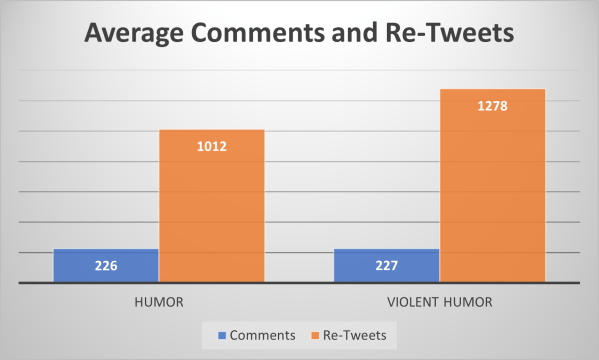
Acknowledgement: This blog post is part of a paper that I presented at a recent workshop on humor and global politics at the University of Sheffield. I am thankful to all participants and to the organizer, Dr. Dmitry Chernobrov. Since the beginning of the Russia-Ukraine War, Ukraine has used social media to rally online and... Continue Reading →
Monday’s Digital Diplomacy Must Read List
Each week, I publish a list of interesting articles, essays and reports that may be of interest to the digital diplomacy community. This week- How Big Tech Is Killing Innovation (The New York Times) Why does AI hallucinate? (MIT Technology Review) Does what happens on your iPhone still stay on your iPhone? (The Guardian) China... Continue Reading →
From “Wolf Warrior Diplomacy” To “Lone Wolf Diplomacy: The New Logic of Digital Public Diplomacy
At a recent international conference I was asked- how does relationality help understand public diplomacy in today’s world? To answer this question, we must first characterize todays’ world. It is a world that is prone to crises, a world that is marked by wars, it is a complex world as a crisis in one world... Continue Reading →
Digital Diplomacy and the Beautification of War
Susan Sontag famously argued that photography was violent in nature. Photographs, according to Sontag, are violent as they fracture linear time. Each photograph is like an atom torn from linear time and forever frozen. The more photographs one takes, the more he or she rips linear time into fragments that can longer form a coherent... Continue Reading →
Monday’s Must Read List
Each week, I publish a list of interesting articles, essays and reports that may be of interest to the digital diplomacy community. This week- What the future holds for driverless cars (BBC News) Resistance Is Futile, But Maybe Not With AI (Bloomberg) It’s Time to Give Up on Ending Social Media’s Misinformation Problem (The Atlantic)... Continue Reading →
The Drone Wars: How Ukrainian Drones Are Reshaping War Coverage
In the early 1990s, scholars coined the term “The CNN Effect” referencing the impact that CNN had on American foreign policy. Scholars asserted that issues which rose to prominence in CNN were soon addressed by American policy makers. In this way CNN shaped the priorities of the White House and the State Department. CNN was... Continue Reading →
Practicing Diplomacy in the Attention Economy
Advertisers argue that attention is a finite resource. According to one study, individuals in the digital society are exposed to 8,000 advertisements a day. Given humans’ limited capacity for information processing, this barrage of advertisements is mostly ignored or forgotten within seconds. This means that if commercial brands are to compete successfully for the attention... Continue Reading →
Is Humor an Effective Digital Diplomacy Strategy?
Since the beginning of the Russia-Ukraine War, Ukraine has relied on its social media channels to obtain foreign policy goals. Through its use of Twitter, Facebook and Telegram Ukraine has crowdfunded humanitarian aid, raised funds for the purchasing of weapons, negotiated agreements with tech magnets such as Elon Musk, managed a cyber army and obtained... Continue Reading →
Monday’s Must Read List
Each week, I publish a list of interesting articles, essays and reports that may be of interest to the digital diplomacy community. This week- Elon Musk vs Mark Zuckerberg fight will be streamed on X, according to Musk (CNN) Ukraine’s elite forces rely on technology to strike behind enemy lines (The Washington Post) U.S. company... Continue Reading →
Hold On: Ukraine’s Wartime Messaging
On July 8th, 2023, the Ukrainian Ministry of Defense published a video on Twitter (shown below). The accompanying text clearly outlined the video's intended messages: The War in Ukraine is no action film or computer simulation. It’s a real war, with real stakes. The text concludes with the statement “And we very much know what we are doing.” This... Continue Reading →