The advent of social media has transformed diplomats into ‘visual narrators’. By visual narrators I refer to diplomats’ growing ability to use visuals to deliver complex foreign policy messages. Indeed, over the past few years ,diplomats have learned to speak the language of visuals or what Roland Barthes called “The Rhetoric of the Image”. Barthes... Continue Reading →
Real Fakes and The Future of Diplomacy
In 2014, a group of data scientists from Microsoft teamed up with AI experts to create a computer program that could generate pictures in the style of Rembrandt. The team created a deep learning network which reviewed 150 gigabytes’ worth of Rembrandt paintings. The network soon learned to recognize distinctive features of Rembrandt’s works be... Continue Reading →
Monday’s Must Read List
Each week, I publish a list of interesting articles, essays and reports that may be of interest to the digital diplomacy community. This week- Uncensored Chatbots Provoke a Fracas Over Free Speech (The New York Times) Israeli technology pioneers using drones, AI and big data to farm (Times of Israel) Can China develop its own... Continue Reading →
AI’s Impact on Public Diplomacy
Recently, I was asked by an American diplomat about the benefits of using AI in public diplomacy activities. The Diplomat stated that as AI was a new kind of technology, foreign ministries around the world are anxious to learn about its benefits and shortcomings. This very question was put to me again this week when... Continue Reading →
Monday’s Must Read List
Each week, I publish a list of interesting articles, essays and reports that may be of interest to the digital diplomacy community. This week- How India is using digital technology to project power (The Economist) 8 Big Questions About AI (The New York Times) Robot takeover? Not quite. Here’s what AI doomsday would look like... Continue Reading →
Media-Jacking: How Ukraine Hijacked Chernobyl Remembrance Day
Diplomats and MFAs often seek to break their “algorithmic confines''. This is because social media algorithms limit the reach of diplomats’ online content. Tweets published by an Embassy, for example, will only reach the Embassy’s followers or social media followers who have expressed some interest in diplomacy, international relations or bi lateral ties between countries.... Continue Reading →
Monday’s Must Read List
Each week, I publish a list of interesting articles, essays and reports that may be of interest to the digital diplomacy community. This week- The TikTok Teens Go To Washington (Data & Society) The Data Delusion (The New Yorker) The Vulkan Files: Secret trove offers rare look into Russian cyberwar ambitions (The Washington Post) ChatGPT... Continue Reading →
The AI Moves In: ChatGPT’s Impact on Digital Diplomacy
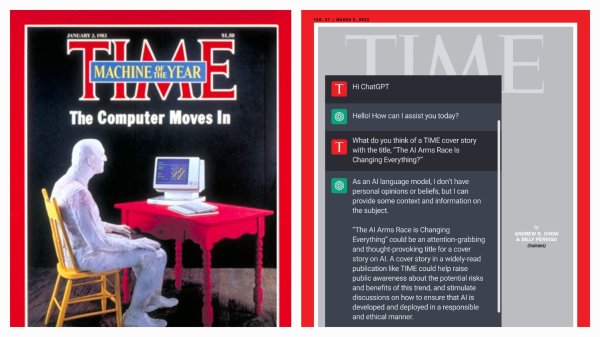
In 1982, Time Magazine’s cover depicted a man sitting opposite a computer screen. The headline read “The Computer Moves In”. Time’s cover captured a pivotal civilizational moment, as the introduction of the personal computer would lead to the creation of a new society- a digital society complete with its own logics, norms, values and laws... Continue Reading →
Challenger 2: Transparency and Military Aid in the Digital Age
On Monday, the British Ministry of Defence tweeted that the United Kingdom (UK) had decided to send a squadron of Challenger 2 Tanks to Ukraine thus accelerating “Ukrainian successes”. This new ‘arms package’ comes in the wake of heated debates on social media. In recent days, Twitter has been abuzz with rumors that European nations... Continue Reading →
What Role Does OSINT Play in Ukraine Crisis?
One of the defining characteristics of the Russia-Ukraine War has been the emergence of OSINT, or open-source intelligence. The term itself is not new. Several years ago, the British Foreign Office created an ‘open-source intelligence unit’ tasked with gathering information from online sources. This information would then be used by British diplomats to obtain foreign... Continue Reading →