A recent article in Nature, titled "Toward effective government communication strategies in the era of COVID-19", outlines communications policies that may help governments face the Covid-19 pandemic. The authors layout 9 guiding principles for "effective" government communication, including clarity, honesty and empathy. It is interesting that most of these principles are relevant to digital diplomacy,... Continue Reading →
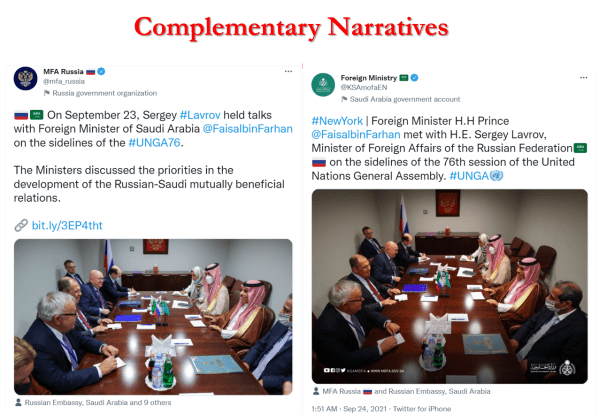
Image Management at the UN General Assembly: The Russian Case Study
It’s that time of the year again. A time of expectation and jubilation. A time of press junkets and photobombs. A time of pomp and circumstance and a time of high level negotiations. It’s the time of the UN’s annual General Assembly when leaders, foreign ministers and diplomats swarm to New York to redraw borders,... Continue Reading →
In the age of Covid19, are Pharma companies diplomatic actors? A Twitter Analysis
Are tech giants diplomatic actors? This question has occupied scholars and commentators for several years. Some have argued that social media companies have obtained a form of digital statehood. Facebook, for instance, displays many trappings of a state including a citizenry, a currency and a diplomatic branch charged with managing relations with offline states. Others... Continue Reading →
What are the future challenges for digital diplomacy?
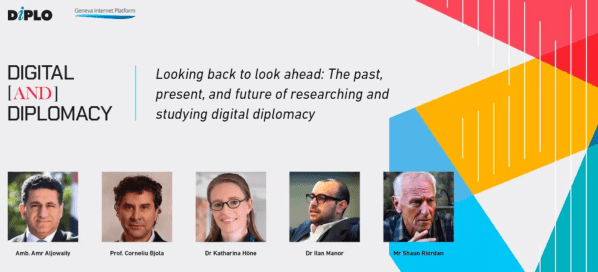
Last week I had the opportunity to partake in a conference organized by the Diplo Foundation asking- what do we mean when use the term “digital diplomacy”. During the conference I was asked three questions on the past, present and future practice of digital diplomacy. This post includes my answer and analysis. Q: How... Continue Reading →
Monday’s Must Read List
Each week, I publish a list of interesting articles, essays and reports that may be of interest to the digital diplomacy community. This week- DOD awards $1B contract to Peraton to counter misinformation (FedScoop)Russian Hypersonic Technology Expert Accused of High Treason (Militray.com)CCTV watchdog criticises Hikvision Uyghur response (BBC News)The UN climate report pins hopes on... Continue Reading →
Monday’s Must Read List
Each week, I publish a list of interesting articles, essays and reports that may be of interest to the digital diplomacy community. This week- Drones deliver blood to prevent maternal death in Botswana (Un News)France’s plan to rein in Big Tech (Politico)Voters already love technology. They don’t need anti-China messaging to get there (Vox)AI is... Continue Reading →
How Chinese Ambassadors Use Twitter
In my 2019 book, The Digitalization of Public Diplomacy, I dedicated a chapter to Ambassadors’ use of Twitter. My assertion was that Ambassadors may be viewed by digital publics as trusted sources of information. This is because Ambassadors have privileged access to information, they have access to the highest echelons of power, they are viewed... Continue Reading →
Monday’s Must Read List
Each week, I publish a list of interesting articles, essays and reports that may be of interest to the digital diplomacy community. This week- When central banks issue digital money (The Economist)Trump decision reveals limits of Facebook’s ‘Supreme Court’ (The Financial Times)Artificial Intelligence Is Misreading Human Emotion (The Atlantic)Amazon’s cashierless checkout technology is coming to... Continue Reading →
Digital Diplomacy: Between Adoption and Adaptation
The speed of diplomacy’s digitalization has been truly remarkable. In less than a decade, MFAs (foreign ministries) have gone from launching websites and virtual embassies to designing smartphone applications, analyzing big data sets, writing code, creating algorithms and establishing social media empires that span multiple networks. This is all the more remarkable as MFAs were... Continue Reading →
The age of conspiracies: Why are Conspiracy Theories Flourishing Online?
Now is the age of conspiracies. Throughout the world, the mass dissemination and belief in conspiracy theories seems to be on the rise. These were especially visible during the 2016 Presidential elections as some argued that climate change was a Chinese invention meant to weaken the West, that Barack Obama was not born in the... Continue Reading →