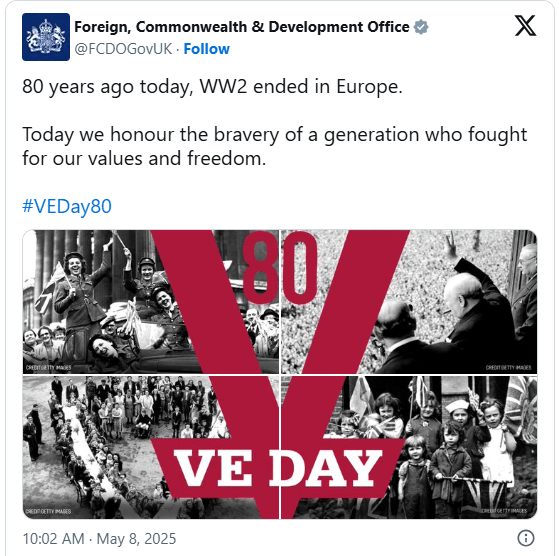
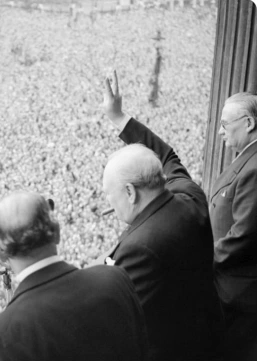
On May 8th, the world celebrated the 80th anniversary of the end of World War II. It was, for many, a solemn day. The end of World War II was meant to usher in a new dawn of stability and harmony amongst the nations of the world. The struggle to defeat Nazi Germany symbolized victory... Continue Reading →
Digital Diplomacy and the Beautification of War
Susan Sontag famously argued that photography was violent in nature. Photographs, according to Sontag, are violent as they fracture linear time. Each photograph is like an atom torn from linear time and forever frozen. The more photographs one takes, the more he or she rips linear time into fragments that can longer form a coherent... Continue Reading →
What’s in an Image? Ukraine’s Visual Narration
The advent of social media has transformed diplomats into ‘visual narrators’. By visual narrators I refer to diplomats’ growing ability to use visuals to deliver complex foreign policy messages. Indeed, over the past few years ,diplomats have learned to speak the language of visuals or what Roland Barthes called “The Rhetoric of the Image”. Barthes... Continue Reading →
Historical Appropriation or How Diplomats Use History to Advance Diplomatic Goals
Cultural appropriation, a term now heard often in media and academic discourse, is defined as “the inappropriate or unacknowledged adoption of an element or elements of one culture or identity by members of another culture or identity. This can be especially controversial when members of a dominant culture appropriate from minority cultures”. The advent of... Continue Reading →
How the US Army Visually Narrates the Fall of Afghanistan
In a blog post published last week, I examined how different actors framed, or narrated, the Taliban’s conquest of Afghanistan. Examining the use of digital diplomacy by world leaders, Embassies, diplomats and individuals, I demonstrated that social media are a competitive framing arena in which multiple actors vie over the attention of digital publics while... Continue Reading →
The New Aesthetics of Leaders’ Images
Images of leaders have always played an important role in politics. Images can capture the supremacy of a king, the daring of a field marshal or the cunning of a shrewd politician. Indeed, Napoleon’s portrait, sitting upon a fiery steed and pointing to the alps, captures his audacity and ambitions. Yet images of world leaders... Continue Reading →
Preparing for the #Digital Future
Prof. Corenliu Bjola of the Oxford Digital Diplomacy Research Group recently concluded that the first stage of digital diplomacy has been a resounding success. Although MFAs are risk averse organizations who value discretion and shun from the limelight, they have successfully migrated to social media and adopted new communication practices that centre on information sharing,... Continue Reading →