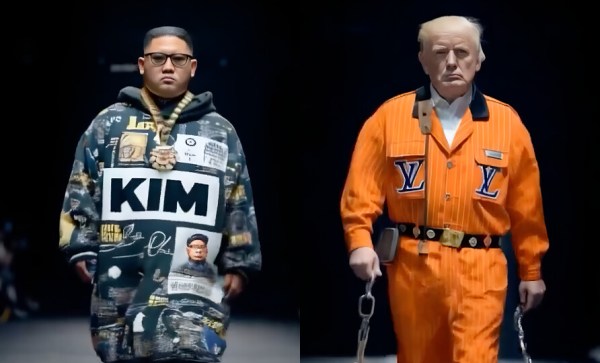
In recent years diplomats have increasingly employed pop culture in their digital communications. Some nations, for instance, celebrate Star Wars Day on May the 4th tweeting at their followers. Others employ pop culture memes when attempting to shape global public opinion. Countries such as Ukraine, Russia, Israel and the UK have all relied in popular... Continue Reading →
The Dangers of the AI Hype
A version of this post was originally published on E-IR website and can be found here According to Dr. Dan Kotliar, technological advancements are accompanied by a certain degree of hype, or hyperbolic discourse. The internet, for example, was accompanied by a democratization hype with scholars and pundits arguing that the internet would enable new... Continue Reading →
AI and the Decline of Reality in Public Diplomacy
By Giles Strachan and Ilan Manor In 1957, the physicist Hugh Everett proposed the Many-worlds Interpretation of reality. Quantum physicists had discovered that fundamental information about particles was unknowable until the particles were observed. At this point, reality re-asserts itself, as in the famous example of Schrödinger’s cat, which is both alive and dead until... Continue Reading →
Quantum Mechanics, AI and the Future of Diplomacy
Werner Heisenberg’s uncertainty principle is considered the cornerstone of quantum mechanics. Heisenberg famously argued that quantum particles are subject to unpredictable fluctuations, making them impossible to track precisely. The position and momentum of an electron, for example, are subject to unpredictable fluctuations and as such cannot be measured exactly. Even more complex is the understating... Continue Reading →
Digital Diplomacy and the Retelling of World War II
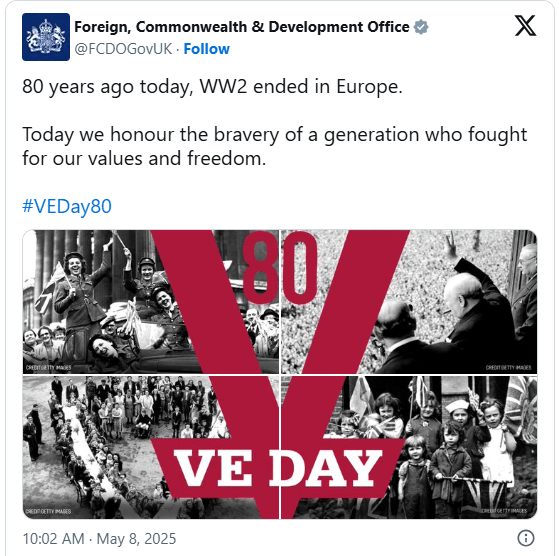
On May 8th, the world celebrated the 80th anniversary of the end of World War II. It was, for many, a solemn day. The end of World War II was meant to usher in a new dawn of stability and harmony amongst the nations of the world. The struggle to defeat Nazi Germany symbolized victory... Continue Reading →
Digital Diplomacy in the Age of Trump: An Analysis of “Rapid Response 47”
In January 2025, the Trump White House unveiled a new Twitter/X account titled “Rapid Response 47.” From the perspective of digital diplomacy, such an account may be of strategic importance. The ubiquity of social media, smartphones, and digital technologies has ushered in an era of instantaneous news dissemination and real-time crisis communication. In this dynamic... Continue Reading →
Digital Diplomacy and the Crisis of Diplomatic Credibility
Diplomacy hinges on credibility. As Ben Mor aptly notes, “being perceived as honest and reliable is a necessary condition for obtaining and holding the attention of target audiences, as well as for effective persuasion.” States that are perceived as duplicitous or deceptive struggle to engage with global publics, let alone persuade them to accept their... Continue Reading →
Leveraging AI in Diplomacy: LLMs As Opinion Aggregators
The rapid development of AI tools has caused a frenzy in foreign ministries (MFAs) as diplomats across the world are trying to identify the risks and benefits brought about by artificial intelligence tools such as ChatGPT, Mistral, Claude, Gemini and DeepSeek. Diplomats’ attempts to grapple with the professional and societal ramifications of AI has taken... Continue Reading →
AI Power and its Impact on Digital Diplomacy Research
Throughout the 1980s, noted British historian Eric Hobsbawm delivered a series of lectures examining the academic study of history, and the state of social history, his chosen field. Hobsbawm’s lectures offer much needed insight into the study of digital diplomacy, in general, and the study of AI’s potential impact on diplomacy. For example, Hobsbawm argued... Continue Reading →
On DeepSeek, AI and “Post-Time”
Sociologist Manuel Castells famously argued that digital societies relentlessly strive to annihilate time and space. Time is annihilated by the reversal of traditional roles and life experiences. Such is the case with a 30-year-old tech CEO that manages 50-year-old employees or in the view of retirement as a second adolescence, a period of experimentation, of... Continue Reading →