In an article from January, 2020, Matthew Ball wrote a lengthy article describing the vision of the Metaverse. Facebook’s announcement that it would seek to create the Metaverse was still months away. In an upcoming event (Thursday, Nov 11) organized by International Cultural Relations, a select group of scholars will discuss the Metaverse and its... Continue Reading →
Nostalgia in British Digital Diplomacy
In a recent ISA conference panel, I argued that now is the age of nostalgia. Throughout the world we are witnessing an insatiable longing for the past. In the post-Brexit haze, the UK craves the influence and power of its defunct empire; in Turkey neo-Ottoman sentiments have transformed a President into a Sultan; Americas have... Continue Reading →
The Silencing of an American President
On January 6th, 2021, riots broke out in Washington D.C. as an angry mob stormed the US Capitol. Though the rioters bore a striking resemblance to the inhabitants of trailer parks in Florida, scenes of armed and furious men seizing control of America’s seat of government shocked the nation, and the world. Some went as... Continue Reading →
2020: The Year of Digital Resurgence
Many people will wish to forget 2020. A year of fear and angst; lockdowns and isolations and one virus that brought the world to a halt. Indeed, the Covid19 virus transported the world to a previous era, one in which reaching another city, let alone another country was impossible. Airports, the signature of the networked... Continue Reading →
What Digital Diplomacy Adds to IR?
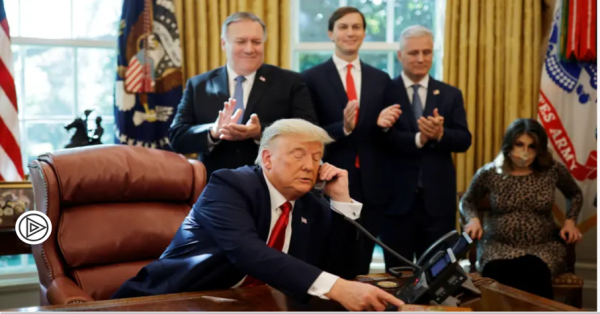
This post seeks to articulate how the study of digital diplomacy contributes to the study of international relations as a whole. To do so, it focuses on the image below. The picture depicts then US President Donald Trump holding a conference call between the leaders of Israel and Sudan, who agreed to normalize ties following... Continue Reading →
Digital Diplomacy: Between Adoption and Adaptation
The speed of diplomacy’s digitalization has been truly remarkable. In less than a decade, MFAs (foreign ministries) have gone from launching websites and virtual embassies to designing smartphone applications, analyzing big data sets, writing code, creating algorithms and establishing social media empires that span multiple networks. This is all the more remarkable as MFAs were... Continue Reading →
Lightning Fast- How Worlds Leader Tweeted at Biden
On November 7th, 2020, CNN projected that Joe Biden had won the US elections garnering 273 electoral votes. Following the projection, a CNN pundit wondered if world leaders would rush to congratulate Biden given that President Trump was unlikely to accept defeat. Moreover, while Biden was the projected winner, he was not yet the official... Continue Reading →
How Will Covid19 Impact Diplomacy’s Digitalization?
When researching digital diplomacy, one soon realizes that every foreign ministry (MFA) has undergone a unique process of digitalization. The digitalization of the US State Department rested, among other, on the appointment of two digital enthusiasts- Alec Ross and Jared Cohen. Canada’s digitalization was facilitated by a change in administration as the Trudeau government urge... Continue Reading →
Crafting Digital Diplomacy Campaigns: How America’s Iranian Campaign is Backfiring
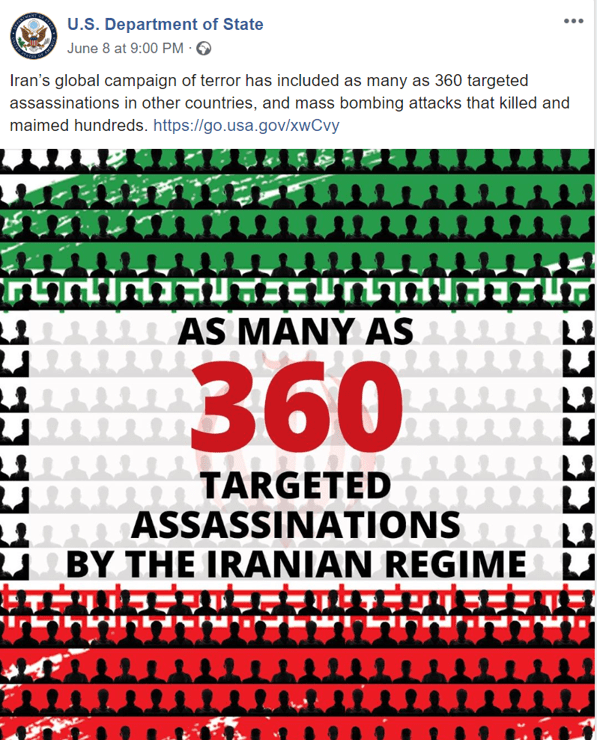
The Value of Facebook Comments When reviewing the US State Department’s Facebook account, it becomes apparent that the Department is in the midst of two digital campaigns. The first focuses on China’s alleged misconduct during the Covid19 outbreak. The second argues that Iran’s nefarious activities in the region, and the world, must be met by... Continue Reading →
What Embassies Tweet About During COVID-19
Diplomacy is not immune to the Covid-19 virus. For the first time since the 17th century, diplomats and world leaders no longer meet face-to-face to address shared challenges or resolve shared grievances. The UN is closed, the WTO is out of session and G7 meetings take place through video conference calls. Embassies, traditionally tasked with... Continue Reading →