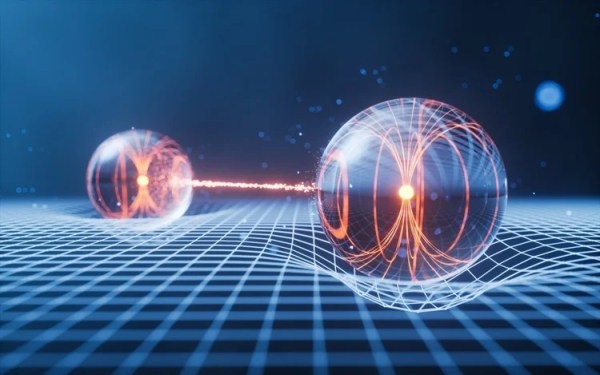
Werner Heisenberg’s uncertainty principle is considered the cornerstone of quantum mechanics. Heisenberg famously argued that quantum particles are subject to unpredictable fluctuations, making them impossible to track precisely. The position and momentum of an electron, for example, are subject to unpredictable fluctuations and as such cannot be measured exactly. Even more complex is the understating... Continue Reading →
Leveraging AI in Diplomacy: LLMs As Opinion Aggregators
The rapid development of AI tools has caused a frenzy in foreign ministries (MFAs) as diplomats across the world are trying to identify the risks and benefits brought about by artificial intelligence tools such as ChatGPT, Mistral, Claude, Gemini and DeepSeek. Diplomats’ attempts to grapple with the professional and societal ramifications of AI has taken... Continue Reading →
AI Power and its Impact on Digital Diplomacy Research
Throughout the 1980s, noted British historian Eric Hobsbawm delivered a series of lectures examining the academic study of history, and the state of social history, his chosen field. Hobsbawm’s lectures offer much needed insight into the study of digital diplomacy, in general, and the study of AI’s potential impact on diplomacy. For example, Hobsbawm argued... Continue Reading →
Digital Diplomacy in the Age of Visual AI
Last week I began exploring possible biases in popular (Artificial Intelligence) AI tools. Within the context of AI, “bias” refers to the generation of skewed output or content. AI tools such as ChatGPT or Microsoft’s Copilot may suffer from biases because they were trained on skewed data or because humans with biases and prejudices programmed... Continue Reading →
Through the Lookingglass: Digital Diplomacy and AI Biases
The launch of ChatGPT, a Generative AI tool developed by the tech company Open AI, spurred a global discussion on the risks and benefits of artificial intelligence. Notably, ChatGPT is referred to as an “AI” tool, yet it is not really an example of Artificial Intelligence. ChatGPT does not think. ChatGPT does act. ChatGPT has... Continue Reading →
Digital Diplomacy and The Rights of AI
I recently asked ChatGPT to draft an AI bill of rights. My prompt sought to identify which human rights should be enshrined in the era of AI and generative AI. Since the advent of AI tools such as ChatGPT, individuals and governments have expressed concerns over possible violations of human rights. For instance, many discussions... Continue Reading →
Diplomacy in the Age of Post-Reality
Last week, the Financial Times published an AI generated image of Presidents Putin and Trump kissing. The headline read “Fakes in the Post-Truth Era”. The term post-truth was first coined in 2016 by The Economist Magazine. The Economist was referring to the impact of social media on politics in general, and American politics in particular.... Continue Reading →
Towards the Strategic Use of AI in Diplomacy
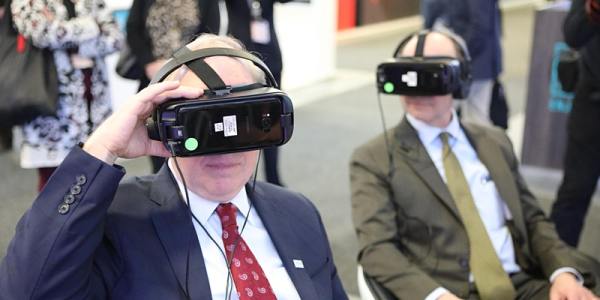
Whatever happened to the Metaverse? In June of 2022, Facebook officially changed its name to Meta reflecting a strategic decision to develop applications for the Metaverse. Hailed as the future incarnation of the internet, the Metaverse was described as a digital plane that would exist alongside the physical plane. Generated by advanced augmented and virtual... Continue Reading →
Monday’s Must Read List
Each week, I publish a list of interesting articles, essays and reports that may be of interest to the digital diplomacy community. This week- Elon Musk vs Mark Zuckerberg fight will be streamed on X, according to Musk (CNN) Ukraine’s elite forces rely on technology to strike behind enemy lines (The Washington Post) U.S. company... Continue Reading →
Monday’s Must Read List
Each week, I publish a list of interesting articles, essays and reports that may be of interest to the digital diplomacy community. This week- How to Redeem Social Media (The Atlantic) Face recognition in the US is about to meet one of its biggest tests (MIT Technology Review) Why some celebrities are embracing Artificial Intelligence... Continue Reading →