Celebrity diplomacy is not a new phenomenon. For many decades, multilateral institutions such as UNICEF (United Nations International Emergency Children’s Fund) have relied on celebrities to increase awareness to important causes and raise funds. Other times celebrities join NGOs to promote specific causes ranging from alleviating poverty in Africa to helping child soldiers rejoin society.... Continue Reading →
What on Earth is Happening in Ukraine?
Yesterday I set out to understand the current state of affairs in Ukraine. The day began, as always, with a barrage of memes mocking a meeting between Russian President Putin and Russian Foreign Minister Sergey Lavrov. The news was not all bad. Though the two gentlemen seemed distanced, Lavrov emphasized that there may still be... Continue Reading →
Are Consular Tweets a New Form of Crisis Signaling?
When scholars and pundits discuss digital diplomacy, they tend to equate this term with social media activities. Indeed, the majority of digital diplomacy studies have focused on how and why social media is used by foreign ministries (MFAs), embassies, Ambassadors and International Organisations. Studies have explored the numerous ways in which states use sites such... Continue Reading →
Preparing for the #Digital Future
Prof. Corenliu Bjola of the Oxford Digital Diplomacy Research Group recently concluded that the first stage of digital diplomacy has been a resounding success. Although MFAs are risk averse organizations who value discretion and shun from the limelight, they have successfully migrated to social media and adopted new communication practices that centre on information sharing,... Continue Reading →
Can Digital Diplomacy Really Start A War?
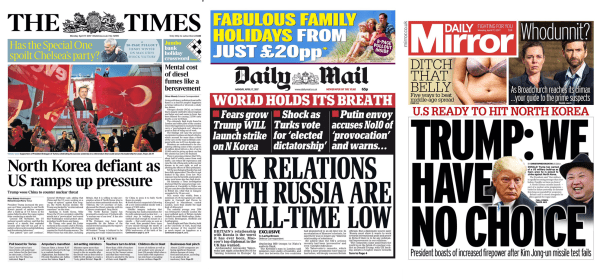
On August 13th, 2017, Nick Miller published an article in The Sydney Morning Herald titled "Getting it wrong could start a war: Welcome to age of digital diplomacy". The article, which attracted much media and social media attention, proposed that digital diplomacy could actually facilitate war between states. Similar sentiments have been expressed in recent... Continue Reading →
Can #DigitalDiplomacy Be Subtle?
Winston Churchill famously stated that "Diplomacy is the art of telling someone to go to hell in a way that he actually looks forward to the journey". Yet diplomacy is also a subtle art. A diplomat must always decide on a message and the intensity of his message. High intensity messages are meant to be... Continue Reading →
If The Cuban Missile Crisis Were Tweeted
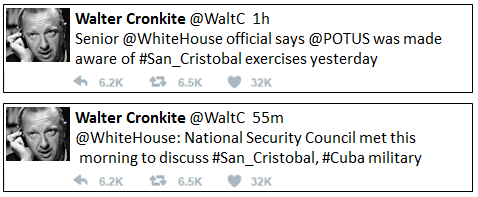
Two weeks ago, Professor David Rothkopf broadcasted a podcast about digital diplomacy. In the podcast he wonders, like many others, how past crises might have played out differently had digital tools been invented at the time. Such is the case with Cuban Missile Crisis of 1962 which often serves as an exemplar of crises management... Continue Reading →
Is the Backstage of Diplomacy Disappearing?
20th Century Diplomacy For most of the 20th Century, diplomacy was practiced behind iron curtains. While diplomats would often pose for photo opportunities, such photographs were taken before and after their meetings. The diplomatic deliberations themselves took place within the inner sanctums of great palaces or behind the closed doors of historic halls. It was... Continue Reading →
Six Degrees of Foreign Policy Narration
There seems to a prevailing opinion among International Relations’ scholars that our world is one of perpetual crises. The moment one crisis ends, such as the threat of Ebola, another begins, such as Russian military involvement in Syria. Communication has always been an integral part of crisis management. Moreover, diplomatic crises are often defined as... Continue Reading →