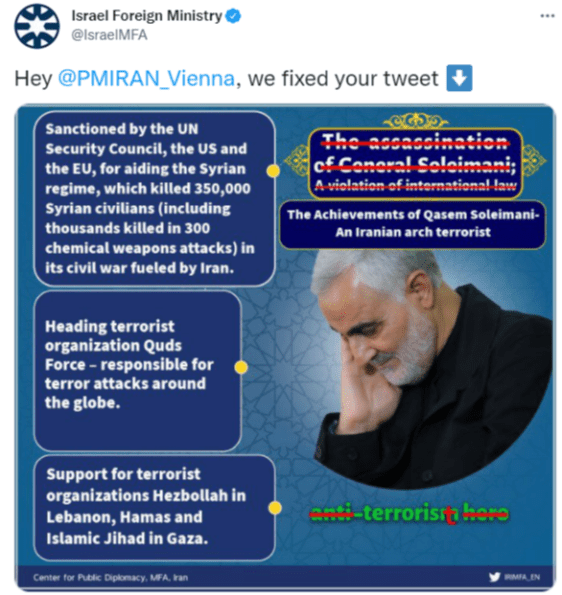
Recent years have seen the mass migration of MFAs (foreign ministries) and diplomats to social media sites. It is now estimated that 95% of UN Member States have established some form of social media presence. Iran is no exception. Although Twitter, Facebook and other platforms cannot be accessed from Iran, senior Iranian policy makers can... Continue Reading →
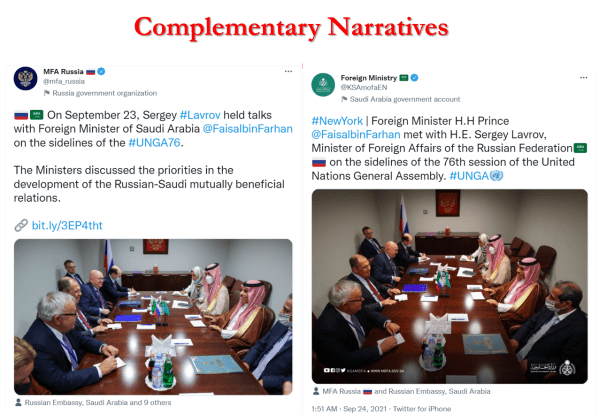
Image Management at the UN General Assembly: The Russian Case Study
It’s that time of the year again. A time of expectation and jubilation. A time of press junkets and photobombs. A time of pomp and circumstance and a time of high level negotiations. It’s the time of the UN’s annual General Assembly when leaders, foreign ministers and diplomats swarm to New York to redraw borders,... Continue Reading →
How the US Army Visually Narrates the Fall of Afghanistan
In a blog post published last week, I examined how different actors framed, or narrated, the Taliban’s conquest of Afghanistan. Examining the use of digital diplomacy by world leaders, Embassies, diplomats and individuals, I demonstrated that social media are a competitive framing arena in which multiple actors vie over the attention of digital publics while... Continue Reading →
Who won the framing competition over Afghanistan? A Twitter Analysis
In 2012, Craig Hayden published one of the first research papers on digital diplomacy. Focusing on the emergence of social media, Hayden stated that the audiences of diplomacy were fragmented into networks of elective exposure. Some individuals learned about the world by following diplomats on Twitter, others turned to trusted bloggers while still others followed... Continue Reading →
How World Leaders Framed the Climate Crisis
Traditionally, diplomats and world leaders have turned to communication channels in order to frame crises. Specifically, leaders and diplomats aim to identify the cause of a crisis, or the underlying problem that has precipitated a crisis between states. For instance, following the 9/11 terror attacks, President Bush announced that terror groups had declared war on... Continue Reading →
Who is Winning the #DigitalDiplomacy Competition over the Salisbury Attack?
Introduction March 4th saw a nerve agent attack in London that left two people dead. According to the British government, this attack was perpetrated by Russia and constitutes the first nerve agent attack since the end of World War 2. In the hours and days following the attack, the UK government demanded that Russia offer... Continue Reading →
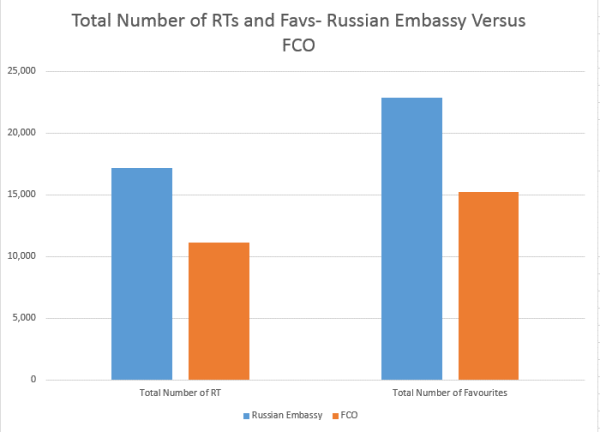
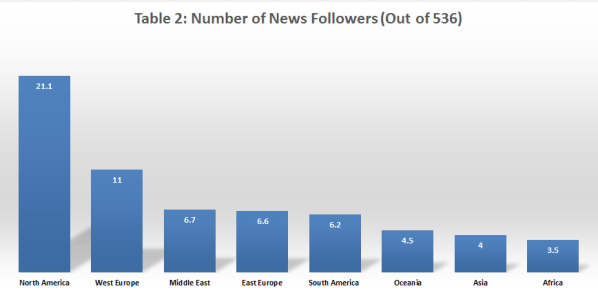
Do MFAs Really Attract Journalists on Social Media?
Some have traced the origins of digital diplomacy to America's need to counter Al-Qaeda's online narrative and recruitment efforts. As Ellen Hallams has written, already in 2008 it was estimated that the internet was responsible of 80% of recruitment of Jihadi movements. In an attempt to stem the tide of recruitment, and counter Al-Qaeda's narrative... Continue Reading →
How the UK & US Are Fighting ISIS Online
Much has been written over the past year about ISIS' use of social media to recruit young Muslims to its ranks. The use of the internet, and social media, in order to recruit members to extremist groups is by no means a new occurrence. A 2008 estimate asserted that the internet was responsible for 80%... Continue Reading →
The State of Russian Digital Diplomacy
Recent moths have seen an abundance of articles dealing with Russia's use of trolls in order to shape online public discourse regarding its foreign policy. According to one article, the Kremlin now manages a troll army used to promote Russia's stance on numerous issues (e.g., Ukraine, Syrian Civil War, Iran nuclear agreement) and discredit Russia's opponents.... Continue Reading →
The Framing of #IranDeal on Digital Diplomacy Channels
One of the greatest difficulties facing foreign ministries in the digital age is the need to react to events in real time. The need for speed, as it were, is in direct contradiction to diplomacy's need for time to respond to events by pooling resources, gathering intelligence and formulating policy recommendations. However, this week saw... Continue Reading →