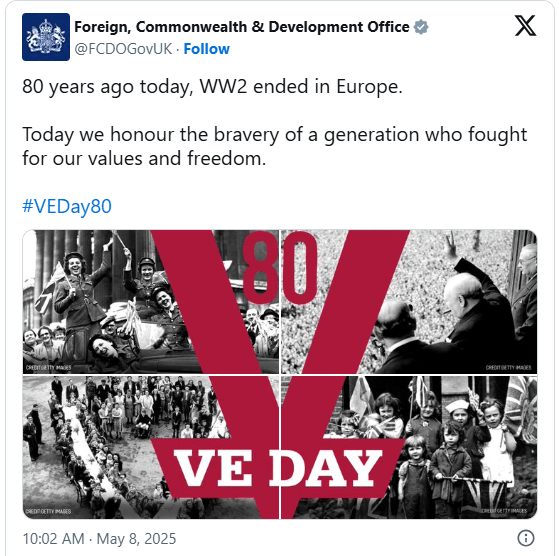
On May 8th, the world celebrated the 80th anniversary of the end of World War II. It was, for many, a solemn day. The end of World War II was meant to usher in a new dawn of stability and harmony amongst the nations of the world. The struggle to defeat Nazi Germany symbolized victory... Continue Reading →
Monday’s Must Read List
Each week, I publish a list of interesting articles, essays and reports that may be of interest to the digital diplomacy community. This week- White House will fight deepfakes with cryptographic verification (Cyber News) Russia using Elon Musk’s Starlink on Ukraine front line, says Kyiv (Financial Times) France uncovers a vast Russian disinformation campaign in... Continue Reading →
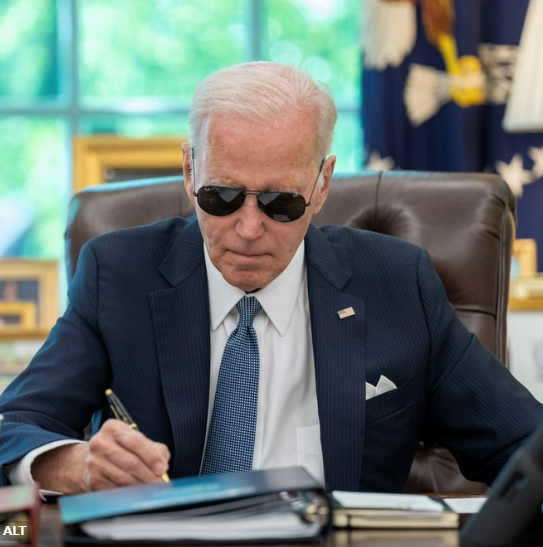
The Old Man? Biden’s Digital Branding
A brand may be considered as a set of associations that are elicited by a product or company. For example, when people see the Apple company logo certain associations come to mind be it “slick design”, “innovation” or “expensive”. The logo of the clothing company H&M elicits a different set of associations including “young”, “affordable”... Continue Reading →
A tale of Two Empires: Facebook and America
The enduring characteristic of empires is not that they rise, but that they fall. Some, such as Rome, fall due to corruption. Others, such as France, fall due to military defeats. Still others may fall due to technological deficits, as was the case with the Soviet Union, or due to societal unrest, as was the... Continue Reading →
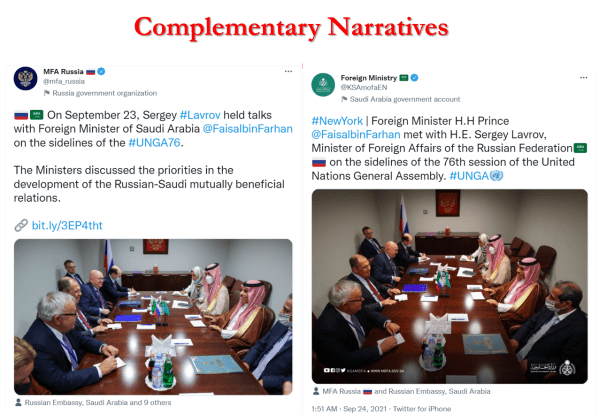
Image Management at the UN General Assembly: The Russian Case Study
It’s that time of the year again. A time of expectation and jubilation. A time of press junkets and photobombs. A time of pomp and circumstance and a time of high level negotiations. It’s the time of the UN’s annual General Assembly when leaders, foreign ministers and diplomats swarm to New York to redraw borders,... Continue Reading →
Who won the framing competition over Afghanistan? A Twitter Analysis
In 2012, Craig Hayden published one of the first research papers on digital diplomacy. Focusing on the emergence of social media, Hayden stated that the audiences of diplomacy were fragmented into networks of elective exposure. Some individuals learned about the world by following diplomats on Twitter, others turned to trusted bloggers while still others followed... Continue Reading →
Selfie Diplomacy- Analyzing Profile Pictures of Leaders on Twitter
Studies have shown that profile pictures on social media serve two main functions. The first is the creation of an online identity. SNS users employ their profile picture to construct an identity and to communicate that identity to their online communities. Through images users can express their beliefs and values and identify the political movements... Continue Reading →
Monday’s Must Read List
Each week, I publish a list of interesting articles, essays and reports that may be of interest to the digital diplomacy community. This week- Drones deliver blood to prevent maternal death in Botswana (Un News)France’s plan to rein in Big Tech (Politico)Voters already love technology. They don’t need anti-China messaging to get there (Vox)AI is... Continue Reading →
Monday’s Must Read List
Each week, I publish a list of interesting articles, essays and reports that may be of interest to the digital diplomacy community. This week- Diplomacy has changed more than most professions during the pandemic (The Economist)G7 Digital and Technology Ministerial Declaration (UK.gov)How France’s data scientists are upstaging its administration (The Economist)A Look at Covid-19 Vaccine ‘Passports,’... Continue Reading →
Monday’s Must Read List
Each week, I publish a list of interesting articles, essays and reports that may be of interest to the digital diplomacy community. This week- China’s rulers want more control of big tech (The Economist)Who Is Making Sure the A.I. Machines Aren’t Racist? (The New York Times)China builds advanced weapons systems using American chip technolog (The... Continue Reading →