Sociologist Manuel Castells famously argued that digital societies relentlessly strive to annihilate time and space. Time is annihilated by the reversal of traditional roles and life experiences. Such is the case with a 30-year-old tech CEO that manages 50-year-old employees or in the view of retirement as a second adolescence, a period of experimentation, of... Continue Reading →
National Memories and Holocaust Remembrance
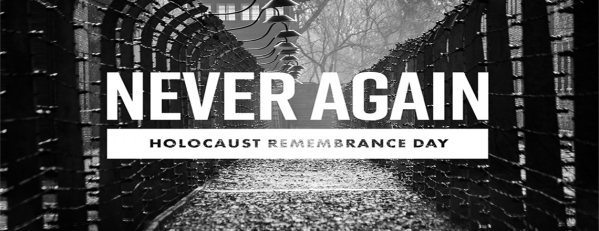
January 27th marked the International Holocaust Remembrance Day. Notably, this day carries little significance in Israel. There are no national ceremonies or moments of silence to commemorate the 6 million Jews who perished in the Holocaust. Israel has a dual relationship with the Holocaust. On the one hand, the Holocaust is commonsensical to Israelis. For... Continue Reading →
Russia’s Digital Kiev Offensive
World War 2 (WW2) features prominently on social media. Dates of important battles are commemorated by many European nations. Foreign ministries (MFAs) also memorialize brutal occupations and celebrate eventual liberations. For some, WW2 is an integral part of national narratives, as is the case with Israel and Poland. While the former claims to have been... Continue Reading →
When Auschwitz Goes Digital
Several days ago I reached an important decision- I began following the Auschwitz Memorial on Twitter. That Auschwitz was recommended by the Twitter algorithm is not surprising as much of my digital activities date back to WW2. I often Google battles and skirmishes, view lists of WW2 facts or read Wikipedia pages of prominent Nazis.... Continue Reading →
Should Diplomats Pay More Attention to Publics’ Online Knowledge Voyage?
Two years ago the Dutch Foreign Ministry held a Digital Diplomacy Camp. Over the course of two days, the Camp offered a platform for diplomats, journalists, scholars and representatives of social media companies eager to discuss the digitalization of diplomacy. In one session, Jay Wang of the USC Center on Public Diplomacy reflected on online... Continue Reading →
The Digital Disruption of the Two Level Game
In 1988 Robert Putnam conceptualized diplomacy as a two level game. At the first level lies the world of domestic or national politics. At the second level lies the world of international politics. Putnam argued that these two levels continuously collide with one another. For instance, a government's ability to negotiate treaties is limited given... Continue Reading →