A recent article in Nature, titled "Toward effective government communication strategies in the era of COVID-19", outlines communications policies that may help governments face the Covid-19 pandemic. The authors layout 9 guiding principles for "effective" government communication, including clarity, honesty and empathy. It is interesting that most of these principles are relevant to digital diplomacy,... Continue Reading →
In the age of Covid19, are Pharma companies diplomatic actors? A Twitter Analysis
Are tech giants diplomatic actors? This question has occupied scholars and commentators for several years. Some have argued that social media companies have obtained a form of digital statehood. Facebook, for instance, displays many trappings of a state including a citizenry, a currency and a diplomatic branch charged with managing relations with offline states. Others... Continue Reading →
What are the future challenges for digital diplomacy?
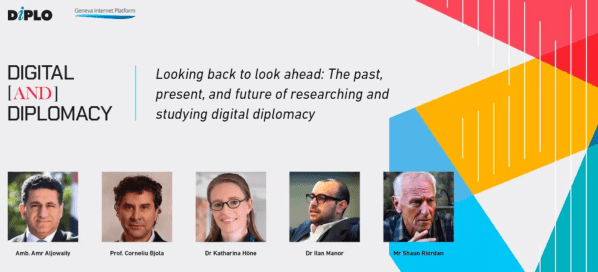
Last week I had the opportunity to partake in a conference organized by the Diplo Foundation asking- what do we mean when use the term “digital diplomacy”. During the conference I was asked three questions on the past, present and future practice of digital diplomacy. This post includes my answer and analysis. Q: How... Continue Reading →
How the US Army Visually Narrates the Fall of Afghanistan
In a blog post published last week, I examined how different actors framed, or narrated, the Taliban’s conquest of Afghanistan. Examining the use of digital diplomacy by world leaders, Embassies, diplomats and individuals, I demonstrated that social media are a competitive framing arena in which multiple actors vie over the attention of digital publics while... Continue Reading →
Who won the framing competition over Afghanistan? A Twitter Analysis
In 2012, Craig Hayden published one of the first research papers on digital diplomacy. Focusing on the emergence of social media, Hayden stated that the audiences of diplomacy were fragmented into networks of elective exposure. Some individuals learned about the world by following diplomats on Twitter, others turned to trusted bloggers while still others followed... Continue Reading →
Real Time Diplomacy: How Social Media Accelerates Diplomacy
In September of 1952, the world was shocked to learn that Israel and West Germany has signed an accord promising financial reparations to the Jewish victims of Nazi Germany. Until that month, Israel had vowed to never recognize, negotiate or interact with West Germany. The accord was made possible once German Chancellor, Konrad Adenauer, made... Continue Reading →
Monday’s Must Read List
Each week, I publish a list of interesting articles, essays and reports that may be of interest to the digital diplomacy community. This week- Why Is Beijing Micromanaging Its Technology Sector? (The Diplomat)Zoom reaches $85M settlement in ‘Zoombombing’ lawsuit (TechCrunch)Israel Aerospace Industries inks $237 million radar deal with German military (Times of Israel)Clubhouse Opens Its... Continue Reading →
Selfie Diplomacy- Analyzing Profile Pictures of Leaders on Twitter
Studies have shown that profile pictures on social media serve two main functions. The first is the creation of an online identity. SNS users employ their profile picture to construct an identity and to communicate that identity to their online communities. Through images users can express their beliefs and values and identify the political movements... Continue Reading →
On Memory, Digitalization & Public Diplomacy in Auschwitz
Throughout the 20th century, numerous intellectual have sought to come to grips with the existence of the Auschwitz Concentration Camp. According to author Primo Levy, Auschwitz was its own universe. The laws that govern our universe, those of physics and mathematics, were suspended in Auschwitz. It was a place with its own language, moral codes,... Continue Reading →
GCHQ on Twitter: Brand Management and Public Engagement
Several weeks ago I analyzed the Twitter account of the Chief of MI6, the United Kingdom’s foreign intelligence agency. I was curious to examine why the UK’s top spy has joined Twitter and how he uses Twitter to advance his organization. I found that the Chief uses Twitter to increase the perceived transparency of MI6... Continue Reading →