Recently, I was asked by an American diplomat about the benefits of using AI in public diplomacy activities. The Diplomat stated that as AI was a new kind of technology, foreign ministries around the world are anxious to learn about its benefits and shortcomings. This very question was put to me again this week when... Continue Reading →
Historical Appropriation or How Diplomats Use History to Advance Diplomatic Goals
Cultural appropriation, a term now heard often in media and academic discourse, is defined as “the inappropriate or unacknowledged adoption of an element or elements of one culture or identity by members of another culture or identity. This can be especially controversial when members of a dominant culture appropriate from minority cultures”. The advent of... Continue Reading →
The Decline and Fall of Twitter? Social Media and the Future of Digital Diplomacy
Denial, anger, bargaining, depression and acceptance. These are the five stages of grief according to Elisabeth Kubler-Ross, and the five emotions expressed by Twitter users since the social network was acquired by Elon Musk. It began with denial, specifically promises by Twitter executives and Musk himself that the social network would remain a vibrant town... Continue Reading →
From Targeting to Tailoring: The Case of Ukraine’s Ambassador to the US
The practice of digital diplomacy has altered considerably since its inception in the wake of the 9/11 terrorist attack. Early digital diplomacy initiatives focused on using virtual platforms to overcome the limitations of traditional diplomacy. For instance, in 2008 Sweden launched the world’s first virtual Embassy in the online world of Second Life. This Embassy... Continue Reading →
New Working Paper: Analyzing Russia’s Selfie Diplomacy
This week I have published a new working paper examining Russia's practice of 'Selfie Diplomacy' during 2020-2021. The Working paper begins by discussing why nostalgia is such a common sentiment in todays' world, arguing that nostalgia is an attempt to force logic onto an incoherent world. Next, the working paper examines the Selfie and asserts... Continue Reading →
Estonia, War Monuments and Strategic Communications
In 2014, Russia launched a stealth invasion of Ukraine. Resulting in the annexation of Crimea, the 2014 invasion saw the mass utilization of social media by Russian state authorities, the Russian foreign ministry and Russian diplomats. Russia’s digital communications rested on four arguments. First, that the democratically elected Ukrainian President Viktor Yanukovych was ousted from... Continue Reading →
Memetic Engagement in the #Ukraine War
Since the onset of Russia’s War against Ukraine, social media users have authored and disseminated thousands of memes. At times, memes respond to trending news stories. Such was the case with the barrage of memes depicting Ukrainian tractors towing Russian tanks and armored vehicles. Other times memes have been used to try and galvanize international... Continue Reading →
Monday’s Must Read List
Each week, I publish a list of interesting articles, essays and reports that may be of interest to the digital diplomacy community. This week – How Silicon Valley’s Russia crackdown proves its power – and its threat (The Guardian)Using Cyber Tool, Westerners Have Been Texting Russians About the War in Ukraine (Wall Street Journal)Ukraine: Spam... Continue Reading →
A War of Digital Firsts
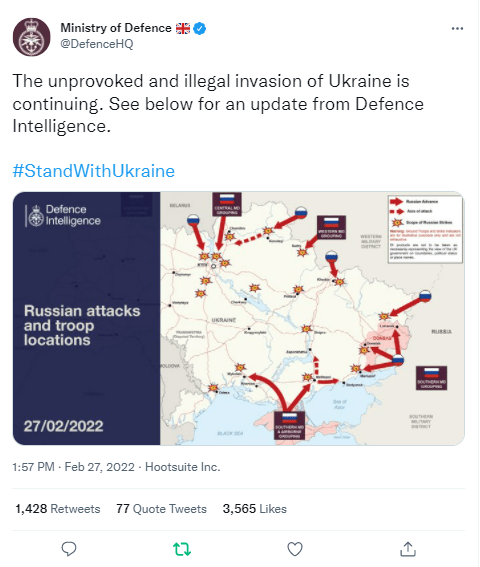
The War in Ukraine has been substantially impacted by digital technologies. In fact, it has been a war of many digital firsts, and there is little doubt that Ukraine’s innovative use of digital technologies will alter the nature of modern conflict. Ukraine’s approach during the war has not rested on employing new technologies but, rather,... Continue Reading →
How Digital Diplomacy is Shaping the #Ukraine Crisis
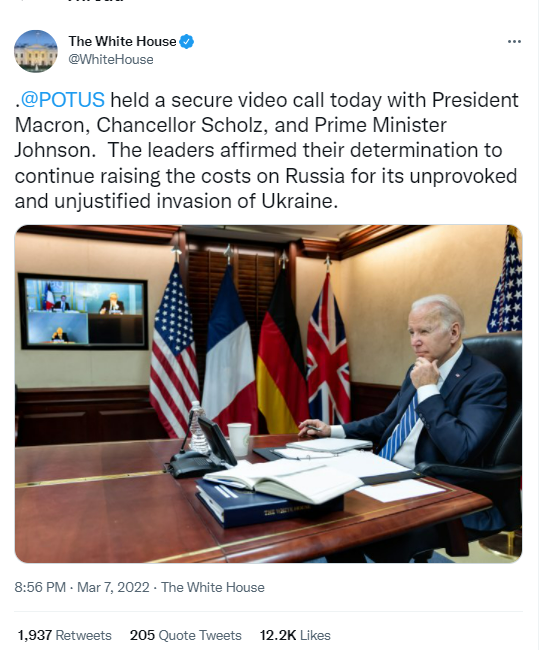
Digital diplomacy is not a new phenomenon. Beginning in the 1990s, foreign ministries (MFAs) sought to adopt and leverage digital technologies. In some cases, this was as rudimentary as using emails as opposed to diplomatic cables or creating intranets, internal networks that enabled diplomats to share information and knowledge with peers. By the early 2000’s,... Continue Reading →