The following remarks were made at the 2021 Namaste Conference on Indian Soft Power In his renowned article from 1990, Joseph Nye sought to imagine how America would exercise power in the post- Cold War era. Power, asserted Nye, rests on the ability to change the behavior of other states. This can be achieved through... Continue Reading →
Monday’s Must Read List
Each week, I publish a list of interesting articles, essays and reports that may be of interest to the digital diplomacy community. This week- People want trusted news, Reuters Institute says (Reuters)Inside a Chinese Propaganda Campaign (The New York Times) Read the Pentagon’s UFO Report to Congress (The Verge)Egypt Firm raises $3.6M to connect celebrities... Continue Reading →
A Q &A with University Students- Assessing the Impact of Diplomacy’s Digitalization
This week I was invited to a Q&A session with university students in Chile. Many questions were asked, ranging from the role of Ambassadors in the digital age to the live-streaming of UN deliberations. Below are questions and answers that may prove valuable to scholars and practitioners of digital diplomacy. Q: Has digitalization led to... Continue Reading →
Monday’s Must Read List
Each week, I publish a list of interesting articles, essays and reports that may be of interest to the digital diplomacy community. This week- Diplomacy has changed more than most professions during the pandemic (The Economist)G7 Digital and Technology Ministerial Declaration (UK.gov)How France’s data scientists are upstaging its administration (The Economist)A Look at Covid-19 Vaccine ‘Passports,’... Continue Reading →
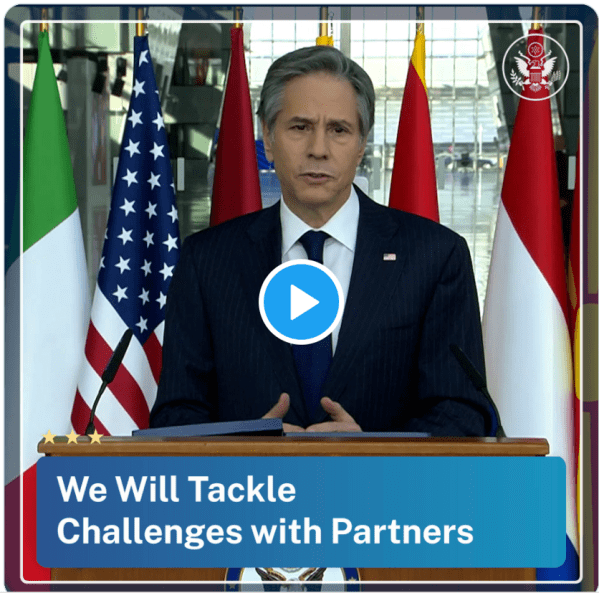
America’s New Rhetoric of Alliances
In a recent article, Guy Golan and I argued that the 21st century will be governed by three giants: The US and China, thanks to their military and financial power, and India thanks to its status as the world’s telecommunications hub. In the world of giants, no single nation will be able to later the... Continue Reading →
The Digital Trial of Ivanka Trump
It began with a necklace. A diamond necklace to be precise. It was purchased from two Jewish jewellers on behalf of the French Queen Marie Antoinette in 1785. The necklace, comprised of 647 stones, and weighing 2,800 carats, never made it to the Queen. Rather, it fell into the hands of a charlatan women who... Continue Reading →
An Act of Digital Disobedience? When U.S. Embassies Raised the Pride Flag
Over the past week, several newspapers have published stories focusing on the activities of U.S. embassies during Pride Month. Specifically, these stories have dealt with the creative ways in which some embassies hoisted the rainbow flag during Pride Month. Unlike the Obama era, the Trump administration has banned the use of the rainbow flag thus preventing... Continue Reading →
Can Digital Diplomacy Build Trust? The Case of Jason Greenblatt
Traditionally, diplomacy rested on proximity. Ambassadors to foreign nations resided in court so that they could assess the temperament of a monarch, create alliances with noble families, gather gossip from local scoundrels and coordinate action with their peers. Proximity has remained important in the 21st century. Ambassadors to multi-lateral organizations essentially reside in a new... Continue Reading →
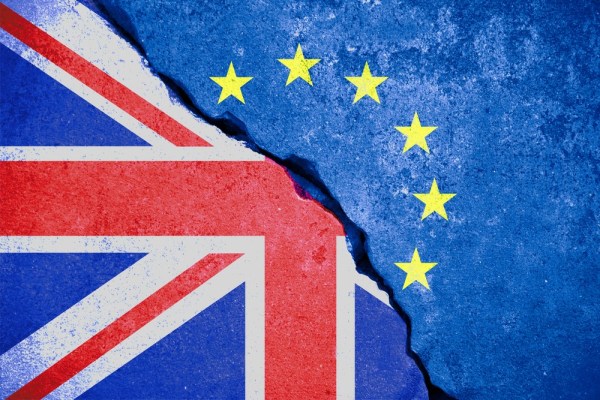
Selfie Diplomacy in a post-Brexit World
In 2015 Dr. Elad Segev and I examined the Selfie Diplomacy of the US State Department. We defined selfie diplomacy as the use of social media sites to proactively manage a nation’s image. In this sense, selfie diplomacy is akin to nation branding campaigns in which a nation’s image can be created, monitored and evaluated... Continue Reading →
Are Retired Ambassadors Digital Diplomacy Assets?
The origins of digital diplomacy may be traced back to the search for “cost-effective” diplomacy at the beginning of the 21st century. The end of the Cold War was accompanied by reductions in the funds allocated to public diplomacy activities. The demise of the Soviet Union was supposed to be replaced by a homogenous capitalist... Continue Reading →