A recent article in Nature, titled "Toward effective government communication strategies in the era of COVID-19", outlines communications policies that may help governments face the Covid-19 pandemic. The authors layout 9 guiding principles for "effective" government communication, including clarity, honesty and empathy. It is interesting that most of these principles are relevant to digital diplomacy,... Continue Reading →
Crafting Digital Diplomacy Campaigns: How America’s Iranian Campaign is Backfiring
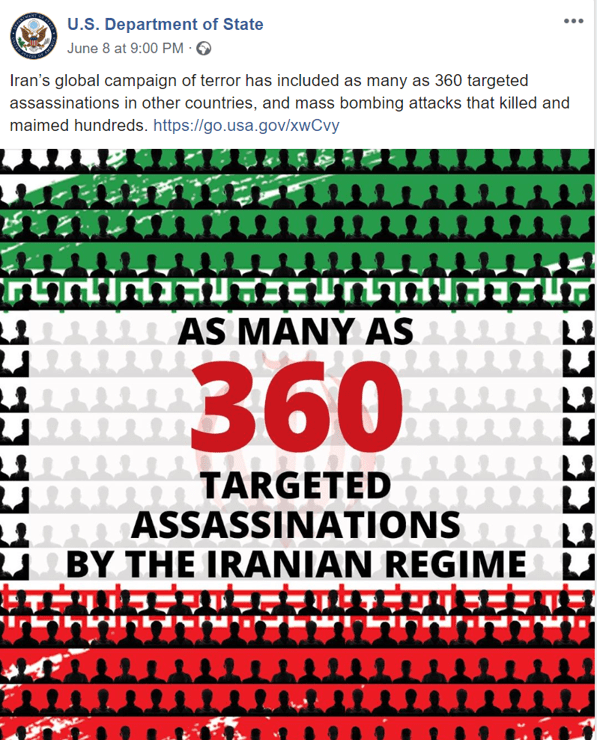
The Value of Facebook Comments When reviewing the US State Department’s Facebook account, it becomes apparent that the Department is in the midst of two digital campaigns. The first focuses on China’s alleged misconduct during the Covid19 outbreak. The second argues that Iran’s nefarious activities in the region, and the world, must be met by... Continue Reading →
Should Diplomats Pay More Attention to Publics’ Online Knowledge Voyage?
Two years ago the Dutch Foreign Ministry held a Digital Diplomacy Camp. Over the course of two days, the Camp offered a platform for diplomats, journalists, scholars and representatives of social media companies eager to discuss the digitalization of diplomacy. In one session, Jay Wang of the USC Center on Public Diplomacy reflected on online... Continue Reading →
An Act of Digital Disobedience? When U.S. Embassies Raised the Pride Flag
Over the past week, several newspapers have published stories focusing on the activities of U.S. embassies during Pride Month. Specifically, these stories have dealt with the creative ways in which some embassies hoisted the rainbow flag during Pride Month. Unlike the Obama era, the Trump administration has banned the use of the rainbow flag thus preventing... Continue Reading →
Has strategic communications reduced political extremism to an information problem?
In a recent publication I have argued that investigating the employment of digital technologies in diplomacy requires that one regard digitalization as a long term process. The reason for this is that new digital technologies constantly emerge bringing with them new opportunities and challenges. Moreover, digital technologies often necessitate that diplomatic institutions adopt new norms... Continue Reading →
Are Local Employees the Unsung Heroes of Digital Diplomacy?
The past decade has seen the accelerated digitalization of diplomacy. While scholars, diplomats and diplomatic institutions are still searching for a definition of the term “digital diplomacy”, most agree that digital technologies have substantially affected the practice of diplomacy. Over the past four years alone, digital technologies have been employed in nearly all realms of... Continue Reading →
The Growing Importance of Journalists in Diplomacy
In 1986 a new press attaché was appointed to the Israeli Embassy in London. His first task was to establish close working relationships with the editors of Fleet Street, the home all major British newspapers at the time. One of the attaché’s most important meeting was with the journalist writing the editorials for the Times... Continue Reading →
Preparing for the Next Wave of #Digital Disruption
Several weeks ago I published a post titled "Preparing for the Digital Future". In it, I advocated that MFAs (ministries of foreign affairs) and diplomats should adopt a proactive approach to digital innovation. A proactive approach begins with understating the future technological landscape and taking measures to adapt to this landscape in terms of working... Continue Reading →
How to Re-integrate #Digital into Diplomacy
The Challenge of Digital Diplomacy I often say that like Woody Allen, I was born into the Hebrew faith but later in life converted to pessimism. And indeed, I often have a pessimistic view of digital diplomacy. Yet I recently attended a conference in The Hague that filled me with optimism as more and more... Continue Reading →
Whose Data Is It Anyway?
Several months ago, Israel's National Institute for Health Policy held an international workshop on the ethical dimensions of using big data in the formulation of public health policy. Israel, which offers its citizens universal healthcare, has four main healthcare providers. The digitalization of health services among all providers has created a vast big data database... Continue Reading →