Each week, I publish a list of interesting articles, essays and reports that may be of interest to the digital diplomacy community. This week- U.S. and States Say Facebook Illegally Crushed Competition (The New York Times)Google and Apple are banning technology for sharing users’ location data (The Verge)Russia's FireEye Hack Is a Statement—but Not a... Continue Reading →
What Digital Diplomacy Adds to IR?
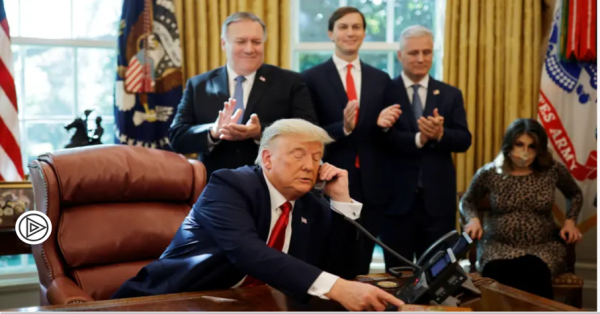
This post seeks to articulate how the study of digital diplomacy contributes to the study of international relations as a whole. To do so, it focuses on the image below. The picture depicts then US President Donald Trump holding a conference call between the leaders of Israel and Sudan, who agreed to normalize ties following... Continue Reading →
Twitter and Diplomatic Signaling: The Case of Joe Biden
Two week ago, I analyzed the speed with which world leaders employed Twitter to congratulate Joe Biden on his election. Indeed, within two hours of CNN’s projection of a Biden victory, more than twenty world leaders tweeted at the President elect. These included the leaders of Germany, Canada, the UK, Norway, France, Sweden and the... Continue Reading →
Russia’s Digital Kiev Offensive
World War 2 (WW2) features prominently on social media. Dates of important battles are commemorated by many European nations. Foreign ministries (MFAs) also memorialize brutal occupations and celebrate eventual liberations. For some, WW2 is an integral part of national narratives, as is the case with Israel and Poland. While the former claims to have been... Continue Reading →
How Will Covid19 Impact Diplomacy’s Digitalization?
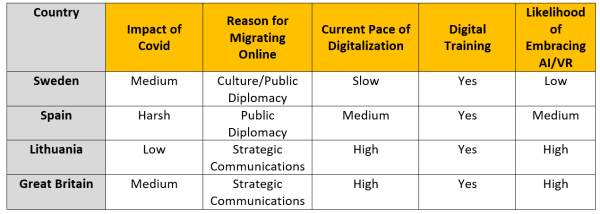
When researching digital diplomacy, one soon realizes that every foreign ministry (MFA) has undergone a unique process of digitalization. The digitalization of the US State Department rested, among other, on the appointment of two digital enthusiasts- Alec Ross and Jared Cohen. Canada’s digitalization was facilitated by a change in administration as the Trudeau government urge... Continue Reading →
Digital Diplomacy & Existential Threats
The Covid virus is not likely to kill mankind. The majority of Covid patients survive, youngsters seem more immune to its potency, and scientific and medical collaborations will ultimately yield a vaccine. However, Covid’s side effects, namely anxiety and disorientation, are evident everywhere. In Israel, TV viewers are told that the rate of contamination has... Continue Reading →
Crafting Digital Diplomacy Campaigns: How America’s Iranian Campaign is Backfiring
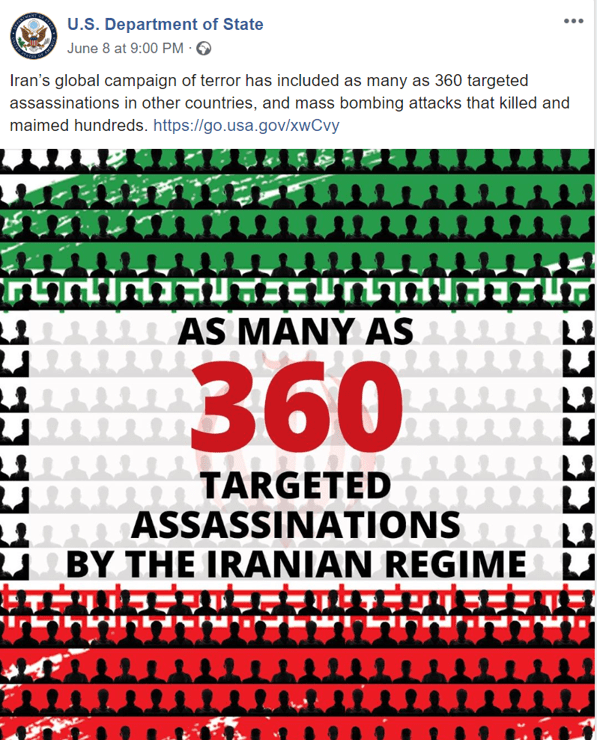
The Value of Facebook Comments When reviewing the US State Department’s Facebook account, it becomes apparent that the Department is in the midst of two digital campaigns. The first focuses on China’s alleged misconduct during the Covid19 outbreak. The second argues that Iran’s nefarious activities in the region, and the world, must be met by... Continue Reading →
Leveraging Big Data During Pandemics
Last week I had the opportunity to interview a software analyst working for one of the world’s most popular search engines. The analyst is part of a crisis response unit whose main task is to offer answers to Covid related queries. To do so, the crisis response team must gather reliable information from all over... Continue Reading →
Re-Framing China: The Corona Virus and National Images
The Corona pandemic is likely to influence the images of many nations. This is because billions of individuals are stranded at home comparing nations' responses to the virus. Moreover, news organizations throughout the world are constantly reporting on the policies of other nations. Finally, periods of acute crisis can challenge misconceptions and worldviews. Indeed, it... Continue Reading →
The Ethical Limitations of Digital Diplomacy: When MFAs Use Your Data
On January 17th, 2020, the US State Department official launched a Center for Analytics (CfA). According to the State Department website, the center will This unique asset helps U.S. diplomats use analytics to addresses key challenges, such as prioritizing issues for diplomatic engagement and aligning Department resources with U.S. foreign policy priorities… As directed by... Continue Reading →