Between the 5th and 7th of December the Israeli Foreign Ministry hosted Israel's Second Digital Diplomacy Conference. Attended by diplomats and academics from more than thirty countries, the conference explored the practice of diplomacy in the age of algorithms. As such, conference panels dealt with the issues of online propaganda and disinformation campaigns, countering the... Continue Reading →
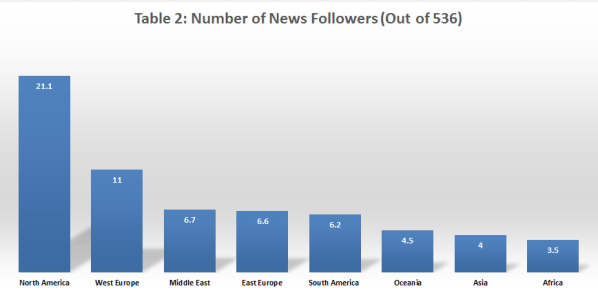
Do MFAs Really Attract Journalists on Social Media?
Some have traced the origins of digital diplomacy to America's need to counter Al-Qaeda's online narrative and recruitment efforts. As Ellen Hallams has written, already in 2008 it was estimated that the internet was responsible of 80% of recruitment of Jihadi movements. In an attempt to stem the tide of recruitment, and counter Al-Qaeda's narrative... Continue Reading →
The Personalization of Digital Diplomacy
In the early days of digital diplomacy, MFAs and diplomats viewed social media as linear communication tools. Diplomats believed that they could use social media to craft a message and directly disseminate it among online publics. Thus, social media was no different from other mass media such as the radio and television. Yet as the... Continue Reading →
Working Paper- The Contradictory Trends of Digital Diaspora Diplomacy
2017 marks a decade since the advent of “digital diplomacy”. What began as an experiment by a select number of foreign ministries has transformed into routine practice for diplomats and embassies the world over. To mark this occasion, I will be publishing a series of working papers. The goal of this series is to reflect... Continue Reading →
Why is Public Diplomacy Data Driven? A Response to Bean & Comor
Note: A version of this post first appeared on the USC Center on Public Diplomacy's website Introduction: Data Driven Public Diplomacy Last month, All Azimuth published an article by Bean and Comor titled "Data Driven Public Diplomacy: A Critical and Reflexive Assessment". The article focuses on a report published by the US Advisory Commission on... Continue Reading →
Can #DigitalDiplomacy Be Subtle?
Winston Churchill famously stated that "Diplomacy is the art of telling someone to go to hell in a way that he actually looks forward to the journey". Yet diplomacy is also a subtle art. A diplomat must always decide on a message and the intensity of his message. High intensity messages are meant to be... Continue Reading →
Can the Internet Save Public Diplomacy?
Introduction- Narratives, Narratives, Narratives Several weeks ago I began watching a TV show depicting the lives of vampires in New York City. One of the greatest challenge facing these vampires is their lack of ability to gain acceptance from the human population. As the vampire leader summarized, “we lack a compelling narrative”. This week I... Continue Reading →
Digitizing the EU’s Public Diplomacy in Israel
Introduction The relationship between Israel and the European Union has been strained for some time. Indeed it is enough to review op-eds published in Israeli newspapers to sense the resentment Israelis hold towards Brussels. This is, in part, a result of three EU policies. The first is the EU’s ongoing critique against Israeli settlements and... Continue Reading →
On the use of videos in Digital Diplomacy
Images & Diplomacy Images have traditionally played an important role in diplomacy. For instance, paintings were often used to bare testimony to diplomatic summits and conferences. Such is the case with Gerard ter Borch’s painting of the treaty of Munster. Additionally, political cartoons were used to narrate a nation’s foreign policy, frame its adversaries, manage... Continue Reading →
Evaluating Palestine’s Digital Diplomacy Strategy
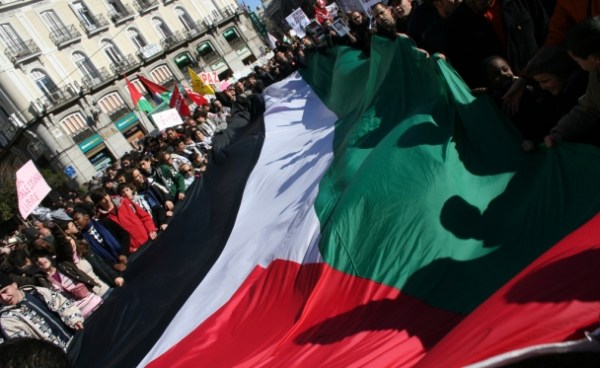
Note: A version of this post originally appeared on the USC Centre on Public Diplomacy's Blog From a diplomatic perspective, Palestine represents a puzzling case study. On the one hand, Palestine has been recognized as an independent state by the UN General Assembly. On the other hand, it is not a full member state of... Continue Reading →