Each week, I publish a list of interesting articles, essays and reports that may be of interest to the digital diplomacy community. This week- Concern mounts over government cyber agency's struggle to respond to hack fallout (CNN)Teachers on TV? Schools Try Creative Strategy to Narrow Digital Divide (The New York Times)Digital Advertising Harms Society. Here’s... Continue Reading →
Monday’s #MustRead List
Each week, I publish a list of interesting articles, essays and reports that may be of interest to the digital diplomacy community. This week- Subtle cyberattack met by swift cybersecurity acts (The Jerusalem Post)5 challenges to the new EU digital rulebook (Politico)Queen Elizabeth will deliver her Christmas Day message via Alexa this year, if you... Continue Reading →
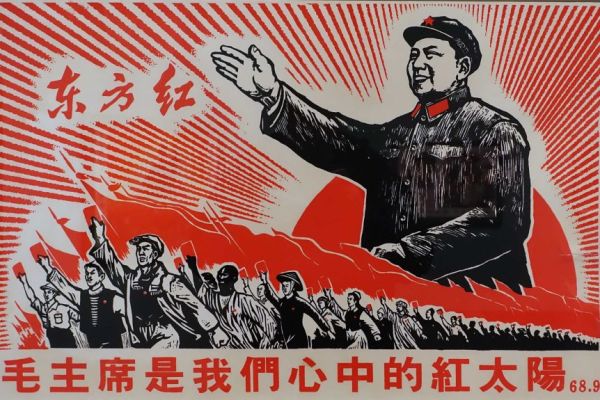
The new “new” propaganda
The term propaganda has accompanied digital diplomacy since its inception more than a decade ago. Notably, although the propaganda has a negative connotation it actually dates back to the Catholic church that wished to propagate the faith. As technologies have evolved, so have the forms of propaganda. Under the reign of Henry VI, tapestries were... Continue Reading →
Monday’s #MustRead List
Each week, I publish a list of interesting articles, essays and reports that may be of interest to the digital diplomacy community. This week- U.S. and States Say Facebook Illegally Crushed Competition (The New York Times)Google and Apple are banning technology for sharing users’ location data (The Verge)Russia's FireEye Hack Is a Statement—but Not a... Continue Reading →
What Digital Diplomacy Adds to IR?
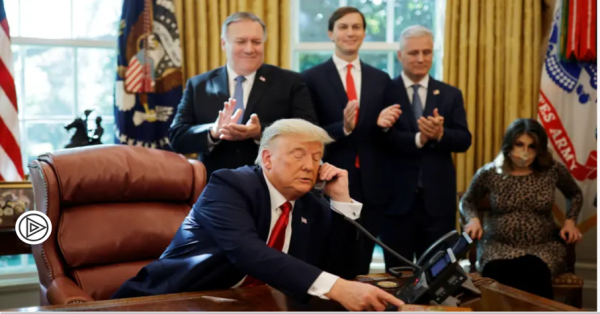
This post seeks to articulate how the study of digital diplomacy contributes to the study of international relations as a whole. To do so, it focuses on the image below. The picture depicts then US President Donald Trump holding a conference call between the leaders of Israel and Sudan, who agreed to normalize ties following... Continue Reading →
Nostalgia’s Role in Digital Diplomacy
On Nostalgia Nostalgia is a basic human emotion. Strangely, it is a combination of two contradictory emotions- a sweet longing for the past and a pain emanating from the fact that the past can never be fully experienced again. Throughout history, nostalgia has served as a social and political tool, a means of gathering support... Continue Reading →
Russia’s Digital Kiev Offensive
World War 2 (WW2) features prominently on social media. Dates of important battles are commemorated by many European nations. Foreign ministries (MFAs) also memorialize brutal occupations and celebrate eventual liberations. For some, WW2 is an integral part of national narratives, as is the case with Israel and Poland. While the former claims to have been... Continue Reading →
On Digital Attrition: Is Trump Losing His Twitter War?
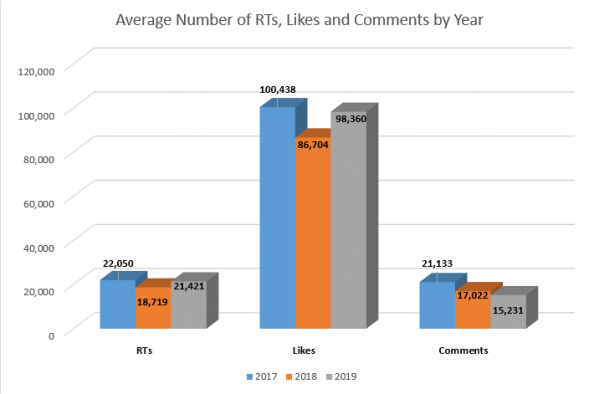
Trump Triumphs? During the 2016 Presidential elections, Donald Trump argued that he relied on his Twitter account to bypass the liberal American media and communicate directly with the American public. Having been denied access to the public sphere by newsroom elites, “the Donald” used social media win over the American electorate. Some have asserted that... Continue Reading →
What Is The Role of Humor in Digital Diplomacy?
The past two years have seen the growing use of humor and satire in digital diplomacy. Memes, GIFs, pop references and BLOCK CAPITALS have become another instrument in the diplomatic toolkit. One of the earliest successful uses of humor in digital diplomacy occurred during the Crimea Crisis of 2014 when the Canadian Mission to NATO... Continue Reading →
NATO’S Digital Narrative- “What We Are”, Not “Who We Are”
The word narrative has for some time dominated conversations about digital diplomacy. At the most basic level, narratives are viewed as compelling stories through which state and non-state actors can explain their policies and actions. The narrative is thus a rhetorical and visual device that replaces official press statements lined with diplomatic double entendres and... Continue Reading →