James Pamment has written that for most of the 20th century the term public diplomacy was associated with the term propaganda. According to the Oxford Dictionary propaganda relates to information, especially of a biased or misleading nature, used to promote a political cause or point of view. During the 21st century, the field of public... Continue Reading →
Why Are Digital Diplomacy Initiatives Short-lived?
Last week I had the pleasure of attending the International Communication Association's 68th Annual Conference in Prague. My presentation focused on the digital and public diplomacy activities of the Palestinian government in the West Bank, specifically it's Facebook Embassy to Israel. While presenting my work I mentioned that unlike other virtual Embassies, Palestine's Facebook Embassy... Continue Reading →
Narrative Alignment as Public Diplomacy Evaluation
Despite the emergence of new technologies the task of evaluating public diplomacy activities remains a daunting one. While scholars and practitioners have offered numerous definitions for the term public diplomacy, they have yet to agree upon a method for measuring the impact of public diplomacy activities. Some have suggested that public diplomacy is a means... Continue Reading →
An Optimistic Research Agenda For Digital Public Diplomacy
Last week I had the pleasure of serving as a discussant on a panel that explored new research agendas in digital diplomacy. The panel, chaired by Professor Emily Metzgar, was part of the 2018 International Studies Association annual conference. Notably, the majority of the participants on the panel offered research agendas that focused on the negative impact... Continue Reading →
Who is Winning the #DigitalDiplomacy Competition over the Salisbury Attack?
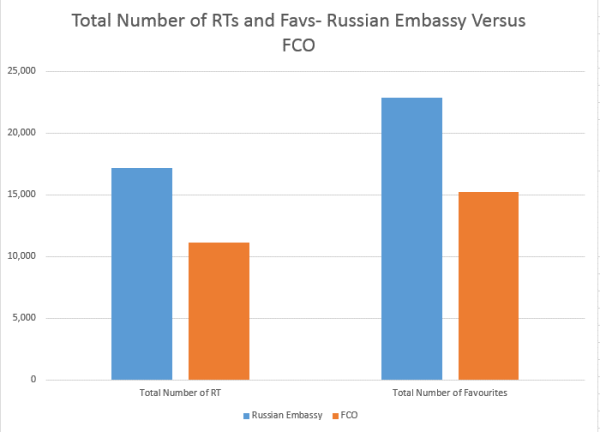
Introduction March 4th saw a nerve agent attack in London that left two people dead. According to the British government, this attack was perpetrated by Russia and constitutes the first nerve agent attack since the end of World War 2. In the hours and days following the attack, the UK government demanded that Russia offer... Continue Reading →
Preparing for the #Digital Future
Prof. Corenliu Bjola of the Oxford Digital Diplomacy Research Group recently concluded that the first stage of digital diplomacy has been a resounding success. Although MFAs are risk averse organizations who value discretion and shun from the limelight, they have successfully migrated to social media and adopted new communication practices that centre on information sharing,... Continue Reading →
The Woman in Purple- An Address At Warwick University
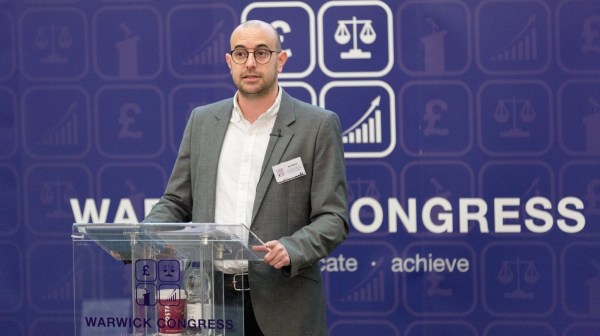
(The following is an address made at the 2018 Warwick Student Congress) American poet Allen Ginsburg opens his masterpiece Howl with the lines I saw the best minds of my generation destroyed by madness, starving hysterical naked,dragging themselves through the negro streets at dawn looking for an angry fix,angelheaded hipsters burning for the ancient heavenly... Continue Reading →
From Digital Tactics To Digital Strategies: Practicing Digital Public Diplomacy
Note: This post was co-written with Prof. Corneliu Bjola and first appeared on the USC Center for Public Diplomacy Blog On the 1st and 2nd of February 2017, the Oxford Digital Diplomacy Research Group (DigDiploRox) took part in The Hague Digital Diplomacy Camp. Organized by the Dutch Foreign Ministry, the Camp sought to explore the... Continue Reading →
Should Diplomats Dump Social Media?
During World War 2, the US 101st Airborne Division took part in what would be known as the Battle of the Bulge. Encircled by the German Military, pounded by German artillery and freezing in the winter’s snow, members of 101st were told to hold their positions near the municipality of Bastogne at all costs. By... Continue Reading →
The Digital Disruption of the Two Level Game
In 1988 Robert Putnam conceptualized diplomacy as a two level game. At the first level lies the world of domestic or national politics. At the second level lies the world of international politics. Putnam argued that these two levels continuously collide with one another. For instance, a government's ability to negotiate treaties is limited given... Continue Reading →