Now is the age of conspiracies. Throughout the world, the mass dissemination and belief in conspiracy theories seems to be on the rise. These were especially visible during the 2016 Presidential elections as some argued that climate change was a Chinese invention meant to weaken the West, that Barack Obama was not born in the... Continue Reading →
Persoan Grata- An Interview with the Israeli MFA
This week I was interviewed for the Israeli MFA's podcast on digital diplomacy- Persona Grata. In this special episode of Persona Grata I talked with Yiftah Curiel who heads the Israel MFA's Digital Diplomacy department which manages more than 30 social media channels in 5 languages including English, Arabic, Farsi, Spanish, Russian and Hebrew. We discussed... Continue Reading →
What Is The Role of Humor in Digital Diplomacy?
The past two years have seen the growing use of humor and satire in digital diplomacy. Memes, GIFs, pop references and BLOCK CAPITALS have become another instrument in the diplomatic toolkit. One of the earliest successful uses of humor in digital diplomacy occurred during the Crimea Crisis of 2014 when the Canadian Mission to NATO... Continue Reading →
What Can Cultural Theory Tell Us About Trump’s Populist Public Diplomacy the Digital Age?
Paweł Surowiec (University of Sheffield) and Chris Miles (Bournemouth University) During the Cold War, the categorisation between ‘high’ and ‘low’ politics, mirrored by 'high' and 'low' cultures, was distinguishable as a trend in public diplomacy. These distinctions became blurred and, in the early 2000s, a new trend emerged whereby ‘high’ politics began borrowing from 'low'... Continue Reading →
Can Digital Diplomacy Build Trust? The Case of Jason Greenblatt
Traditionally, diplomacy rested on proximity. Ambassadors to foreign nations resided in court so that they could assess the temperament of a monarch, create alliances with noble families, gather gossip from local scoundrels and coordinate action with their peers. Proximity has remained important in the 21st century. Ambassadors to multi-lateral organizations essentially reside in a new... Continue Reading →
In Digital Diplomacy, Hope Travels Further Than Hate
Recent years have seen ministries of foreign affairs (MFAs) adopt a strategic approach to their digital communications. As part of this approach, MFAs create narratives, or frames, through which digital publics can make sense of events shaping their world. Scholars such as Ben O’Loughlin, Alister Miskimmon and Laura Roselle argue that narratives are powerful as... Continue Reading →
Are Local Employees the Unsung Heroes of Digital Diplomacy?
The past decade has seen the accelerated digitalization of diplomacy. While scholars, diplomats and diplomatic institutions are still searching for a definition of the term “digital diplomacy”, most agree that digital technologies have substantially affected the practice of diplomacy. Over the past four years alone, digital technologies have been employed in nearly all realms of... Continue Reading →
The Digital Battle over News Headlines
When exploring digital diplomacy, scholars and practitioners tend to treat diplomacy as an island entire of itself. Some scholars, for instance, examine how digital tools facilitate diplomatic activities. Such is the case with virtual embassies that enable diplomats to foster ties with distant foreign populations. Other times scholars examine how digital tools complicate the practice... Continue Reading →
The Training Disconnect: How to Prepare Diplomats for the Digital Age
The adoption of digital technologies by diplomats has had a profound impact on the working routines of ministries of foreign affairs (MFAs). Specifically, digital technologies have had a temporal and spatial effect on diplomacy. The speed with which news travels online has reduced the response time of diplomats. Those wishing to comment on world events... Continue Reading →
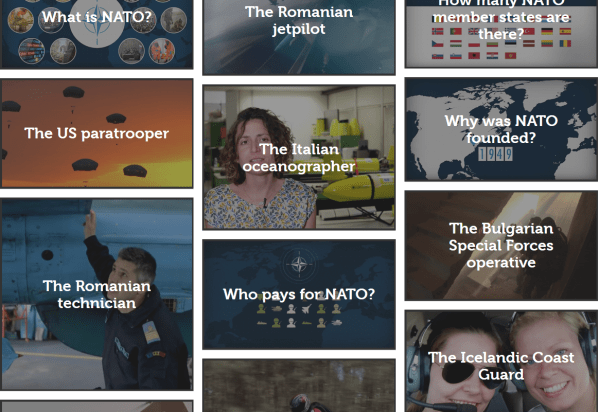
NATO’S Digital Narrative- “What We Are”, Not “Who We Are”
The word narrative has for some time dominated conversations about digital diplomacy. At the most basic level, narratives are viewed as compelling stories through which state and non-state actors can explain their policies and actions. The narrative is thus a rhetorical and visual device that replaces official press statements lined with diplomatic double entendres and... Continue Reading →