The word narrative has for some time dominated conversations about digital diplomacy. At the most basic level, narratives are viewed as compelling stories through which state and non-state actors can explain their policies and actions. The narrative is thus a rhetorical and visual device that replaces official press statements lined with diplomatic double entendres and... Continue Reading →
Revisiting Putnam’s two-level game theory in the digital age: Domestic digital diplomacy and the Iran nuclear deal
Note: This post was originally published on the blog of the Cambridge Review of International Affairs and was co-authored with Corneliu Bjola. In 1988, Robert Putnam conceptualised diplomatic negotiations as a two-level game in which national and international politics often collide. In this framework, constituents and interest groups (labour unions, activist groups, etc.) pursue their interests at... Continue Reading →
Why Are Digital Diplomacy Initiatives Short-lived?
Last week I had the pleasure of attending the International Communication Association's 68th Annual Conference in Prague. My presentation focused on the digital and public diplomacy activities of the Palestinian government in the West Bank, specifically it's Facebook Embassy to Israel. While presenting my work I mentioned that unlike other virtual Embassies, Palestine's Facebook Embassy... Continue Reading →
Delivering Digital Consular Aid
Traditionally, MFAs (ministries of foreign affairs) have been viewed as organizations that face the world with their back to the nation as they have been responsible for communicating with foreign populations rather than the national citizenry. Thus, unlike ministries of Justice, Homeland Security and Culture, MFAs were never able to foster a domestic constituency putting... Continue Reading →
An Optimistic Research Agenda For Digital Public Diplomacy
Last week I had the pleasure of serving as a discussant on a panel that explored new research agendas in digital diplomacy. The panel, chaired by Professor Emily Metzgar, was part of the 2018 International Studies Association annual conference. Notably, the majority of the participants on the panel offered research agendas that focused on the negative impact... Continue Reading →
The Woman in Purple- An Address At Warwick University
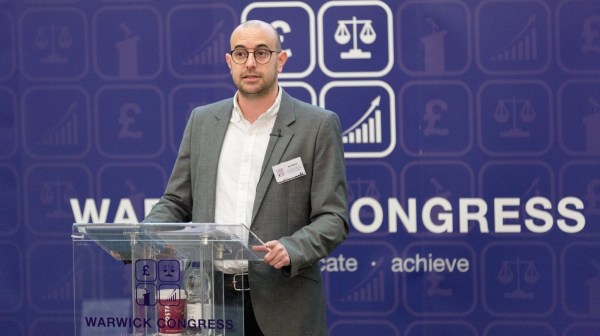
(The following is an address made at the 2018 Warwick Student Congress) American poet Allen Ginsburg opens his masterpiece Howl with the lines I saw the best minds of my generation destroyed by madness, starving hysterical naked,dragging themselves through the negro streets at dawn looking for an angry fix,angelheaded hipsters burning for the ancient heavenly... Continue Reading →
Do MFAs Really Attract Journalists on Social Media?
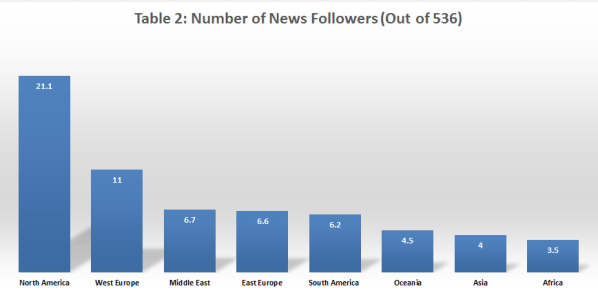
Some have traced the origins of digital diplomacy to America's need to counter Al-Qaeda's online narrative and recruitment efforts. As Ellen Hallams has written, already in 2008 it was estimated that the internet was responsible of 80% of recruitment of Jihadi movements. In an attempt to stem the tide of recruitment, and counter Al-Qaeda's narrative... Continue Reading →
Can the Internet Save Public Diplomacy?
Introduction- Narratives, Narratives, Narratives Several weeks ago I began watching a TV show depicting the lives of vampires in New York City. One of the greatest challenge facing these vampires is their lack of ability to gain acceptance from the human population. As the vampire leader summarized, “we lack a compelling narrative”. This week I... Continue Reading →
If The Cuban Missile Crisis Were Tweeted
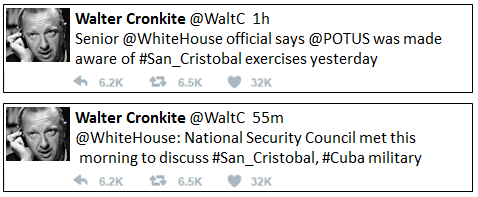
Two weeks ago, Professor David Rothkopf broadcasted a podcast about digital diplomacy. In the podcast he wonders, like many others, how past crises might have played out differently had digital tools been invented at the time. Such is the case with Cuban Missile Crisis of 1962 which often serves as an exemplar of crises management... Continue Reading →
On the use of images in the diplomatic struggle over Syria
Two weeks ago I published an analysis of the images of Syria used by the British FCO on Twitter. My analysis found that the FCO employs images that resonate with iconic moments from British history. In addition, I found that these images are an integral part of the British narrative of events in Syria. This... Continue Reading →