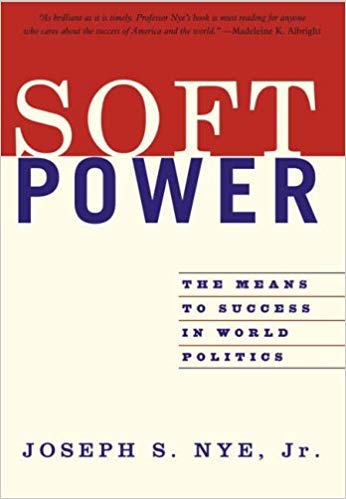
In the autumn of 1990, Joseph Nye sought to re-imagine what American power would like in the 21st century. Writing near the end of the Cold War, Nye offered scholars and policy makers a new conceptual framework through which they could understand power dynamics in a changing world. The Cold War would soon be over,... Continue Reading →
Call for Papers: The Digitalization of Diplomacy in South-East Asia (Special Issue)
Call for Papers Journal of Contemporary Eastern Asia (JCEA), Vol. 19, No 1 - Summer 2020 The Digitalization of Diplomacy in South-East Asia: A Special Issue Invited editors: Ilan Manor, University of Oxford (manor.ilan@gmail.com) Craig Hayden, Marine Corps University Hyunjin Seo, University of Kansas In recent years scholars have paid growing attention to... Continue Reading →
On Digital Attrition: Is Trump Losing His Twitter War?
Trump Triumphs? During the 2016 Presidential elections, Donald Trump argued that he relied on his Twitter account to bypass the liberal American media and communicate directly with the American public. Having been denied access to the public sphere by newsroom elites, “the Donald” used social media win over the American electorate. Some have asserted that... Continue Reading →
The Digital Trial of Ivanka Trump
It began with a necklace. A diamond necklace to be precise. It was purchased from two Jewish jewellers on behalf of the French Queen Marie Antoinette in 1785. The necklace, comprised of 647 stones, and weighing 2,800 carats, never made it to the Queen. Rather, it fell into the hands of a charlatan women who... Continue Reading →
An Act of Digital Disobedience? When U.S. Embassies Raised the Pride Flag
Over the past week, several newspapers have published stories focusing on the activities of U.S. embassies during Pride Month. Specifically, these stories have dealt with the creative ways in which some embassies hoisted the rainbow flag during Pride Month. Unlike the Obama era, the Trump administration has banned the use of the rainbow flag thus preventing... Continue Reading →
The age of conspiracies: Why are Conspiracy Theories Flourishing Online?
Now is the age of conspiracies. Throughout the world, the mass dissemination and belief in conspiracy theories seems to be on the rise. These were especially visible during the 2016 Presidential elections as some argued that climate change was a Chinese invention meant to weaken the West, that Barack Obama was not born in the... Continue Reading →
Persoan Grata- An Interview with the Israeli MFA
This week I was interviewed for the Israeli MFA's podcast on digital diplomacy- Persona Grata. In this special episode of Persona Grata I talked with Yiftah Curiel who heads the Israel MFA's Digital Diplomacy department which manages more than 30 social media channels in 5 languages including English, Arabic, Farsi, Spanish, Russian and Hebrew. We discussed... Continue Reading →
How America Uses Instagram to Indict Iran
Recent weeks have seen tensions between the U.S. and Iran reach fever pitch. While the Trump administration has warned Iran not to commit any acts of provocation, or attack American interests in the region, Iranian officials have vowed to defeat America in any future war. With tensions quickly escalating, the U.S. has decided to withdraw... Continue Reading →
Public Diplomacy in the Digital Age
This blog post is an excerpt from a recent special issue of the Hague Journal of Diplomacy dealing with the future of public diplomacy. For the full article click here Corneliu Bjola, Jennifer Cassidy and Ilan Manor The scope, volume and intensity of global data connectivity are expected to explode in the coming years. The... Continue Reading →
What Is The Role of Humor in Digital Diplomacy?
The past two years have seen the growing use of humor and satire in digital diplomacy. Memes, GIFs, pop references and BLOCK CAPITALS have become another instrument in the diplomatic toolkit. One of the earliest successful uses of humor in digital diplomacy occurred during the Crimea Crisis of 2014 when the Canadian Mission to NATO... Continue Reading →