A brand may be considered as a set of associations that are elicited by a product or company. For example, when people see the Apple company logo certain associations come to mind be it “slick design”, “innovation” or “expensive”. The logo of the clothing company H&M elicits a different set of associations including “young”, “affordable”... Continue Reading →
On Memory, Digitalization & Public Diplomacy in Auschwitz
Throughout the 20th century, numerous intellectual have sought to come to grips with the existence of the Auschwitz Concentration Camp. According to author Primo Levy, Auschwitz was its own universe. The laws that govern our universe, those of physics and mathematics, were suspended in Auschwitz. It was a place with its own language, moral codes,... Continue Reading →
Nostalgia in British Digital Diplomacy
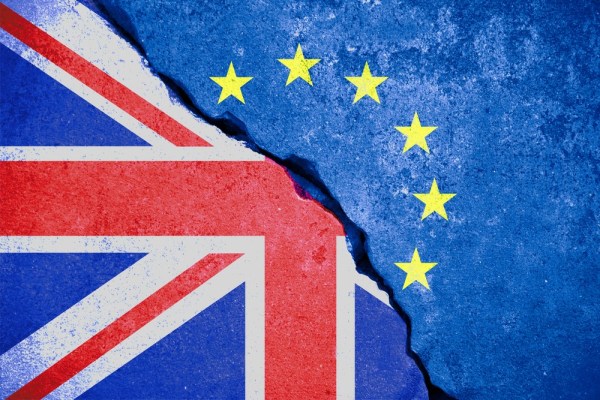
In a recent ISA conference panel, I argued that now is the age of nostalgia. Throughout the world we are witnessing an insatiable longing for the past. In the post-Brexit haze, the UK craves the influence and power of its defunct empire; in Turkey neo-Ottoman sentiments have transformed a President into a Sultan; Americas have... Continue Reading →
ISA/ICA Soft Power Debate
NOTE: On March 30, 2021 the International Communication Section of ISA, and the ICA's Public Diplomacy Interest Group held a joint debate on the merits of the term Soft Power. I was asked to argue against the proposition. Below are my comments, which should be regarded as both an assessment of the term Soft Power,... Continue Reading →
Leveraging Big Data During Pandemics
Last week I had the opportunity to interview a software analyst working for one of the world’s most popular search engines. The analyst is part of a crisis response unit whose main task is to offer answers to Covid related queries. To do so, the crisis response team must gather reliable information from all over... Continue Reading →
What Embassies Tweet About During COVID-19
Diplomacy is not immune to the Covid-19 virus. For the first time since the 17th century, diplomats and world leaders no longer meet face-to-face to address shared challenges or resolve shared grievances. The UN is closed, the WTO is out of session and G7 meetings take place through video conference calls. Embassies, traditionally tasked with... Continue Reading →
The age of conspiracies: Why are Conspiracy Theories Flourishing Online?
Now is the age of conspiracies. Throughout the world, the mass dissemination and belief in conspiracy theories seems to be on the rise. These were especially visible during the 2016 Presidential elections as some argued that climate change was a Chinese invention meant to weaken the West, that Barack Obama was not born in the... Continue Reading →
Selfie Diplomacy in a post-Brexit World
In 2015 Dr. Elad Segev and I examined the Selfie Diplomacy of the US State Department. We defined selfie diplomacy as the use of social media sites to proactively manage a nation’s image. In this sense, selfie diplomacy is akin to nation branding campaigns in which a nation’s image can be created, monitored and evaluated... Continue Reading →
Can digital diplomacy skills serve as public diplomacy resources? The case of Brexit
When evaluating the digitalization of public diplomacy, one can segment this process into two stages. The first stage lasted from circa 2007 to 2014. It was during this stage that diplomats and diplomatic institutions began to experiment with digital technologies. In 2007 the Swedish Institute launched one of the world’s first virtual embassies. In 2011... Continue Reading →
How Diplomats Can Combat Digital Propaganda
James Pamment has written that for most of the 20th century the term public diplomacy was associated with the term propaganda. According to the Oxford Dictionary propaganda relates to information, especially of a biased or misleading nature, used to promote a political cause or point of view. During the 21st century, the field of public... Continue Reading →