Monday’s Must Read List

Each week, I publish a list of interesting articles, essays and reports that may be of interest to the digital diplomacy community. This week- GCHQ to use AI to tackle child sex abuse, disinformation and trafficking (GCHQ)Daniel Kahneman: ‘Clearly AI is going to win. How people are going to adjust is a fascinating problem' (The... Continue Reading →

ISA/ICA Soft Power Debate

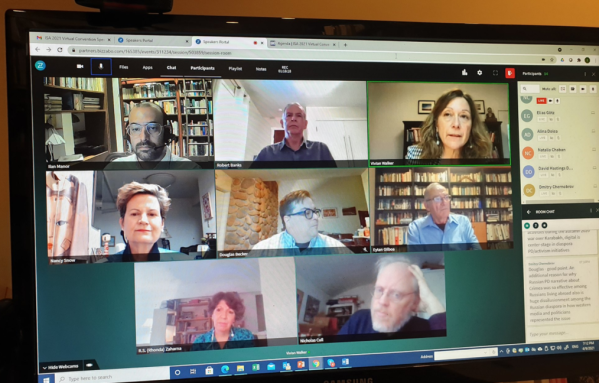
NOTE: On March 30, 2021 the International Communication Section of ISA, and the ICA's Public Diplomacy Interest Group held a joint debate on the merits of the term Soft Power. I was asked to argue against the proposition. Below are my comments, which should be regarded as both an assessment of the term Soft Power,... Continue Reading →

The Banality of Soft Power

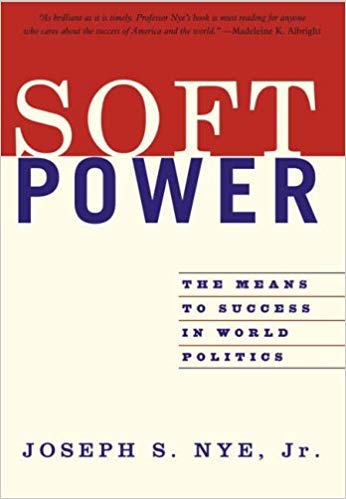
In the autumn of 1990, Joseph Nye sought to re-imagine what American power would like in the 21st century. Writing near the end of the Cold War, Nye offered scholars and policy makers a new conceptual framework through which they could understand power dynamics in a changing world. The Cold War would soon be over,... Continue Reading →

Public Diplomacy in the Digital Age

This blog post is an excerpt from a recent special issue of the Hague Journal of Diplomacy dealing with the future of public diplomacy. For the full article click here  Corneliu Bjola, Jennifer Cassidy and Ilan Manor The scope, volume and intensity of global data connectivity are expected to explode in the coming years. The... Continue Reading →

What Can Cultural Theory Tell Us About Trump’s Populist Public Diplomacy the Digital Age?

Paweł Surowiec (University of Sheffield) and Chris Miles (Bournemouth University) During the Cold War, the categorisation between ‘high’ and ‘low’ politics, mirrored by 'high' and 'low' cultures, was distinguishable as a trend in public diplomacy. These distinctions became blurred and, in the early 2000s, a new trend emerged whereby ‘high’ politics began borrowing from 'low'... Continue Reading →

Revisiting Putnam’s two-level game theory in the digital age: Domestic digital diplomacy and the Iran nuclear deal

Note: This post was originally published on the blog of the Cambridge Review of International Affairs and was co-authored with Corneliu Bjola.   In 1988, Robert Putnam conceptualised diplomatic negotiations as a two-level game in which national and international politics often collide. In this framework, constituents and interest groups (labour unions, activist groups, etc.) pursue their interests at... Continue Reading →

Blog at WordPress.com.

Up ↑