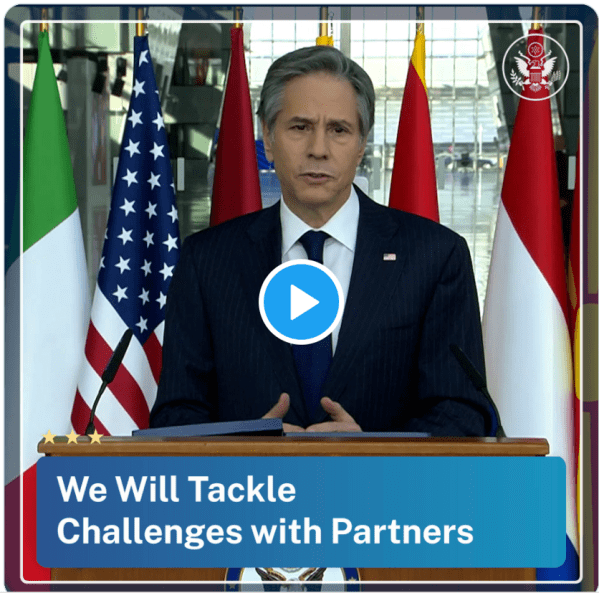
For nearly a decade, the term digital diplomacy has been closely associated with social media. In many MFAs, digital diplomacy units are actually tasked with managing social media empires that span hundreds of accounts across numerous platforms. Although social media has remained central to the practice of digital diplomacy, its use has changed over the... Continue Reading →
Digital Diplomacy and the Beautification of War
Susan Sontag famously argued that photography was violent in nature. Photographs, according to Sontag, are violent as they fracture linear time. Each photograph is like an atom torn from linear time and forever frozen. The more photographs one takes, the more he or she rips linear time into fragments that can longer form a coherent... Continue Reading →
ISA/ICA Soft Power Debate
NOTE: On March 30, 2021 the International Communication Section of ISA, and the ICA's Public Diplomacy Interest Group held a joint debate on the merits of the term Soft Power. I was asked to argue against the proposition. Below are my comments, which should be regarded as both an assessment of the term Soft Power,... Continue Reading →
America’s New Rhetoric of Alliances
In a recent article, Guy Golan and I argued that the 21st century will be governed by three giants: The US and China, thanks to their military and financial power, and India thanks to its status as the world’s telecommunications hub. In the world of giants, no single nation will be able to later the... Continue Reading →
Algorithms as Audiences
Diplomacy’s digitalization has advanced at a remarkable speed. MFAS, once defined as archaic institutions who lack the communicative culture to adapt to new technologies, have launched virtual Embassies, created smartphone applications, built blog sites, established big data units and have taken to writing their own algorithms. While not all digital initiatives have ended in a... Continue Reading →
The age of conspiracies: Why are Conspiracy Theories Flourishing Online?
Now is the age of conspiracies. Throughout the world, the mass dissemination and belief in conspiracy theories seems to be on the rise. These were especially visible during the 2016 Presidential elections as some argued that climate change was a Chinese invention meant to weaken the West, that Barack Obama was not born in the... Continue Reading →
In Digital Diplomacy, Hope Travels Further Than Hate
Recent years have seen ministries of foreign affairs (MFAs) adopt a strategic approach to their digital communications. As part of this approach, MFAs create narratives, or frames, through which digital publics can make sense of events shaping their world. Scholars such as Ben O’Loughlin, Alister Miskimmon and Laura Roselle argue that narratives are powerful as... Continue Reading →
2017: A Year of Digital Uncertainty
In many respects, 2017 was a year of digital uncertainty. It was a year in which digital platforms were used to weaponize uncertainty. It was a year in which the societal role of digital platforms became uncertain. It was a year in which the relationship between states and tech gaits became uncertain. And it was... Continue Reading →
Queen Rania’s Selfie
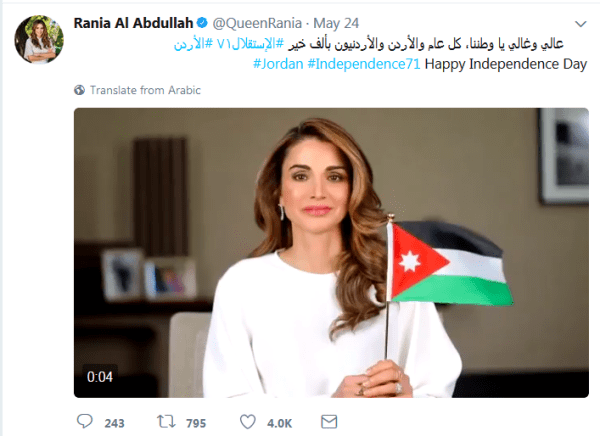
Introduction The Arab World has always had a strenuous relationship with social media. On the one hand, several countries in the Arab World monitor their citizen’s social media activity, ban social media or shut down social media during times of domestic upheaval. Such was the case when the Mubarak regime attempted to block Facebook at... Continue Reading →
On the use of images in the diplomatic struggle over Syria
Two weeks ago I published an analysis of the images of Syria used by the British FCO on Twitter. My analysis found that the FCO employs images that resonate with iconic moments from British history. In addition, I found that these images are an integral part of the British narrative of events in Syria. This... Continue Reading →