Two years ago the Dutch Foreign Ministry held a Digital Diplomacy Camp. Over the course of two days, the Camp offered a platform for diplomats, journalists, scholars and representatives of social media companies eager to discuss the digitalization of diplomacy. In one session, Jay Wang of the USC Center on Public Diplomacy reflected on online... Continue Reading →
The Banality of Soft Power
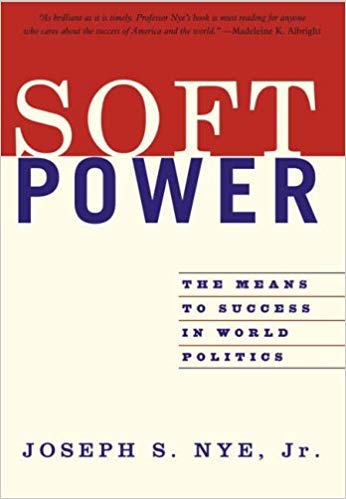
In the autumn of 1990, Joseph Nye sought to re-imagine what American power would like in the 21st century. Writing near the end of the Cold War, Nye offered scholars and policy makers a new conceptual framework through which they could understand power dynamics in a changing world. The Cold War would soon be over,... Continue Reading →
What Is The Role of Humor in Digital Diplomacy?
The past two years have seen the growing use of humor and satire in digital diplomacy. Memes, GIFs, pop references and BLOCK CAPITALS have become another instrument in the diplomatic toolkit. One of the earliest successful uses of humor in digital diplomacy occurred during the Crimea Crisis of 2014 when the Canadian Mission to NATO... Continue Reading →
Can Digital Diplomacy Build Trust? The Case of Jason Greenblatt
Traditionally, diplomacy rested on proximity. Ambassadors to foreign nations resided in court so that they could assess the temperament of a monarch, create alliances with noble families, gather gossip from local scoundrels and coordinate action with their peers. Proximity has remained important in the 21st century. Ambassadors to multi-lateral organizations essentially reside in a new... Continue Reading →
Narrative Realignment & the Holy Grail of Digital Diplomacy
How to prove the efficacy of digital diplomacy activities? This question has plagued diplomats and scholars for nearly a decade. Diplomats have had to prove the efficacy of digital activities in order to ensure the very existence of digital diplomacy departments. Unlike any other desk or department, diplomats have had to demonstrate that digital diplomacy... Continue Reading →
NATO’S Digital Narrative- “What We Are”, Not “Who We Are”
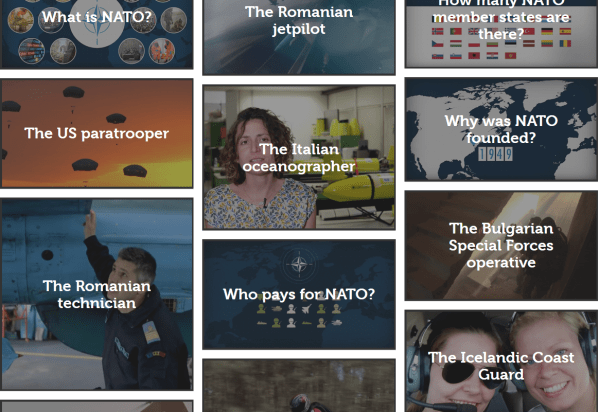
The word narrative has for some time dominated conversations about digital diplomacy. At the most basic level, narratives are viewed as compelling stories through which state and non-state actors can explain their policies and actions. The narrative is thus a rhetorical and visual device that replaces official press statements lined with diplomatic double entendres and... Continue Reading →
Revisiting Putnam’s two-level game theory in the digital age: Domestic digital diplomacy and the Iran nuclear deal
Note: This post was originally published on the blog of the Cambridge Review of International Affairs and was co-authored with Corneliu Bjola. In 1988, Robert Putnam conceptualised diplomatic negotiations as a two-level game in which national and international politics often collide. In this framework, constituents and interest groups (labour unions, activist groups, etc.) pursue their interests at... Continue Reading →
Why Are Digital Diplomacy Initiatives Short-lived?
Last week I had the pleasure of attending the International Communication Association's 68th Annual Conference in Prague. My presentation focused on the digital and public diplomacy activities of the Palestinian government in the West Bank, specifically it's Facebook Embassy to Israel. While presenting my work I mentioned that unlike other virtual Embassies, Palestine's Facebook Embassy... Continue Reading →
Delivering Digital Consular Aid
Traditionally, MFAs (ministries of foreign affairs) have been viewed as organizations that face the world with their back to the nation as they have been responsible for communicating with foreign populations rather than the national citizenry. Thus, unlike ministries of Justice, Homeland Security and Culture, MFAs were never able to foster a domestic constituency putting... Continue Reading →
An Optimistic Research Agenda For Digital Public Diplomacy
Last week I had the pleasure of serving as a discussant on a panel that explored new research agendas in digital diplomacy. The panel, chaired by Professor Emily Metzgar, was part of the 2018 International Studies Association annual conference. Notably, the majority of the participants on the panel offered research agendas that focused on the negative impact... Continue Reading →