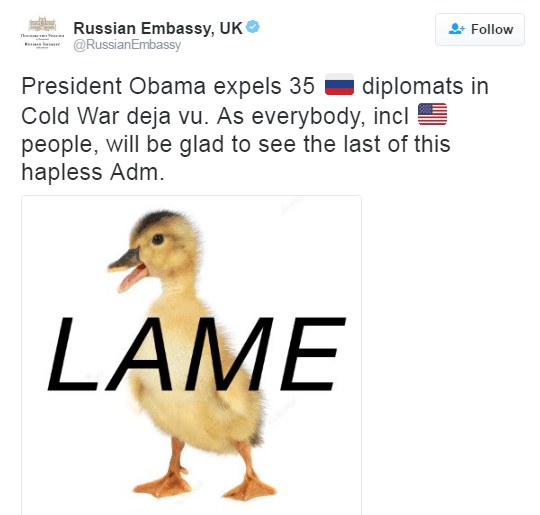
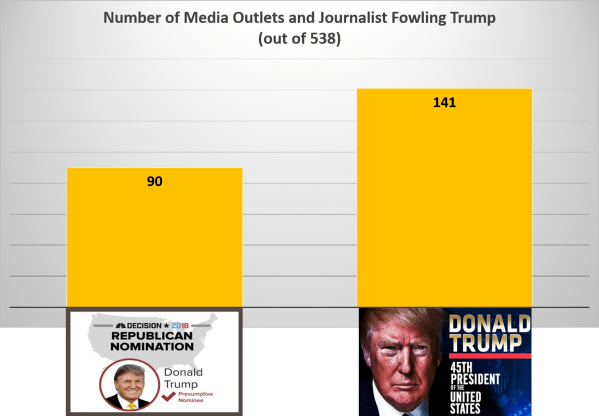
Despite recent debates on fake news and the virility of rumors and gossip, it is important to remember that social media users are intelligent, curious and eager to learn about events shaping their world. More specifically, digital diplomacy followers are often interested in insight and analysis of global events. For this reason, narratives may play... Continue Reading →
Do World Leaders attract #digital diplomats? 2016 analysis
Two weeks ago I evaluated the extent to which Donald Trump has been able to attract diplomats, MFAs, embassies and foreign affairs journalists to his Twitter account. My analysis suggested that most digital diplomats, and diplomatic institutions, do not follow Trump online. This week, I decided to expand my analysis and see if world leaders... Continue Reading →
10 Tips to Increase ROI on #DigitalDiplomacy
On Friday, December 2nd, the Oxford Digital Diplomacy Research Group, and the Latvian Mission to Geneva, co-hosted a Digital Diplomacy event at the UN headquarters in Geneva. The purpose of the event was to examine whether there is a Return On Investment in digital diplomacy activities. The event demonstrated that the first stage of digital... Continue Reading →
Has Donald Trump Obtained Digital Diplomatic Recognition?
Several weeks before the 2016 US elections, I analysed the extent to which Presidential candidates attract digital diplomacy followers. To do, I evaluated the number of Twitter followers Hillary Clinton and Donald Trump attracted from five epistemic communities: MFAs, UN missions in NY and Geneva, Multi-Lateral organizations and foreign affairs journalists. My results showed that... Continue Reading →
How will #Digital Disappointment influence digital #diplomacy
Last week I had the pleasure of attending a conference at the Ditchley Foundation centered on the question- "Will we still have one global internet in 2025?" The conference dealt with a myriad of topics ranging from the governance of the internet to the impact the Internet of Things will have on parliamentary politics. Over... Continue Reading →
Evaluating the Dialogic Activities of London Embassies
When one explores the digital diplomacy activities of embassies, he is often surprised by the number of social media accounts embassies now maintain. For instance, embassies in Washington DC are often active on Facebook, Twitter, YouTube and Instagram. The rationale for operating several accounts lies in the understanding that audiences use different social media platform... Continue Reading →
Digital Diplomacy in the Age of Political Extremity
Introduction Over the past year, a growing number of scholars, diplomats and journalists have reflected on the growing importance of algorithms to the conduct of diplomacy. Some MFAs now employ algorithms to analyze online discourse in foreign countries in an attempt to anticipate civil unrest. Likewise, algorithms are used to identify relevant audiences for public... Continue Reading →
The 2017 Social Network of Foreign Ministries
Introduction In May of 2014, I published my analysis of the social network of world foreign ministries (MFAs) on twitter. My assumption was that MFAs would actively follow one another online in order to gather relevant information. For instance, by following other ministries an MFA may be able to identify policy changes in certain countries,... Continue Reading →
Evaluating Palestine’s Digital Diplomacy Strategy
Note: A version of this post originally appeared on the USC Centre on Public Diplomacy's Blog From a diplomatic perspective, Palestine represents a puzzling case study. On the one hand, Palestine has been recognized as an independent state by the UN General Assembly. On the other hand, it is not a full member state of... Continue Reading →
Three Leaders Three Narratives: Digital Diplomacy at the UN General Assembly
The yearly session of the UN General Assembly may be regarded as the pinnacle of the diplomatic calendar year. Within the space of a few days, global leaders are all offered the opportunity to address the General Assembly and, through global news channels, the world. Additionally, the General Assembly is often the sight of intensive... Continue Reading →