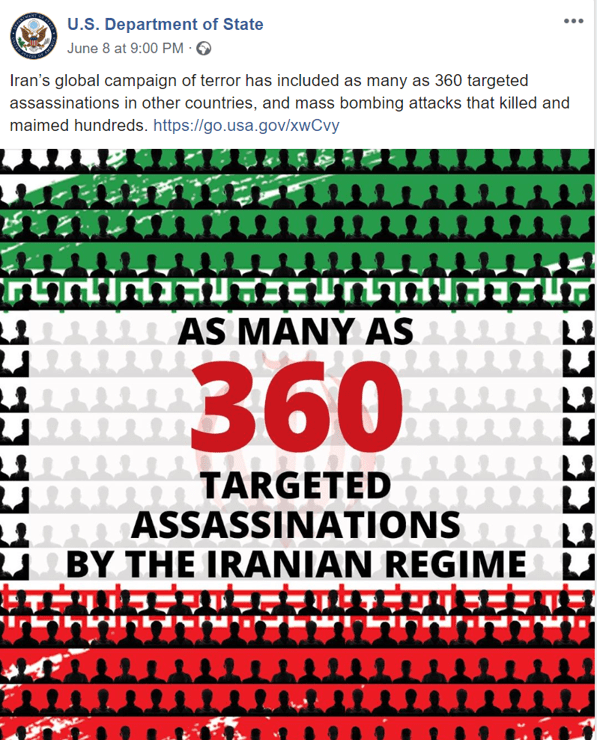
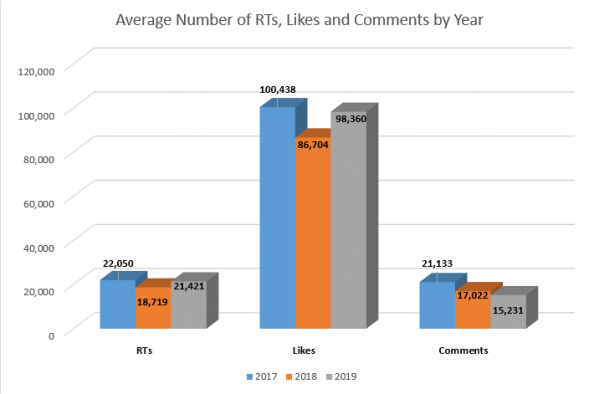
The Value of Facebook Comments When reviewing the US State Department’s Facebook account, it becomes apparent that the Department is in the midst of two digital campaigns. The first focuses on China’s alleged misconduct during the Covid19 outbreak. The second argues that Iran’s nefarious activities in the region, and the world, must be met by... Continue Reading →
On Digital Attrition: Is Trump Losing His Twitter War?
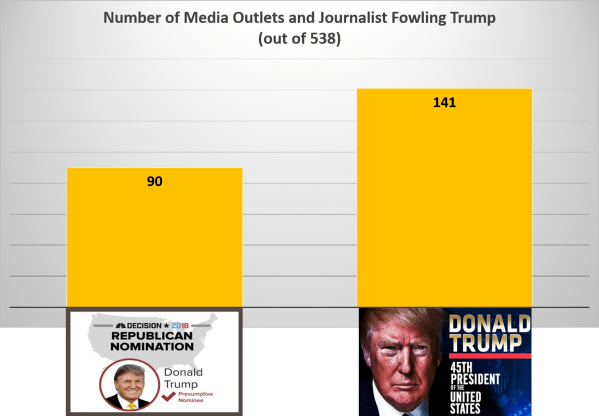
Trump Triumphs? During the 2016 Presidential elections, Donald Trump argued that he relied on his Twitter account to bypass the liberal American media and communicate directly with the American public. Having been denied access to the public sphere by newsroom elites, “the Donald” used social media win over the American electorate. Some have asserted that... Continue Reading →
The Digital Trial of Ivanka Trump
It began with a necklace. A diamond necklace to be precise. It was purchased from two Jewish jewellers on behalf of the French Queen Marie Antoinette in 1785. The necklace, comprised of 647 stones, and weighing 2,800 carats, never made it to the Queen. Rather, it fell into the hands of a charlatan women who... Continue Reading →
What Can Cultural Theory Tell Us About Trump’s Populist Public Diplomacy the Digital Age?
Paweł Surowiec (University of Sheffield) and Chris Miles (Bournemouth University) During the Cold War, the categorisation between ‘high’ and ‘low’ politics, mirrored by 'high' and 'low' cultures, was distinguishable as a trend in public diplomacy. These distinctions became blurred and, in the early 2000s, a new trend emerged whereby ‘high’ politics began borrowing from 'low'... Continue Reading →
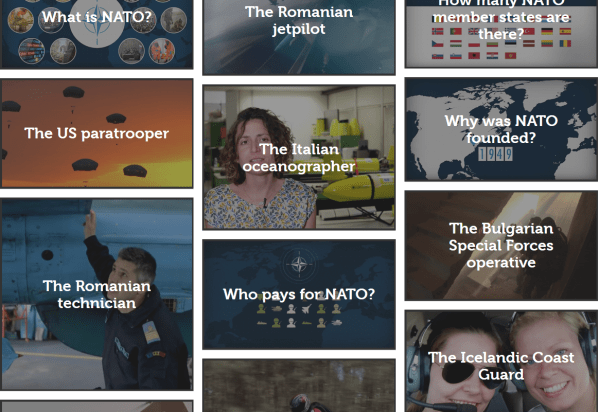
NATO’S Digital Narrative- “What We Are”, Not “Who We Are”
The word narrative has for some time dominated conversations about digital diplomacy. At the most basic level, narratives are viewed as compelling stories through which state and non-state actors can explain their policies and actions. The narrative is thus a rhetorical and visual device that replaces official press statements lined with diplomatic double entendres and... Continue Reading →
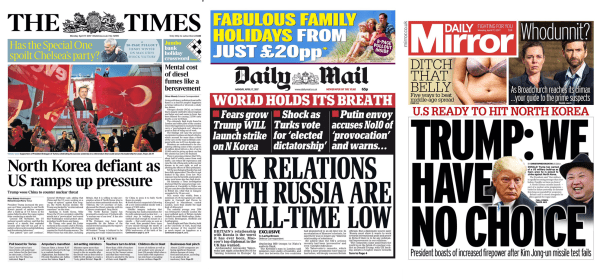
Can Digital Diplomacy Really Start A War?
On August 13th, 2017, Nick Miller published an article in The Sydney Morning Herald titled "Getting it wrong could start a war: Welcome to age of digital diplomacy". The article, which attracted much media and social media attention, proposed that digital diplomacy could actually facilitate war between states. Similar sentiments have been expressed in recent... Continue Reading →
On the use of videos in Digital Diplomacy
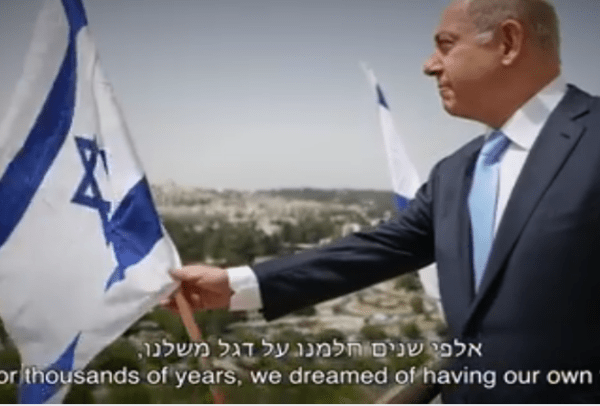
Images & Diplomacy Images have traditionally played an important role in diplomacy. For instance, paintings were often used to bare testimony to diplomatic summits and conferences. Such is the case with Gerard ter Borch’s painting of the treaty of Munster. Additionally, political cartoons were used to narrate a nation’s foreign policy, frame its adversaries, manage... Continue Reading →
Do World Leaders attract #digital diplomats? 2016 analysis
Two weeks ago I evaluated the extent to which Donald Trump has been able to attract diplomats, MFAs, embassies and foreign affairs journalists to his Twitter account. My analysis suggested that most digital diplomats, and diplomatic institutions, do not follow Trump online. This week, I decided to expand my analysis and see if world leaders... Continue Reading →
Has Donald Trump Obtained Digital Diplomatic Recognition?
Several weeks before the 2016 US elections, I analysed the extent to which Presidential candidates attract digital diplomacy followers. To do, I evaluated the number of Twitter followers Hillary Clinton and Donald Trump attracted from five epistemic communities: MFAs, UN missions in NY and Geneva, Multi-Lateral organizations and foreign affairs journalists. My results showed that... Continue Reading →
Digital Diplomacy in the Age of Political Extremity
Introduction Over the past year, a growing number of scholars, diplomats and journalists have reflected on the growing importance of algorithms to the conduct of diplomacy. Some MFAs now employ algorithms to analyze online discourse in foreign countries in an attempt to anticipate civil unrest. Likewise, algorithms are used to identify relevant audiences for public... Continue Reading →