The launch of ChatGPT, a Generative AI tool developed by the tech company Open AI, spurred a global discussion on the risks and benefits of artificial intelligence. Notably, ChatGPT is referred to as an “AI” tool, yet it is not really an example of Artificial Intelligence. ChatGPT does not think. ChatGPT does act. ChatGPT has... Continue Reading →
Who won the framing competition over Afghanistan? A Twitter Analysis
In 2012, Craig Hayden published one of the first research papers on digital diplomacy. Focusing on the emergence of social media, Hayden stated that the audiences of diplomacy were fragmented into networks of elective exposure. Some individuals learned about the world by following diplomats on Twitter, others turned to trusted bloggers while still others followed... Continue Reading →
Is it time for a terminology shift in digital diplomacy?
The digitalization of diplomacy has been closely associated with the practice of public diplomacy. Indeed, early adopters sought to leverage digital tools such as social media, blog sites and virtual worlds to foster ties with foreign populations. Public diplomacy underscored the digitalization of the US State Department that sought to engage with critical Muslim audiences... Continue Reading →
Crafting Digital Diplomacy Campaigns: How America’s Iranian Campaign is Backfiring
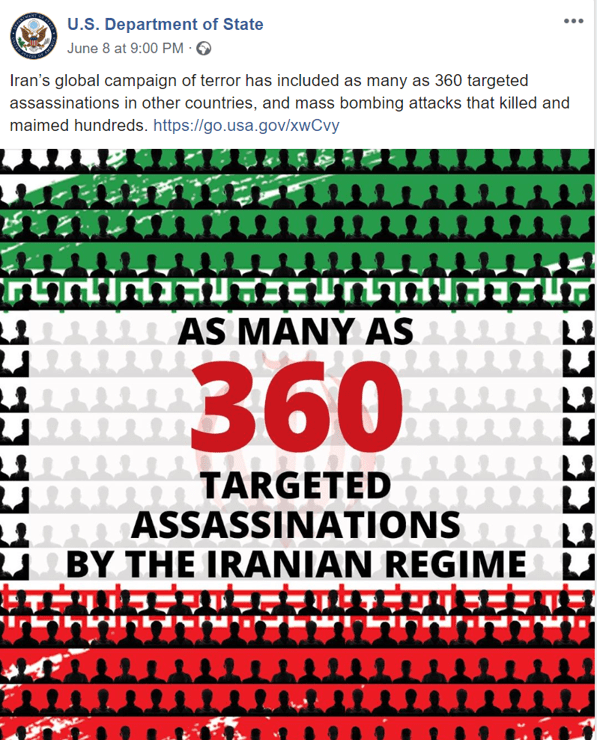
The Value of Facebook Comments When reviewing the US State Department’s Facebook account, it becomes apparent that the Department is in the midst of two digital campaigns. The first focuses on China’s alleged misconduct during the Covid19 outbreak. The second argues that Iran’s nefarious activities in the region, and the world, must be met by... Continue Reading →
The Ethical Limitations of Digital Diplomacy: When MFAs Use Your Data
On January 17th, 2020, the US State Department official launched a Center for Analytics (CfA). According to the State Department website, the center will This unique asset helps U.S. diplomats use analytics to addresses key challenges, such as prioritizing issues for diplomatic engagement and aligning Department resources with U.S. foreign policy priorities… As directed by... Continue Reading →
Why Are Digital Diplomacy Initiatives Short-lived?
Last week I had the pleasure of attending the International Communication Association's 68th Annual Conference in Prague. My presentation focused on the digital and public diplomacy activities of the Palestinian government in the West Bank, specifically it's Facebook Embassy to Israel. While presenting my work I mentioned that unlike other virtual Embassies, Palestine's Facebook Embassy... Continue Reading →
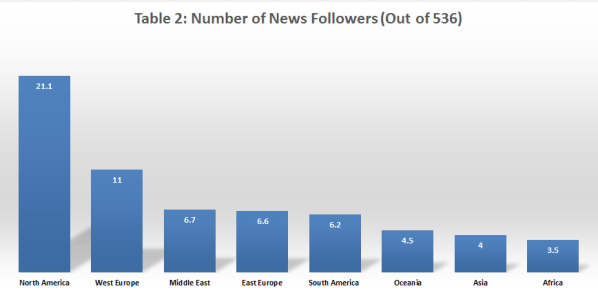
Do MFAs Really Attract Journalists on Social Media?
Some have traced the origins of digital diplomacy to America's need to counter Al-Qaeda's online narrative and recruitment efforts. As Ellen Hallams has written, already in 2008 it was estimated that the internet was responsible of 80% of recruitment of Jihadi movements. In an attempt to stem the tide of recruitment, and counter Al-Qaeda's narrative... Continue Reading →
America’s Selfie in the Age of Trump
Note: This post first appeared on the Global Policy website For over a decade the State Department has relied on social media sites to counter extremist narratives, engage in conversation with foreign publics and shape the global diplomatic agenda. Importantly, the State Department also uses social media to manage America's global image. The need to... Continue Reading →
Digital Diplomacy During #NepalEarthquake
Digital Diplomacy- Between Revolution and Evolution Much of the current debate regarding digital diplomacy tends to focus on the question of evolution vs. revolution. The focal question of this debate is does digital diplomacy represent a revolutionary way of conducting diplomacy or is it merely an evolution in the practice of diplomacy. While answering this question is... Continue Reading →
The Social Network of Embassies to the US on twitter
Digital diplomacy may be viewed as a multi-faceted form of diplomacy. As a tool for public diplomacy, it may be used to communicate directly with foreign populations thereby facilitating the acceptance of one's foreign policy. As a nation branding tool, it may be used to shape and manage a nation's global image. Digital diplomacy may also... Continue Reading →