Each week, I publish a list of interesting articles, essays and reports that may be of interest to the digital diplomacy community. This week- Tech giants join with governments to fight Covid misinformation (The Guardian)Alibaba sets 'Single Day' sales record (The Wall Street Journal)Coronavirus to dominate Saudi-hosted virtual G20 summit (The Japan Times) Microsoft says... Continue Reading →
Lightning Fast- How Worlds Leader Tweeted at Biden
On November 7th, 2020, CNN projected that Joe Biden had won the US elections garnering 273 electoral votes. Following the projection, a CNN pundit wondered if world leaders would rush to congratulate Biden given that President Trump was unlikely to accept defeat. Moreover, while Biden was the projected winner, he was not yet the official... Continue Reading →
Monday’s #MustRead List
Each week, I publish a list of interesting articles, essays and reports that may be of interest to the digital diplomacy community. This week- Budapest Times Interviews Irish Ambassador on Use of Digital Diplomacy During Covid (The Budapest Times)Biden Win Would be Good for Global Tech (ITPro)Global Leaders Congratulate Joe Biden on His Victory (CNN)Online... Continue Reading →
Should Diplomats Pay More Attention to Publics’ Online Knowledge Voyage?
Two years ago the Dutch Foreign Ministry held a Digital Diplomacy Camp. Over the course of two days, the Camp offered a platform for diplomats, journalists, scholars and representatives of social media companies eager to discuss the digitalization of diplomacy. In one session, Jay Wang of the USC Center on Public Diplomacy reflected on online... Continue Reading →
On Digital Attrition: Is Trump Losing His Twitter War?
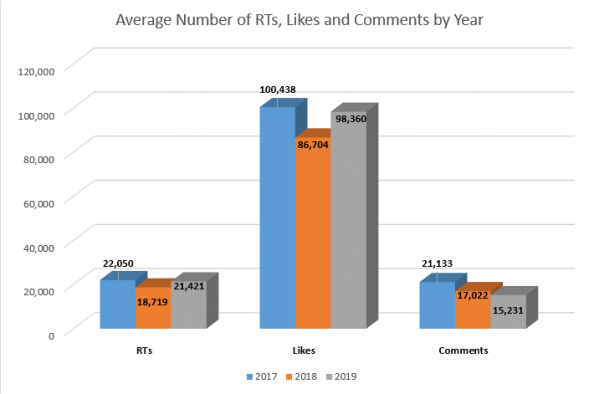
Trump Triumphs? During the 2016 Presidential elections, Donald Trump argued that he relied on his Twitter account to bypass the liberal American media and communicate directly with the American public. Having been denied access to the public sphere by newsroom elites, “the Donald” used social media win over the American electorate. Some have asserted that... Continue Reading →
An Act of Digital Disobedience? When U.S. Embassies Raised the Pride Flag
Over the past week, several newspapers have published stories focusing on the activities of U.S. embassies during Pride Month. Specifically, these stories have dealt with the creative ways in which some embassies hoisted the rainbow flag during Pride Month. Unlike the Obama era, the Trump administration has banned the use of the rainbow flag thus preventing... Continue Reading →
The age of conspiracies: Why are Conspiracy Theories Flourishing Online?
Now is the age of conspiracies. Throughout the world, the mass dissemination and belief in conspiracy theories seems to be on the rise. These were especially visible during the 2016 Presidential elections as some argued that climate change was a Chinese invention meant to weaken the West, that Barack Obama was not born in the... Continue Reading →
What Can Cultural Theory Tell Us About Trump’s Populist Public Diplomacy the Digital Age?
Paweł Surowiec (University of Sheffield) and Chris Miles (Bournemouth University) During the Cold War, the categorisation between ‘high’ and ‘low’ politics, mirrored by 'high' and 'low' cultures, was distinguishable as a trend in public diplomacy. These distinctions became blurred and, in the early 2000s, a new trend emerged whereby ‘high’ politics began borrowing from 'low'... Continue Reading →
Can Digital Diplomacy Build Trust? The Case of Jason Greenblatt
Traditionally, diplomacy rested on proximity. Ambassadors to foreign nations resided in court so that they could assess the temperament of a monarch, create alliances with noble families, gather gossip from local scoundrels and coordinate action with their peers. Proximity has remained important in the 21st century. Ambassadors to multi-lateral organizations essentially reside in a new... Continue Reading →
NATO’S Digital Narrative- “What We Are”, Not “Who We Are”
The word narrative has for some time dominated conversations about digital diplomacy. At the most basic level, narratives are viewed as compelling stories through which state and non-state actors can explain their policies and actions. The narrative is thus a rhetorical and visual device that replaces official press statements lined with diplomatic double entendres and... Continue Reading →