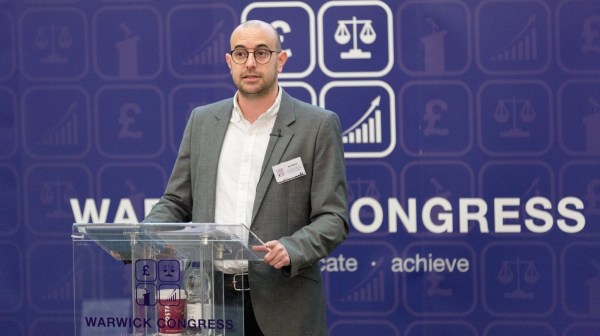
(The following is an address made at the 2018 Warwick Student Congress) American poet Allen Ginsburg opens his masterpiece Howl with the lines I saw the best minds of my generation destroyed by madness, starving hysterical naked,dragging themselves through the negro streets at dawn looking for an angry fix,angelheaded hipsters burning for the ancient heavenly... Continue Reading →
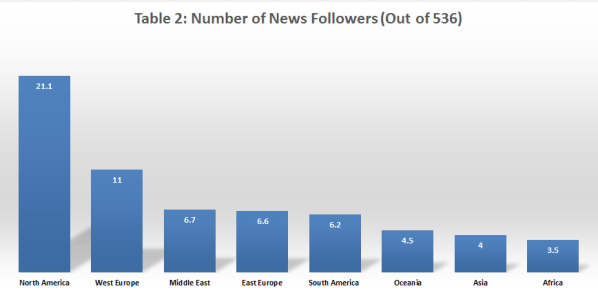
Do MFAs Really Attract Journalists on Social Media?
Some have traced the origins of digital diplomacy to America's need to counter Al-Qaeda's online narrative and recruitment efforts. As Ellen Hallams has written, already in 2008 it was estimated that the internet was responsible of 80% of recruitment of Jihadi movements. In an attempt to stem the tide of recruitment, and counter Al-Qaeda's narrative... Continue Reading →
Can the Internet Save Public Diplomacy?
Introduction- Narratives, Narratives, Narratives Several weeks ago I began watching a TV show depicting the lives of vampires in New York City. One of the greatest challenge facing these vampires is their lack of ability to gain acceptance from the human population. As the vampire leader summarized, “we lack a compelling narrative”. This week I... Continue Reading →
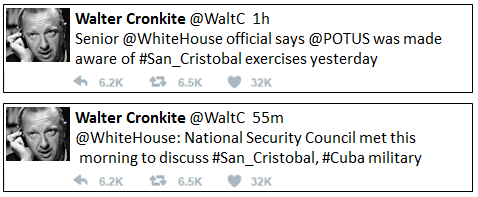
If The Cuban Missile Crisis Were Tweeted
Two weeks ago, Professor David Rothkopf broadcasted a podcast about digital diplomacy. In the podcast he wonders, like many others, how past crises might have played out differently had digital tools been invented at the time. Such is the case with Cuban Missile Crisis of 1962 which often serves as an exemplar of crises management... Continue Reading →
On the use of images in the diplomatic struggle over Syria
Two weeks ago I published an analysis of the images of Syria used by the British FCO on Twitter. My analysis found that the FCO employs images that resonate with iconic moments from British history. In addition, I found that these images are an integral part of the British narrative of events in Syria. This... Continue Reading →
The Russian Tweet Heard Around the World
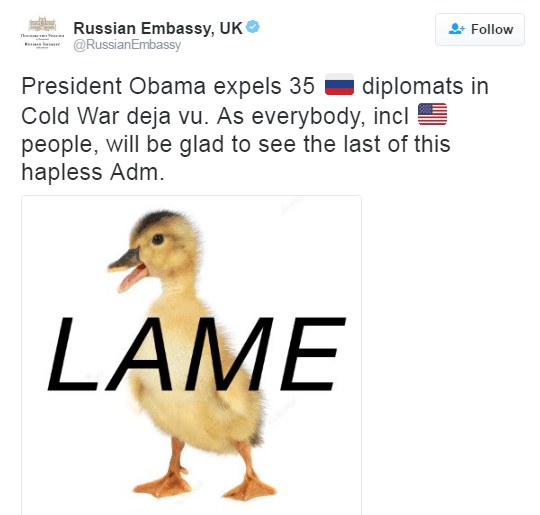
On Thursday, the 29th of December 2016, President Barack Obama announced the expulsion of 35 Russian diplomats from the US as well as new economic sanctions targeting Russia's intelligence agencies. Both measures were part of the American response to Russia's alleged interfering in the 2016 Presidential elections. Russia's digital response was immediate. Within an hour... Continue Reading →
Do US candidates for the Presidency attract diplomats on Twitter?
On the 23rd of July, Donald Trump accepted the Republican nomination for the Presidency of the United States. This week Hillary Clinton is likely to be chosen at the Democratic nominee for the Presidency. While it is true that national elections often draw attention from foreign countries and governments, no election is as closely monitored... Continue Reading →
Selfie Diplomacy- Analyzing Profile Pictures of World Leaders on Twitter
Last week I published an analysis of the Twitter profile pictures of MFAs (ministries of foreign affairs). I argued that such images may be a form of Selfie Diplomacy as profile pictures enable social media users to construct an online identity and communicate that identity to their networks. This week I endeavored to analyze the... Continue Reading →
Is NATO Sending Russia Mixed Signals on Social Media?
The majority of academic articles suggest that MFAs (ministries of foreign affairs) migrated to social media given a desire to converse and shape the opinions of online publics. However, recent studies also suggest that MFAs now use twitter to disseminate and gather information that may be of use to foreign policy makers and analysts. Indeed... Continue Reading →
How the UK & US Are Fighting ISIS Online
Much has been written over the past year about ISIS' use of social media to recruit young Muslims to its ranks. The use of the internet, and social media, in order to recruit members to extremist groups is by no means a new occurrence. A 2008 estimate asserted that the internet was responsible for 80%... Continue Reading →