In many respects, 2017 was a year of digital uncertainty. It was a year in which digital platforms were used to weaponize uncertainty. It was a year in which the societal role of digital platforms became uncertain. It was a year in which the relationship between states and tech gaits became uncertain. And it was... Continue Reading →
The Social Media Scare
American poet Allen Ginsburg opens his masterpiece, Howl, with the lines I saw the best minds of my generation destroyed by madness, starving hysterical naked, dragging themselves through the negro streets at dawn looking for an angry fix, angel headed hipsters burning for the ancient heavenly connection to the starry dynamo in the machinery of... Continue Reading →
Digital Diplomacy 3.0: Personalized Diplomacy
From Digital Diplomacy 1.0 to Digital Diplomacy 2.0 When foreign ministries first migrated online, they viewed social media platforms as mass media channels. Much like the radio and television, Twitter and Facebook could be used to disseminate messages among millions of users. The conceptualization of social media as mass media was, in part, the result... Continue Reading →
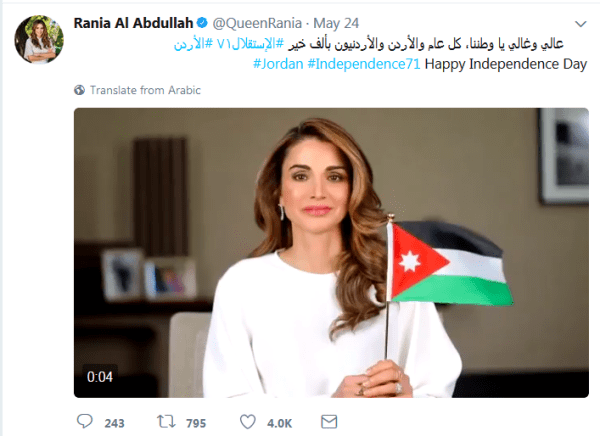
Queen Rania’s Selfie
Introduction The Arab World has always had a strenuous relationship with social media. On the one hand, several countries in the Arab World monitor their citizen’s social media activity, ban social media or shut down social media during times of domestic upheaval. Such was the case when the Mubarak regime attempted to block Facebook at... Continue Reading →
The Personalization of Digital Diplomacy
In the early days of digital diplomacy, MFAs and diplomats viewed social media as linear communication tools. Diplomats believed that they could use social media to craft a message and directly disseminate it among online publics. Thus, social media was no different from other mass media such as the radio and television. Yet as the... Continue Reading →
From Magic Bullets to Bots: How Diplomats Conceptualize Social Media
Since the late 1930's communications scholars have investigated the influence of masa media on society. At times, scholars assumed that mass media such as radio and film had an immense impact on individuals and could manipulate their thoughts, beliefs and actions. At other times scholars assumed that the effects of mass media were cumulative and... Continue Reading →
Whose Data Is It Anyway?
Several months ago, Israel's National Institute for Health Policy held an international workshop on the ethical dimensions of using big data in the formulation of public health policy. Israel, which offers its citizens universal healthcare, has four main healthcare providers. The digitalization of health services among all providers has created a vast big data database... Continue Reading →
America’s Selfie in the Age of Trump
Note: This post first appeared on the Global Policy website For over a decade the State Department has relied on social media sites to counter extremist narratives, engage in conversation with foreign publics and shape the global diplomatic agenda. Importantly, the State Department also uses social media to manage America's global image. The need to... Continue Reading →
Workshop Summary- Towards Professionalization of #DigitalDiplomacy
On April 5th 2017, the Australian Embassy in Israel and the Oxford Digital Diplomacy Research Group co-hosted a workshop on Digital Diplomacy. The workshop, which was attended by journalists, foreign diplomats and members of the Israeli MFA (Ministry of Foreign Affairs), focused on three issues: utilizing digital tools for communicating with journalists, transitioning from digital... Continue Reading →
How Palestine Digitized It’s Public Diplomacy
NOTE: This blog post originally appeared on the USC CPD Blog and was co-written with Professor Marcus Holmes In 2011, the U.S. State Department launched Virtual Embassy Iran, a web-based platform that aimed to promote American “values and culture” to Iranians. This embassy served as an example of how diplomats can use digital technologies to... Continue Reading →